In Malaysia, food is so much more than a pastime; it’s a national passion. And while pizza may not dominate the Malaysian dining scene in the way it does in Italy, the UK, or the United States, it has nevertheless carved out a loyal following here – and the appreciation for a quality pizza has only grown in the last decade or so. From neighbourhood delivery chains to wood-fired pizzerias tucked into shoplots, Malaysians clearly understand the appeal of good pizza. Now, more and more, people want to enjoy a great pizza at home as easily as they can outside.
Across Western markets, the past decade has seen an explosion in dedicated home pizza ovens. Lockdowns during the pandemic undeniably accelerated the trend, but the appetite has endured. Consumers who once relied on their domestic ovens – or resigned themselves to limp bases and pale toppings – began chasing something closer to the real thing. The goal was simple: replicate the performance of a commercial pizza oven in a backyard or balcony setting. That thinking has made its way to Malaysia, and while it will probably not take hold the way it has in the American market, consumers here are increasingly interested in the prospect of making their own pizzas at home.
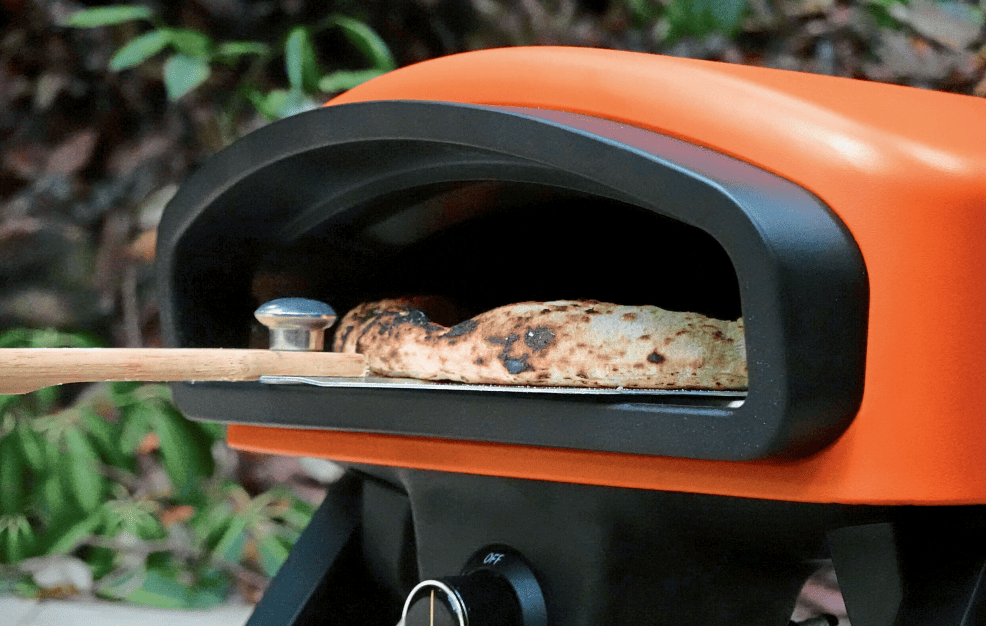
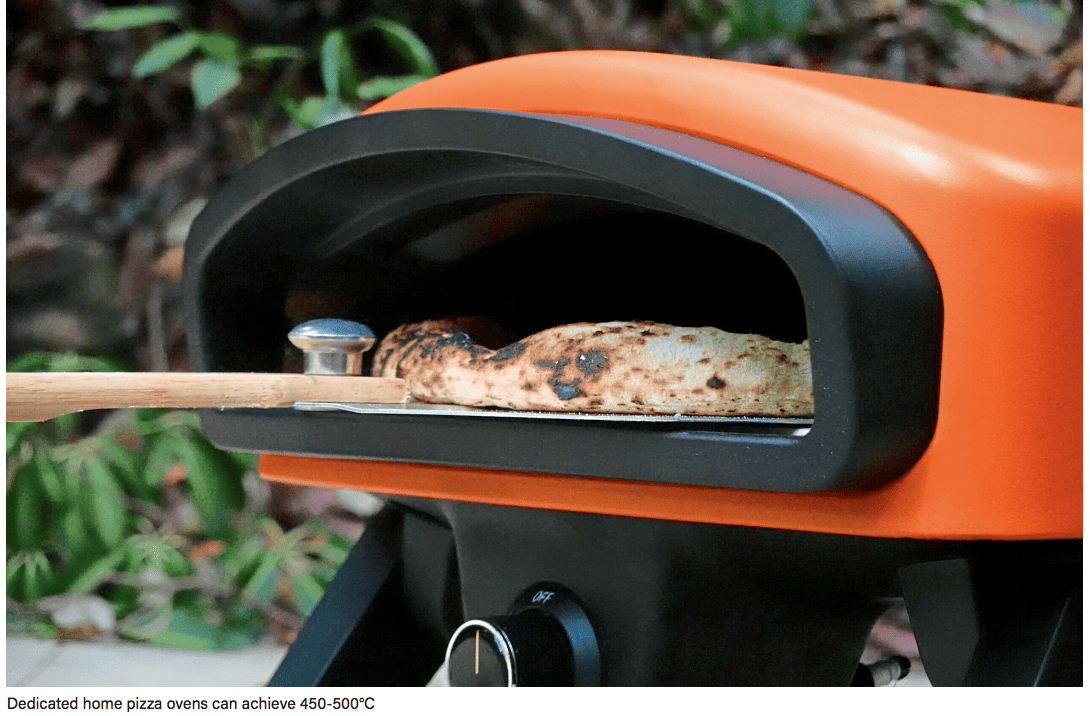
Though you could argue several points make a difference when it comes to home versus restaurant ovens, it’s safe to say that heat is the defining variable. A proper pizza oven – whether wood-fired or gas-powered – routinely pushes beyond 450°C and often approaches 500°C. At those temperatures, a thin Neapolitan-style pizza cooks in just 60 to 90 seconds. The dough puffs, leopard spots form along the crust, and the base sets before the toppings overcook. By contrast, most domestic ovens in Malaysia top out at around 230 to 250°C. Even with a baking steel or stone, you are working with roughly half the required heat. The result is serviceable, but rarely especially memorable.
For Malaysian home cooks inspired by Instagram reels and YouTube tutorials, this is where aspiration collides with reality. Globally recognised brands such as Ooni and Gozney have set the benchmark for compact, highperformance pizza ovens. Their units are beautifully engineered, capable of serious heat output, and widely endorsed by chefs and influencers alike. Unfortunately for those of us in Malaysia, they also come with price tags that, once converted to ringgit and layered with shipping, import duties, and local mark-ups, can be truly eye-watering.
It is not unusual to see certain Ooni or other imported models retailing locally for several thousand ringgit. Add accessories – peels, covers, infrared thermometers, gas attachments – and the investment climbs further. For many Malaysians who simply want to explore the craft of pizza-making at home, that cost represents a significant barrier. The risk of spending RM4,000 to RM7,000 on a highly specialised appliance, only to potentially discover that it becomes an occasional novelty, is real.
This pricing gap has created space for credible local alternatives, and finally we found one: Beetle Box.
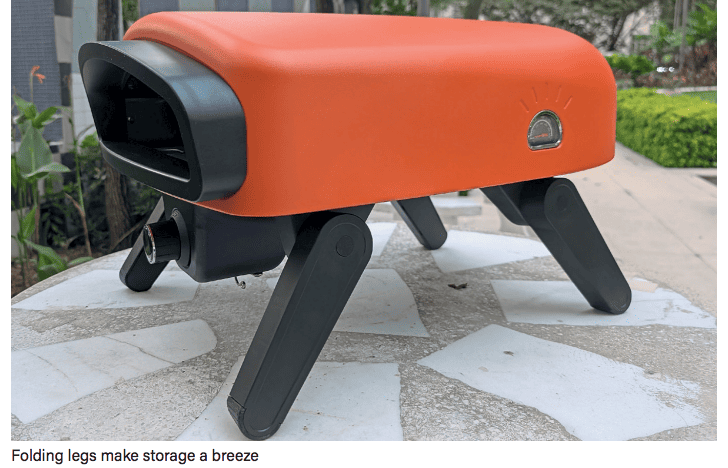
Positioned more at the serious enthusiast rather than the casual dabbler, Beetle Box offers the core attributes that matter – high heat, efficient insulation, and practical design – without the wallet-busting imported premium. It is engineered to reach the temperatures required for authentic, fast-fired pizzas, and does so using common LPG cylinders. Crucially, though, it does so at a price point that feels attainable rather than needlessly indulgent.
What makes the oven’s design relevant in Malaysia is context. Outdoor cooking here must contend with humidity, sudden rain, and oftentimes rather compact urban spaces. A pizza oven needs to be robust, portable enough to move and store when necessary, and straightforward to operate. There is little appetite for overly fussy systems. Beetle Box appears to understand that. The emphasis is on performance first, with a thoughtful design that keeps things simple yet still aesthetically appealing. We also like that it can handle pizzas up to 14 inches in diameter.
For the aspiring Malaysian pizzaiolo, the equation becomes clearer. You need heat. You need consistency. You need a unit that can recover temperature quickly between bakes when friends are gathered and dough balls are lined up. What you do not necessarily need is an imported badge that doubles the cost (or more).
We were delighted to see the Beetle Box oven in the marketplace and with a price point of well under half that of even the most basic, entry-level Ooni oven, couldn’t resist placing an order. A few other purchases, such as a new LPG cylinder and low-pressure regulator and hose, along with some specialised pizza-wrangling tools, ensured that we were ready to start making pizzas soon after the Beetle Box was delivered. Of course, we loved that speedy delivery of the oven is free in Peninsular Malaysia.
With any home pizza oven like this, there is a learning curve. We’ve been making pizzas at home for years, but there’s a big difference when you suddenly have access to a dedicated gas oven that can literally reach up to 500°C in about 20 minutes or so. For the uninitiated, such an oven with its rip-roaring wall of flame and soaring temperatures, can frankly be a little intimidating. For more experienced home cooks, however – especially those who love a good pizza – this is the tool they’ve been waiting for.
OUR EXPERIENCE
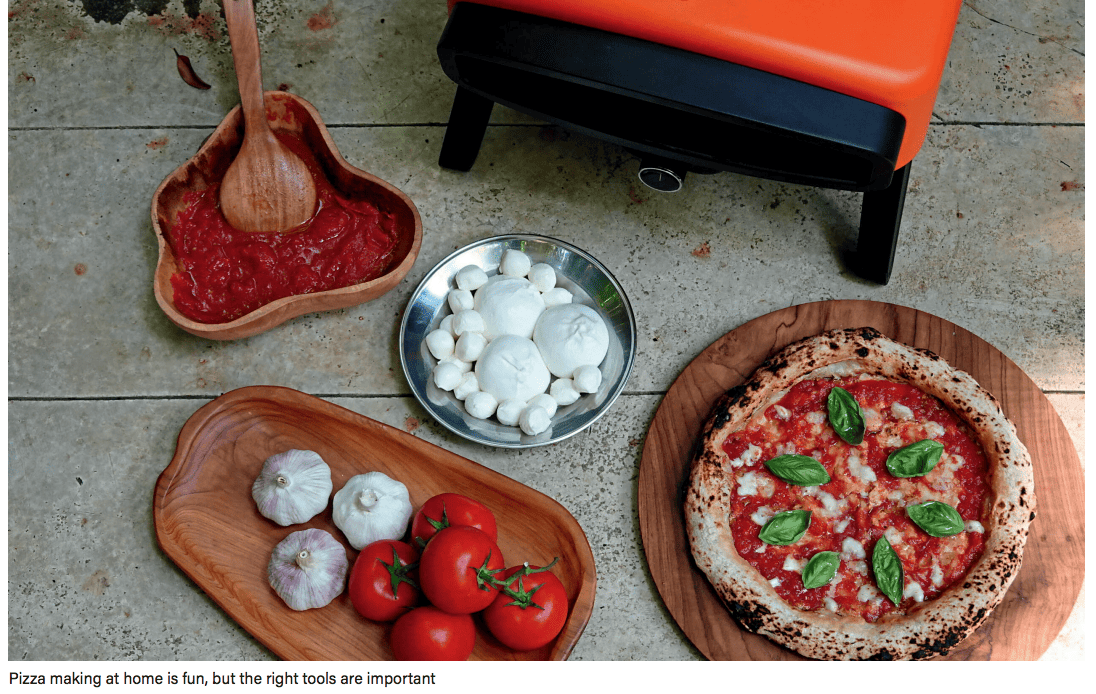
Regardless of where you eat pizza, one truth that holds is that the most important part is the crust. This is the foundation of every pizza, and it all starts with the dough. You’ll need a good bread flour, and while you don’t absolutely need one that’s super-finely milled specifically for pizza, like the well-known Tipo 00, that style has certainly earned its merits. Absent that, though, any bread flour with 12-13% protein is a good place to start.
For a traditional Neapolitan dough, you’ll only need four ingredients: flour, water, yeast, and salt. There are scores of recipes online that cover a wide range of different pizza doughs, but we find that sticking to the basics is wise at first. Aim for 60-65% hydration at first, meaning the ratio between flour and water; for example, 62% hydration means you add 62g of water for every 100g of flour. Higher hydration levels of say, 65 to 70%, may yield more ‘authentic’ Neapolitan-style results, but also make the dough stickier and more challenging to work with. Yeast and salt also follow established ratios, and the numbers scale perfectly, so you can confidently make as many dough balls as you want by simply multiplying the amounts of each of the four ingredients.
You can use your dough shortly after a period of resting and proofing, but for superior flavour, let the dough ball ferment in the fridge (covered) overnight. Then let it come up to room temperature before working on your pizza. As with any breadmaking exercise, pizza dough greatly rewards planning and proper timing.
Dough handling and stretching also comes with a learning curve of its own, and this is where nearly all of your pizza-making education will take place. The rest of it is quite easy. The dough is the most important part, and also the most timeconsuming to master.
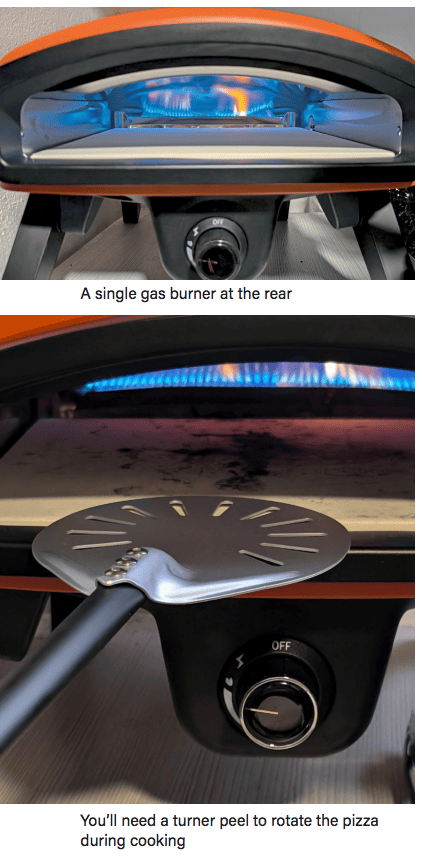
Using our standard Neapolitan pizza dough, we made several pies over the first few days with the Beetle Box. The two things we noticed as fairly crucial were that first, you must let the oven fully preheat. It doesn’t take long, but waiting that extra five minutes is an investment that pays good dividends. The baking stone needs to get very hot to properly cook and blister the dough as a crust is formed. Second, you absolutely need a small pizza turning peel, different than the larger peel used to launch and retrieve the pizza. As the heat source is along the back wall, the pizza will not cook evenly, so it must be rotated. A thin metal peel, much smaller than the pizza (typically the turning peel is 7-8 inches in diameter) is not just useful, it’s necessary. It can slip easily under the dough, allowing you to slightly lift and rotate the pie during its very short cooking cycle.
Two other things we think you’ll find very useful include an infrared thermometer gun and semolina, a course, often pale-yellow grainy flour. To its credit, the Beetle Box has a built-in thermometer on the side, but an inexpensive handheld infrared thermometer gun allows you to accurately determine the temperature at specific various points inside the oven. (Just ensure you get one capable of measuring up to 550-600°C.) As for the semolina, sprinkle this liberally on your main pizza peel, on which you’ll build your pizza and then use to load the pie into the oven. The thin layer of semolina helps the pizza slide easily from your peel to the hot baking stone. Regular flour and corn meal are not recommended due to their tendency to scorch and burn more easily.
We found that at its highest setting, the gas burner inside the oven produced a high-intensity flame that occasionally curled and licked its way outside the opening of the oven, particularly if there was much wind. However, despite the interior temp getting up over 450°C, we rarely saw the insulated top surface getting much above 90- 95°C. Still quite hot, mind you, but a far cry from the blazing temps going on inside the oven! After preheating, we lowered the flame’s intensity a bit to prevent the pizza from literally catching fire, something it’s quite prone to do if the oven is at its maximum setting and the pizza is loaded too near to the back burner.
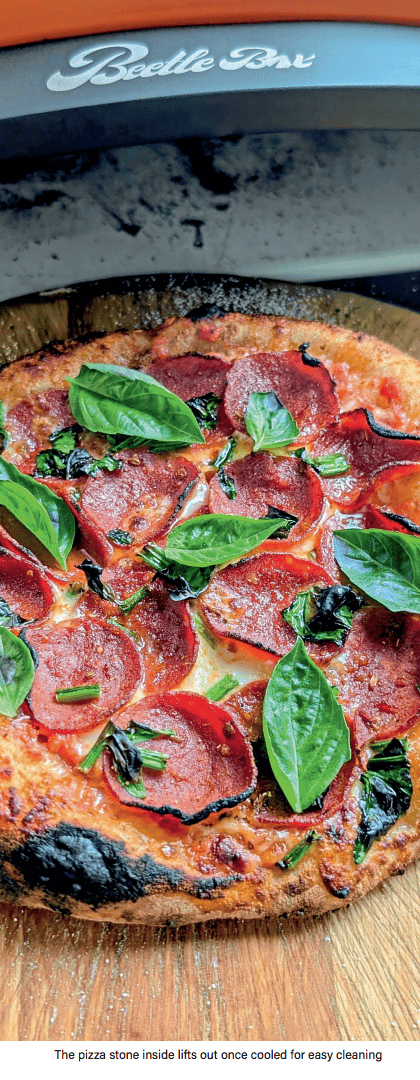
Assuming you’ve let the oven properly preheat, most pizzas will cook fully in about two minutes or less. The results are excellent, though we admittedly burned the crust’s edges on the first couple of pizzas we attempted, as we were leaving the burner at its highest setting. In a short time, however, we were routinely making superb-quality pizzas at home, experimenting with different flours, hydration levels, cold fermentation times, and toppings.
THE VERDICT
For anyone in Malaysia who is keen to flex their own pizzaiolo muscles, the local choice is a good one, and we have thoroughly enjoyed putting the Beetle Box pizza oven through its paces.
The democratisation of home pizza-making is, at its heart, about access. An entry price of thousands of ringgit curbs that access, but Beetle Box cuts that price tag dramatically, rightly calling itself “Everyone’s Pizza Oven.” And as we found, when the tools become attainable, experimentation follows. Dough hydration levels are tweaked. Fermentation times are debated. Sauce recipes are refined. It’s a lot of fun (and pretty tasty, too) … but all that is hard to justify if the cost of entry feels prohibitively expensive.
Beetle Box lowers the barrier to entry without cutting any corners where it counts. We’d like to see more detailed information in the owner’s guide, which we found painfully thin and rather lacking, but realistically, there’s so much good information on pizza-making to be found online, a deep-dive approach in the owner’s guide isn’t strictly necessary. On the whole, we’re just thrilled to see something like Beetle Box now available in Malaysia, opening the door wider to those who want to enjoy making pizzeriaquality pies in their own home. In a market where the big global names remain aspirational but financially daunting, that alone makes the local option one worth serious consideration.
To learn more, visit beetleboxoven.com