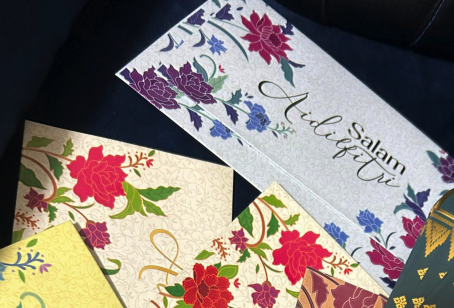
Eid Mubarak may be about forgiveness, family, and food… but let’s be honest, there’s also a quiet financial system running in the background. Welcome to the unspoken economics of duit raya. No one really explains it, yet somehow, we all understand the rules. Who gives, who receives, how much, and most importantly, how to react when you open that green packet. It’s subtle. It’s social. And somehow, it’s perfectly organised chaos.
THE ART OF GIVING
Younger cousins receive with unfiltered excitement, already planning what to spend it on before they’ve even said thank you. Teenagers try to act nonchalant, but you can see their eyes doing quick mental math. Adults? We handle it with grace. We give, smile, and pretend we’re not mentally calculating how many packets we’ve handed out so far.
And then there’s that one relative who gives crisp, freshly withdrawn notes, like they just walked out of the bank five minutes ago. Clean. Straight. Impressive. Effort like that never goes unnoticed. Sometimes, you can even feel the “heat” of freshly minted money.
THE SILENT PRICE RANGE
No one talks about it, but everyone knows. There’s a range.
Too little, and you risk becoming that relative everyone quietly remembers next year. Too much, and suddenly you’ve set a standard you might not be able to maintain.
So we all find that middle ground. Generous enough to feel good, careful enough to stay sustainable. It’s not just giving, it’s budgeting with a sweet smile.
THE REACTION GAME
Receiving duit raya is one thing. Reacting to it is another skill entirely that you somehow accidentally master over the years. You open it just enough to peek. Not too obvious, not too slow. Then comes the performance.
A nod. A smile. Eye contact.
“Wah, thank you!”
Whether it’s RM5 or RM50, the reaction stays the same. Because this isn’t about the number. This is about grace under pressure. This is about diplomacy.
THE STRATEGY
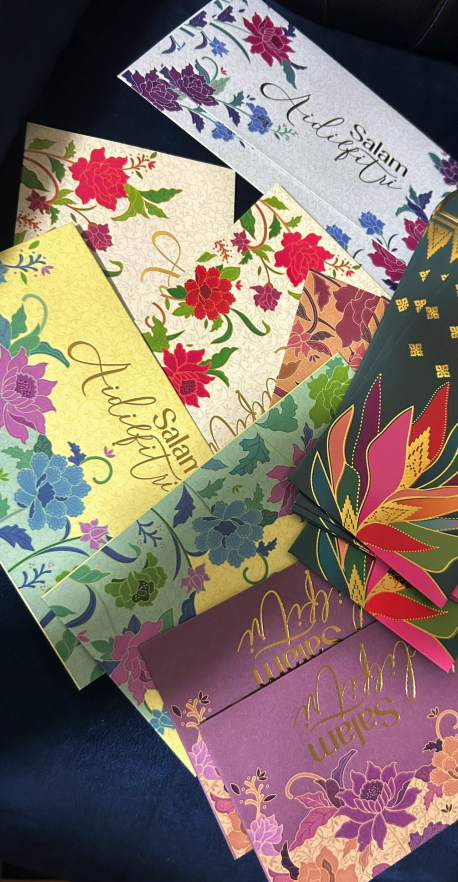
Let’s not pretend there isn’t a system. There is one, even if it’s not loud and obvious.
You plan your visits. You prioritise houses. You time your arrivals strategically. Not too early, not too late. Just right. Because deep down, we all know some houses are… more generous than others. It’s not greed. It’s awareness. Cultural awareness.
INFLATION, BUT MAKE IT FESTIVE
Let’s address the obvious. Everything is more expensive now. Food, fuel, daily life. But somehow, duit raya hasn’t exactly evolved at the same speed.
And yet, that RM10 note still feels special. Not because of its value, but because of what it represents. Effort. Thought. Tradition.
It’s a small gesture, but it carries weight. Emotional weight. Cultural weight. And occasionally, coffee money for the week ahead.
THE SOCIAL BALANCE
Duit raya also comes with its own quiet social choreography. You don’t open it too quickly. You don’t compare openly. You don’t make comments that might offend. Everything is done with a certain level of grace, even when curiosity is at its peak. It’s fascinating, really. A whole system of giving and receiving, built on unspoken understanding and mutual respect.
THE REAL VALUE
Here’s the truth. Beneath all the calculations, comparisons, and quiet strategies, duit raya was never really about the money. It’s about the gesture. The ritual. The way it adds a little excitement to every visit, a little joy to every interaction. It’s the one time of year where giving feels effortless, receiving feels light, and everyone participates in this shared tradition without needing instructions.
So yes, we calculate. Yes, we notice. Yes, we might even compare.
But at the end of the day, we still say thank you, we still smile, and we still keep the tradition going.
Because that’s the real economy of Raya. Not measured in ringgit, but in moments, memories, and the quiet understanding that some traditions are worth more than what’s inside the envelope.