Some cities impress you instantly. Others take their time. Busan does neither and somehow, that’s exactly its charm. If Seoul is the mind of Korea, sharp, efficient, always in motion then Busan is its heart. Calm, steady, and quietly self-assured. It doesn’t compete. It doesn’t perform. It simply is.
And that, I realised, is far more compelling.
Most first-time travellers begin with Seoul.
I chose differently.
After seven hours on Malaysia Airlines, I arrived at Gimpo International Airport slightly disoriented, slightly excited, and already rethinking every fast-paced expectation I had about South Korea. Because Busan doesn’t rush you. It introduces itself slowly, like it knows you’ll stay a while.
HAEDONG YONGGUNGSA TEMPLE
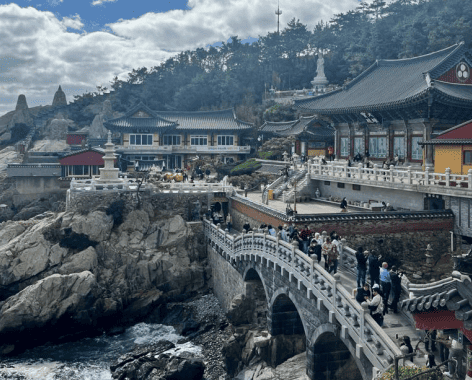
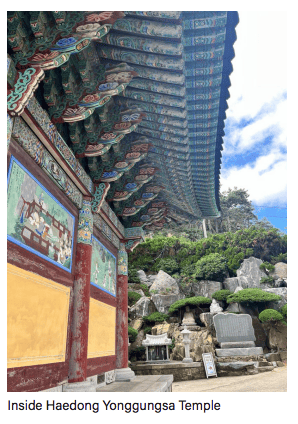
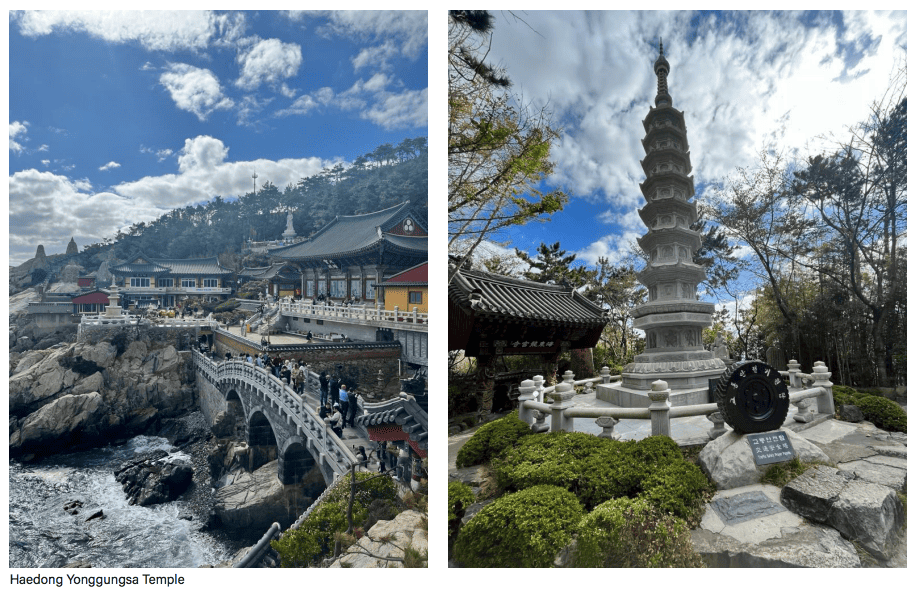
My first lesson in that came at Haedong Yonggungsa Temple often known as one of the most beautiful temples in Korea, and honestly, it doesn’t take long to see why.
Unlike most temples that sit quietly in the mountains, this one opens itself to the sea. The ocean stretches endlessly beside it, waves crashing against the rocks like background music that no one asked for, but everyone appreciates.
I arrived in autumn, which, in hindsight, was the perfect decision I didn’t even realise I was making. The air was crisp, the light softer, and the entire place felt almost cinematic, if you ignored the fact that half of Busan had the same idea. It was busy. Very busy. But somehow, it never felt chaotic.
The temple itself unfolds in sections, almost like it’s revealing itself slowly. Three main buildings, each with its own presence, connected by pathways that guide you through without ever rushing you.
Inside, I found rows of statues intricate, symbolic, and deeply rooted in Korean culture. I’ll admit, I didn’t know the story behind every single one, but that didn’t make the experience any less meaningful.
Of course, I did what any selfaware traveller would do I took a lot of photos. Mostly of the ocean, the details, the way nature and architecture seemed to coexist without trying too hard. The kind of photos you tell yourself are “for the memories,” but also quietly hope turn out really good.
There was also a restaurant overlooking the ocean one of those spots where you sit down for the view and accidentally stay longer than planned. Because when the sea looks like that, time becomes a little less important.
Somewhere along the way, I wandered into a small shop and, without much hesitation, bought a jade roller. Practical? Maybe. Necessary? Probably not. But it felt like one of those travel decisions you don’t question too much.
And that was my first real moment in Busan.
Unplanned, slightly indulgent, and quietly unforgettable.
CHEONGSAPO DARITDOL OBSERVATORY
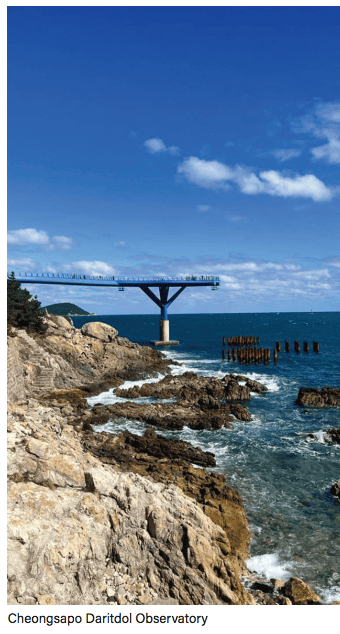
At Cheongsapo Daritdol Observatory, the experience shifts slightly, from stillness to sensation. A narrow glass walkway extends over the ocean, offering views that are both breathtaking and mildly intimidating. I approached it with confidence, the kind you have right before reality humbles you.
Three steps in, I slowed down. A lot.
There’s something about seeing the sea directly beneath your feet that makes you reconsider your life choices briefly, but significantly.
But once you lean into it, the reward is undeniable. The horizon stretches endlessly, the sea changes colour with the light, and for a moment, you feel suspended between where you are and where you’re going.
GAMCHEON CULTURE VILLAGE
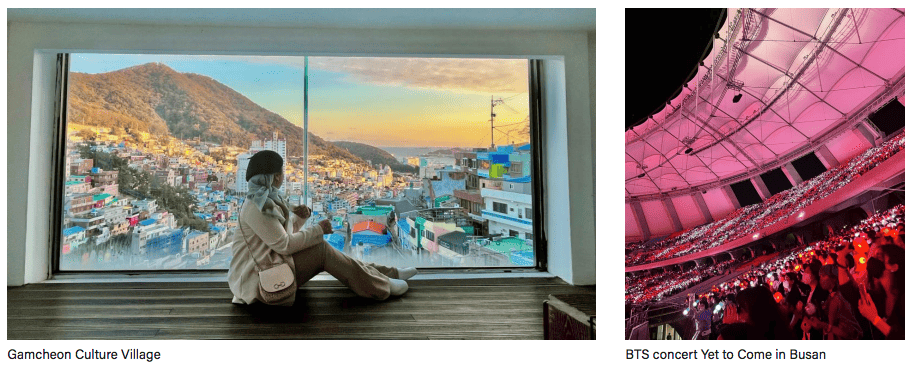
Then comes Gamcheon Culture Village, where Busan decides to have a little fun. The hillside bursts into colour, each house painted as if it has its own personality. Alleyways twist in ways that make navigation optional, and every corner feels like it’s quietly competing for your attention. And yet, it never feels forced.
Somewhere between taking the “wrong” turn (which, in Gamcheon, is usually the right one) and pausing for photos I pretended were candid, I found something I didn’t expect.
People.
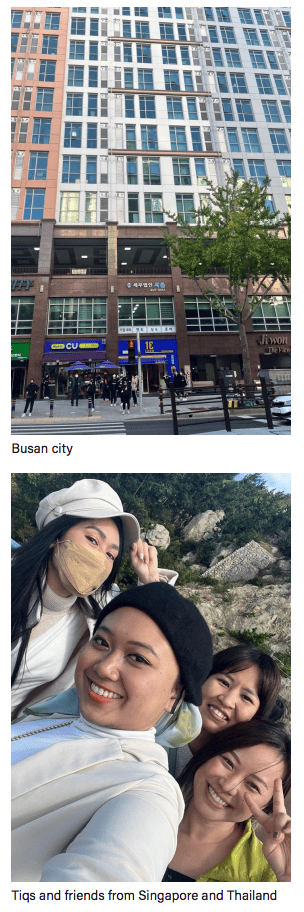
Strangers from Singapore and Thailand who, within minutes, felt familiar. Conversations started effortlessly, where are you from, how long are you here and somehow evolved into shared laughter, recommendations, and that unspoken understanding that travel makes everything a little easier.
No titles. No expectations. Just presence.
It’s a rare kind of connection, and Busan seems to create space for it.
HUINNYEOUL CULTURE VILLAGE
If Gamcheon is expressive, then Huinnyeoul Culture Village is restraint.
Often referred to as the Santorini of Korea, it offers sweeping coastal views framed by soft-toned houses and narrow paths that seem to lead you exactly where you need to be eventually.
The moment you step in, the blue-and-white buildings instantly lift your mood, like walking into a postcard. I spent hours wandering along the long back-alley pavement, each twist and turn revealing another perfect photo opportunity.
The alleys are lined with tiny shops selling jewelry, accessories, and all sorts of trinkets that make you want to buy everything (I may have). But what makes the stroll magical isn’t just the shopping, it’s the view. Each shop, each café, seems perfectly placed to overlook the vast ocean, which stretches endlessly in every direction. The waves glint under the autumn sunlight, and if you pause long enough, you can almost forget the world beyond the village.
It felt less like visiting a place and more like being let in on one.
And just when I thought I understood Busan calm, composed, quietly confident, it revealed another side.
BUSAN, LOUD AND GROUNDED
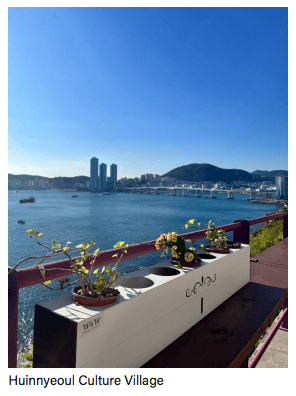
The city came alive during the BTS Yet to Come in Busan concert, where the biggest K-pop Boyband In The World, Bangtan Sonyeondan (BTS) transformed the atmosphere entirely.
What was once still became electric.
Crowds gathered from across the world, languages blended into one shared excitement, and for a moment, Busan felt like the centre of something much bigger.
I expected it to feel overwhelming.
It didn’t.
Because even at its loudest, Busan remains grounded. There’s an ease to it, a sense that everything, no matter how big, still belongs.
And maybe that’s what makes it special.
It adapts without losing itself.
Somewhere between quiet temples, hesitant steps on glass walkways, unexpected friendships, and a concert that brought the world together, Busan became more than a destination.
It became a feeling.
Not loudly. Not dramatically.
But just enough to make you wonder when you’ll return.