It’s one of those places which, if you’re heading there from Malaysia for a holiday, you’ll almost always need to mention it twice to friends for clarity. “Oh, Sarawak,” they’ll possibly say, and you’ll have to reply, “No, not Sibu. I’m going to Cebu. The one in the Philippines.” In truth, the pronunciation of the two similarly named cities is meaningfully different (SEE-boo vs SEH-boo), but most people seem to pronounce them the same. But as far as actual destinations go, Sibu and Cebu could hardly be more distinct from one another.

Cebu, located almost 600 km southeast of Manila, occupies a central place in the story of the Philippines. Long before the arrival of European explorers, it was already a thriving trading port, linked to regional networks that stretched across Southeast Asia and into China. Its natural harbour and strategic location made it an important hub, a role it continues to play today
A BRIEF HISTORY
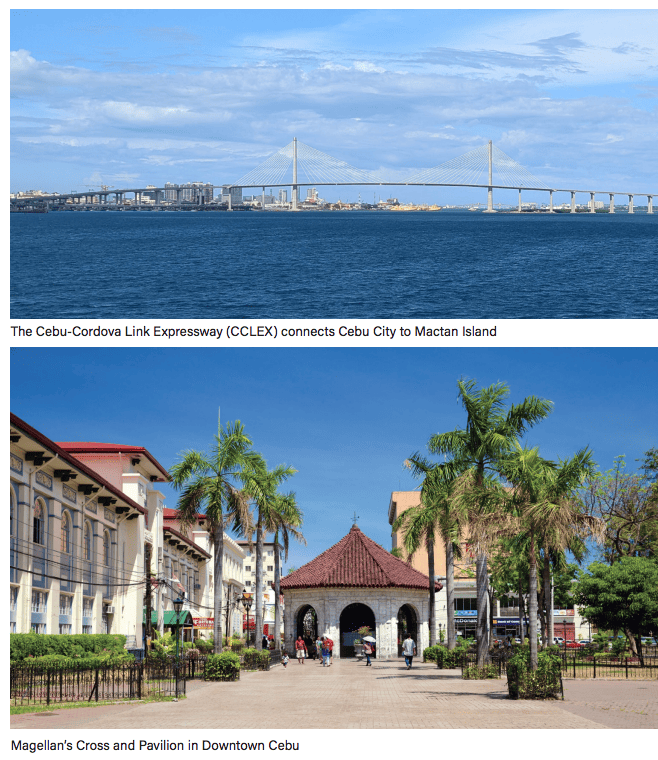
The island entered global history in 1521, when Ferdinand Magellan landed on its shores. Though Portuguese, Magellan was exploring on behalf of the Spanish government, and his arrival marked the beginning of Spain’s long colonial influence in the Philippines, though certainly not without resistance. The Battle of Mactan, where local chieftain LapuLapu and his troops defeated (and killed) Magellan, remains a defining moment of national pride. Today, visitors can explore this layered past through sites such as Magellan’s Cross, Basilica del Santo Niño, and Fort San Pedro, all of which offer glimpses into Cebu’s colonial heritage.
Following the Battle of Mactan, Spanish ambitions in Cebu did not immediately take hold, but they were simmering nevertheless. The Spaniards returned with greater force in 1565 under Miguel López de Legazpi. This marked the formal beginning of Spanish colonial rule in the Philippines, with Cebu established as the first Spanish settlement and, briefly, the capital of the colony. It was during this period that Basilica del Santo Niño was founded, housing the revered Santo Niño de Cebu, a religious icon that continues to draw pilgrims and devotees from across the country. Unsurprisingly, Spain’s long period of rule would go on to shape Cebu’s urban layout, religion, and cultural identity for more than three centuries.
By the late 19th century, revolutionary sentiments were sweeping across the archipelago, and Cebu played its part in the broader push for independence from Spain. Following the Spanish– American War, control of the Philippines shifted to the United States, ushering in a new colonial chapter. American influence introduced public education, infrastructure development, and a greater emphasis on English, elements that remain embedded in Cebuano society today.
During World War II, Cebu was occupied by Japanese forces before – much like Manila – the city was liberated by combined Filipino and American troops in 1945. In the decades that followed independence in 1946, Cebu steadily evolved into a major economic and cultural hub in the Visayas, balancing its deep historical roots with a more contemporary identity.
CEBU TODAY
Modern Cebu is a dynamic blend of old and new. Cebu City, often referred to as the “Queen City of the South,” is one of the country’s most important urban centres. It serves as a commercial, educational, and cultural hub, with a skyline that continues to evolve. Shopping malls, business districts, a major casino development, and a thriving food scene sit alongside centuries-old churches and heritage structures, creating a city that feels both grounded and forward-looking.
Yet for many travellers, Cebu’s greatest appeal lies beyond the city limits. The island is a gateway to some of the Philippines’ most celebrated natural attractions. Pristine beaches, coral reefs, and island-hopping excursions are all within easy reach. To the south, waterfalls such as Kawasan Falls draw visitors with their vivid turquoise waters, while Moalboal is known for its remarkable sardine run and accessible dive sites. Whale shark encounters in Oslob remain a popular – if sometimes ethically debated – draw.
Mactan Island, connected to Cebu City by bridges – including the newest one, the impressive CebuCordova Bridge – has emerged as a focal point for leisure travel. It is here that many of the region’s top resorts are located, offering a more relaxed coastal setting without sacrificing convenience. The proximity to Mactan-Cebu International Airport, which is also located on the island, means travellers can transition from arrival to beachfront in a matter of minutes, an advantage that few destinations can match.
The tourism offering in Cebu is broad and accommodating. Highend resorts, boutique hotels, and family-friendly properties cater to a wide range of preferences, while the island’s well-developed infrastructure makes it relatively easy to navigate. English is widely spoken, and we found the warmth of Filipino hospitality to be evident across the service spectrum, from high-end resorts to local eateries.
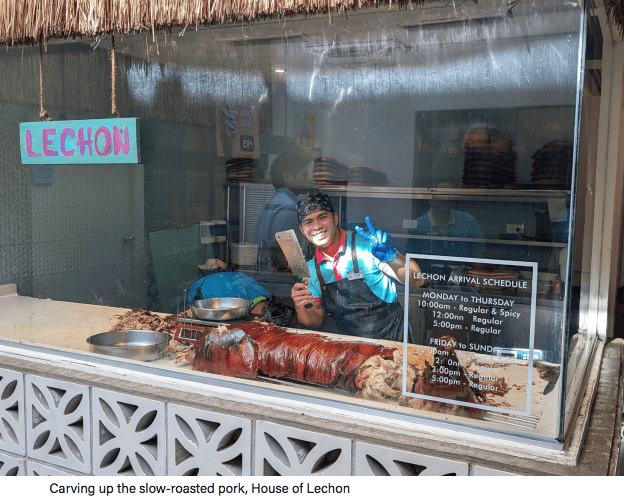
Cuisine is another highlight. Cebu is particularly famous for its lechon, widely regarded as some of the best slow-roasted pork in the Philippines, with crisp skin and deeply flavoured meat, as the meat is stuffed with herbs, including lemongrass, scallions, bay leaves, and other fresh leaves. This style of preparation in Cebu (Cebu lechon, or Visayas lechon) is distinct from that in Manila, and is well-known and beloved throughout the Philippines. Beyond that, seafood features prominently, often prepared simply to let freshness take centre stage. The dining landscape ranges from casual roadside spots to polished restaurants within hotels and resorts.
CHECKING IN: A RELAXING STAY IN CEBU
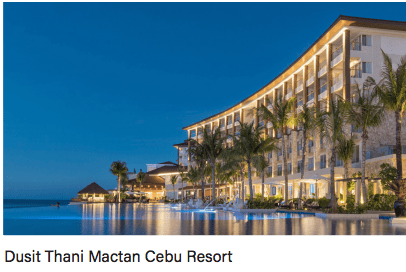
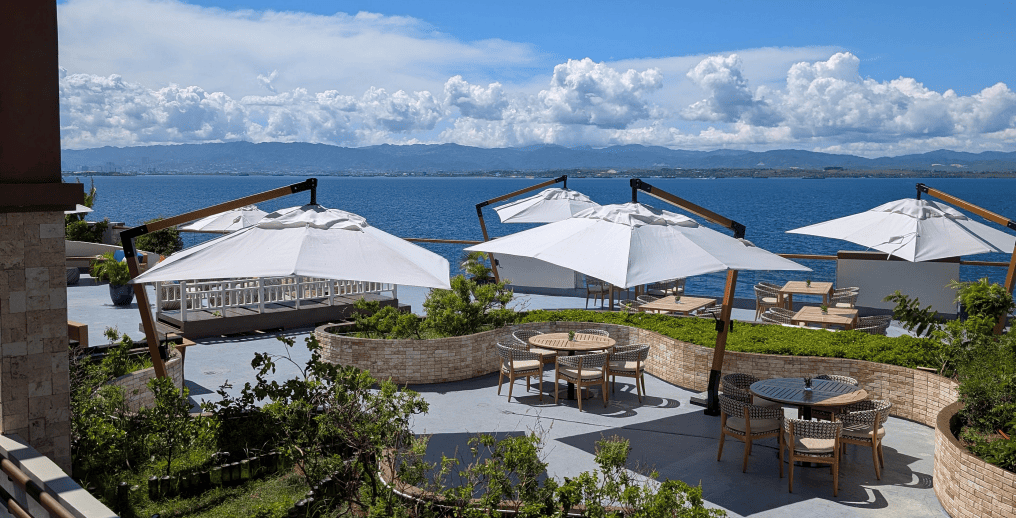
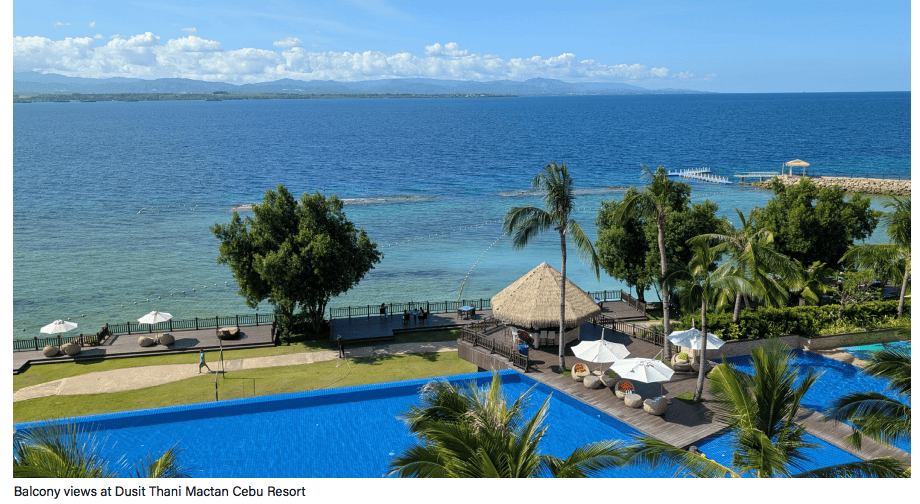
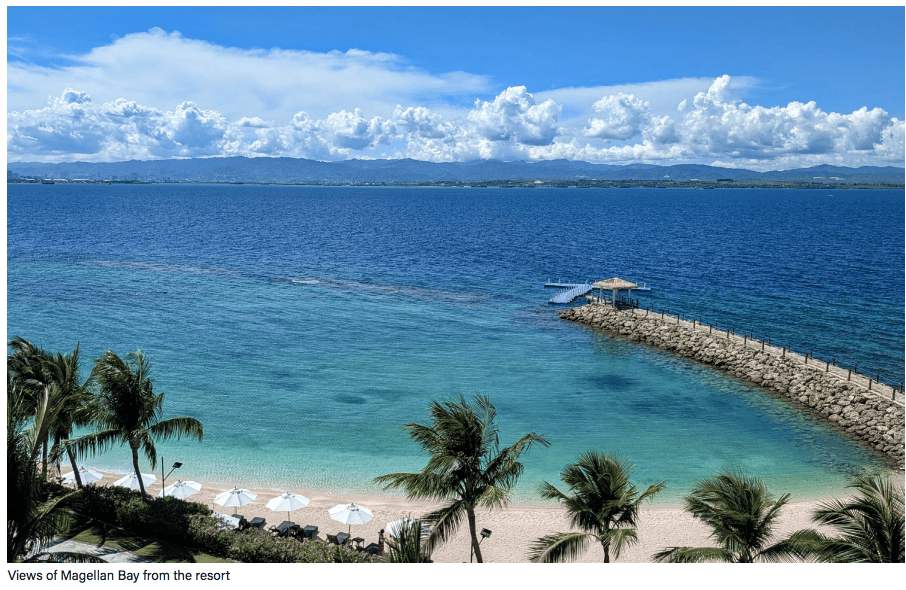
We recently stayed at the sprawling Dusit Thani Mactan Cebu Resort, located on the northeastern tip of Mactan Island, called the Punta Engaño Peninsula. This favoured location means guests enjoy the beautifully clean waters of Magellan Bay, white sands, and lovely views across the water to Cebu City and the mountains beyond.
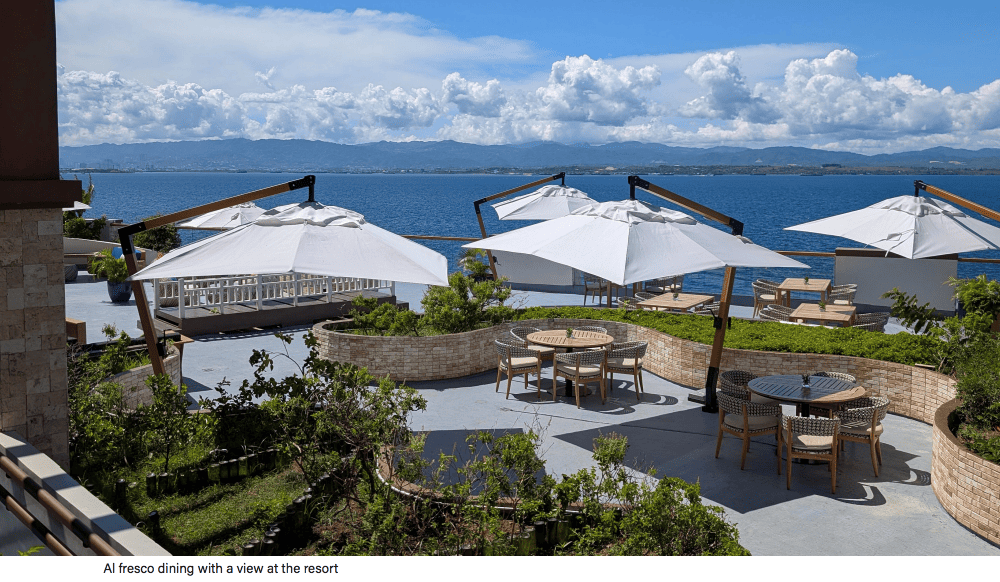
The Dusit Thani Mactan Cebu Resort brings a well-regarded and polished Thai hospitality brand into a distinctly Cebuano setting. With a generous beachfront estate, and uninterrupted views across the Hilutungan Channel, Dusit Thani here is designed as a self-contained retreat. Its architecture leans more towards contemporary, softened by warm tones and subtle Southeast Asian accents, while expansive open spaces, high ceilings, and generous glazing make the most of the coastal light.
There’s also plenty of event space, and the sprawling seafront grounds of the resort mean that guests never feel crowded. We saw some sizeable tour groups coming in, all welcomed with local dance and singing performances in the resort’s vast open-plan lobby. But given all the space available, the groups easily blended in. Whether at the restaurants, at the pool, or on the beach, it always felt like there was plenty of space to breathe.
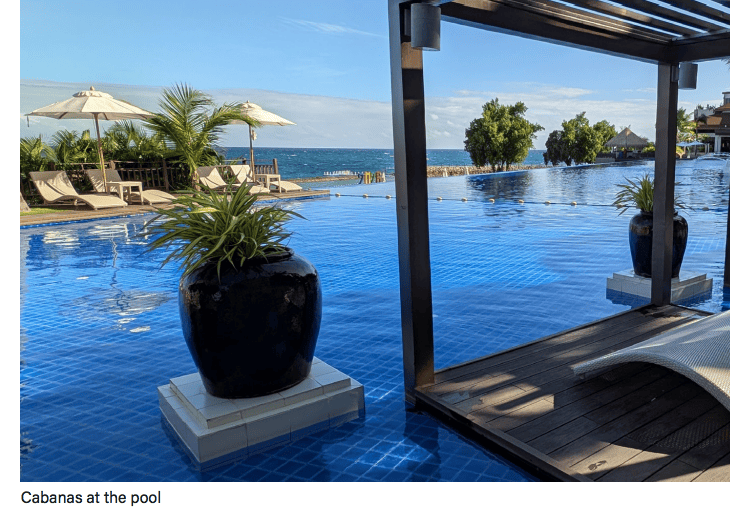
The property features over 270 rooms and suites, many with seafacing balconies, alongside a strong mix of leisure facilities including one of the largest infinity pools in the area, a full-service spa, tennis and pickleball courts, a club lounge, and multiple dining venues.
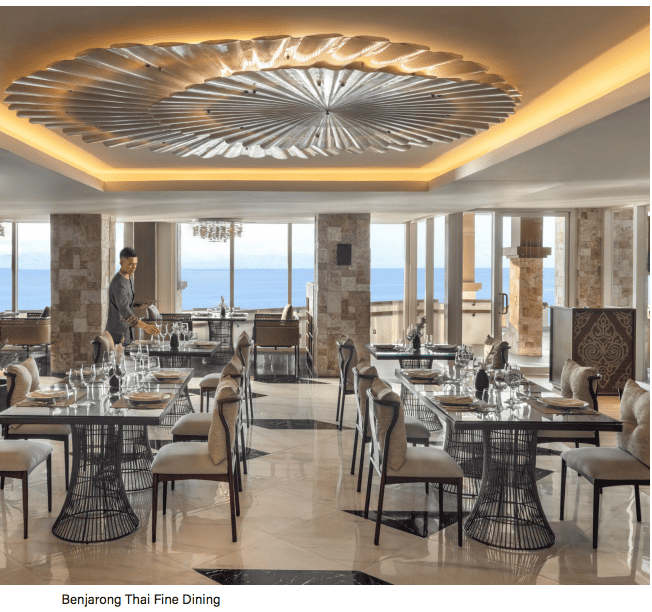
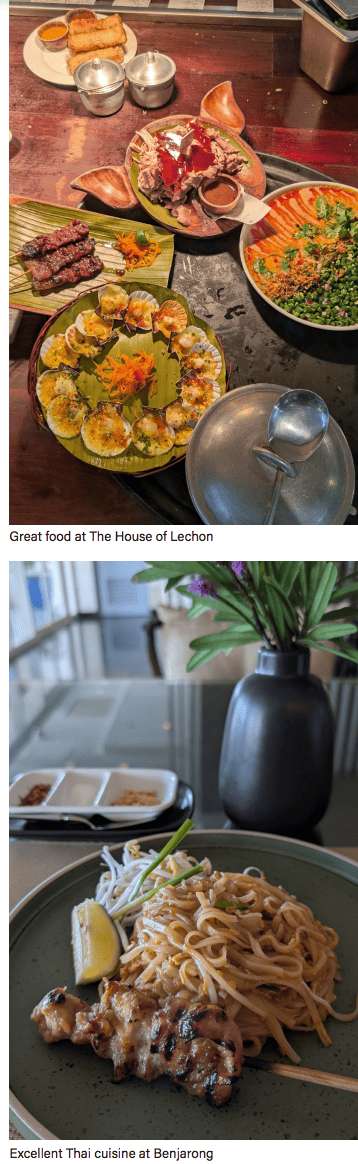
We particularly enjoyed Benjarong, the resort’s Thai fine dining outlet, which we dined at one day for lunch. A set three-course menu was a good way to go, and each course offered a few options. The food was outstanding, and the gracious hospitality Filipinos are known for was on full display throughout the meal.
In terms of the overall accommodation experience, the resort positions itself comfortably between upscale leisure and family-friendly accessibility. The dining is easily a highlight, with not just the aforementioned Thai cuisine standing out, but wonderful breakfasts each day, and a seaside Cebuano BBQ night that, while enjoyable, was accompanied by fairly gusty onshore winds throughout the meal! During the day, some may just prefer to lounge poolside or on the resort’s compact white sand beach, but for adventurers, watersports options provide access to Mactan’s wellknown marine environment.
The resort’s location, about 25 minutes from Mactan-Cebu International Airport, makes it both convenient and slightly removed from the busier resort clusters, lending it a more relaxed, private feel that suits both short breaks and longer, restorative stays. The rooms are contemporary and fairly straightforward. We enjoyed the nice balcony overlooking the beautiful pool on to the sea beyond, and found everything in the room to be completely satisfactory.
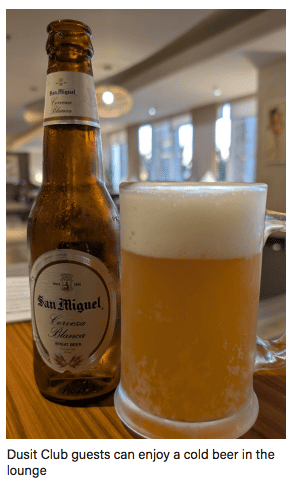
Dusit Thani also has a spacious club lounge that, at least during our stay, was seriously underutilised. Given the lovely range of food, cocktails (almost exclusively rumbased to underscore the tropical nature of the resort, perhaps), and cold beers on offer during the nightly canapé and cocktail hours, we were indeed surprised to not see more guests availing themselves. That said, lounges like this do tend to be more popular in city hotels, but we were nevertheless impressed with the club lounge and once again, thought the service and hospitality was very good.
On the same level as the lounge is the resort’s spa, and it’s both spacious and serene. Treatments here range from facials to full body massages, and if that’s your thing while on holidays, we can definitely recommend indulging while here.
For travellers based in Malaysia and across Southeast Asia, Cebu is an accessible escape. Flight times are manageable, and the destination offers a balance that is sometimes hard to find – a mix of cultural depth, natural beauty, and modern comfort. It is equally suited to a short break or a longer, more exploratory stay
We liked staying on Mactan Island, and had the traffic been more kind to us, the one excursion we took to Cebu City – which was still nice enough – would honestly have been far more enjoyable. We only had three nights on the trip, and had to spend a fairly large chunk of an afternoon getting to the city. While there, however, we went to the House of Lechon (which has a few outlets), likely one of the most well-known lechon restaurants in Cebu. The food was amazing, and the hospitality was over-the-top terrific. You can tell they’re very used to welcoming visitors here, though it was also packed with locals – always a good sign when you’re deciding where to eat while travelling!
Cebu was a very nice escape for us, and an easy one from KL, too, as we flew with Firefly’s new direct service. The combination of history, accessibility, and resortdriven leisure nicely sets the stage for resort properties like Dusit Thani Mactan Cebu. With its enviable setting along the beautiful coastline, it reflects the broader appeal of Cebu itself: a place where heritage and hospitality meet, and where the pace of life can shift, even if it’s only for a few days.