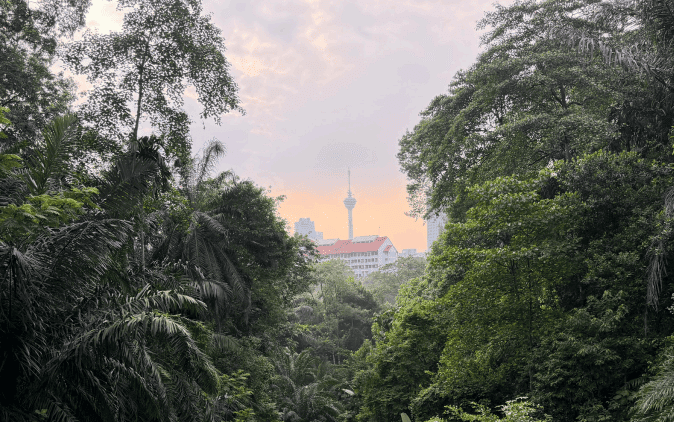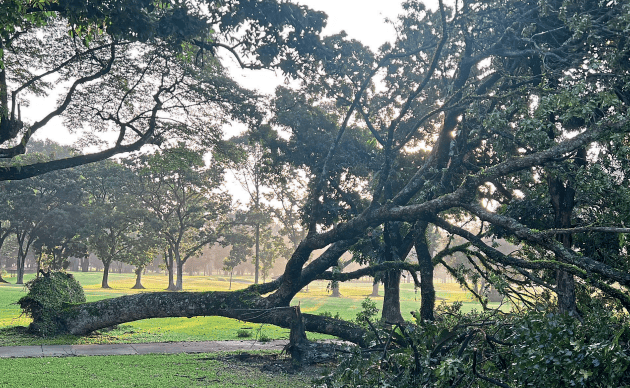
The Royal Selangor Golf Club recently organised its “Nature Walk: Trees for the Birds” programme, bringing Members on an educational and immersive journey through the Old Course landscape on 6 May 2026.
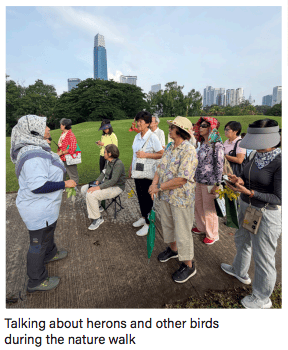
Led by the Club’s horticulturist, the walk introduced Members to various tree species that play an important role in supporting bird life by providing food, shelter and nesting habitats. Throughout the morning, Members not only discovered fascinating botanical facts, but also developed a deeper appreciation for the biodiversity and natural ecosystem surrounding the Club grounds.
MEANINGFUL REFLECTIONS
It was a pleasant morning, with light rain falling steadily around 7.00 am as Members gathered for the walk. A gentle breeze swept across the golf course while they arrived and registered for the session.
While waiting for the walk to begin, Members shared stories and experiences about nature and trees from different places they had visited. One of the Members, Mas, expressed interest in organising a future nature walk outside the Club for a richer experience, suggesting destinations such as Royal Belum and other locations known for their unique natural heritage.
Zuraidah also shared a documentary she had watched about one of the oldest trees in Southeast Asia, located in Tasik Kenyir and known as Pokok Melunak. The tree is believed to be approximately 300 years old, with a trunk so large that about 25 people are needed to hug it.
The conversations soon turned towards the fascinating relationship between people and nature. Some Members shared the belief that when a golf ball accidentally strikes a tree, one should apologise to the tree — otherwise, the next shot may hit another tree, and then another. Others mentioned that in the forest, tapping on a tree can help rescuers locate someone who has become lost. These reflections reminded everyone how deeply nature is connected to our everyday lives, even while playing golf.
REGISTRATION AND BRIEFING
The session began with a short briefing on the stations that would be visited during the walk. Members were informed that there would be six stations in total, including a visit to the nesting area of herons.
The horticulturist introduced the itinerary and shared several interesting facts about the featured tree species. A few short videos were also shown beforehand to spark curiosity and help Members better appreciate the trees before seeing them in person.
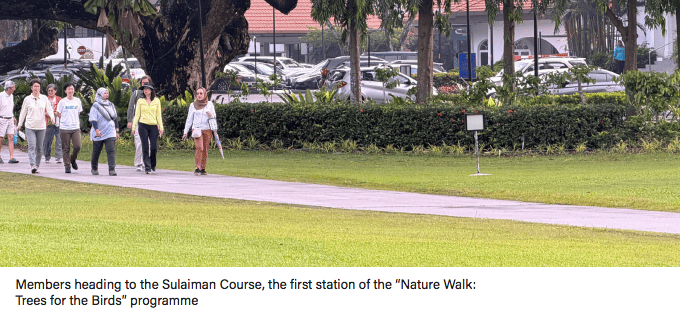
As the weather improved, the group proceeded to the first stop at the Sulaiman Course and continued along the buggy track near the 10th Hole of the Old Course.
FIRST STATION – GOLDEN SHOWER TREE
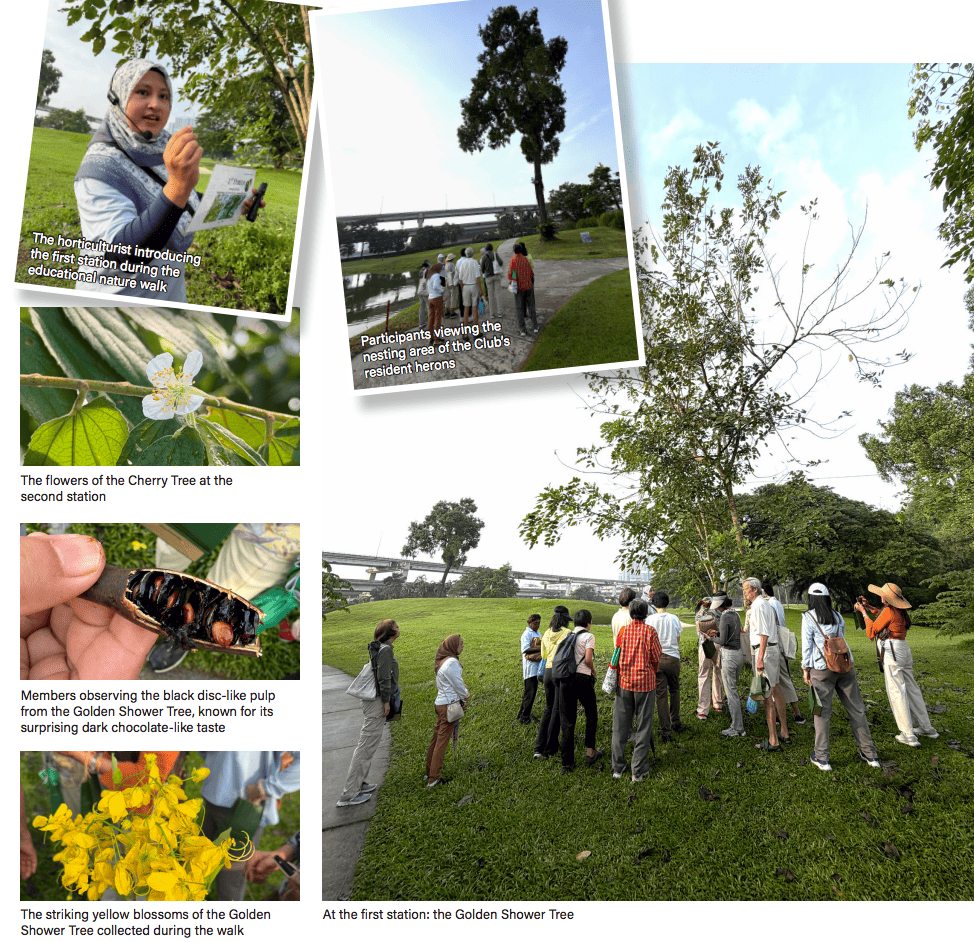
The first tree introduced was the Golden Shower Tree. Members were shown its long pipe-like fruit pods, which can grow up to 40 cm in length. The pods are extremely hard and usually need to be cracked open with a hammer to reveal the black disc-like pulp between the seeds, which surprisingly tastes similar to dark chocolate.
Besides its unique flavour, the tree is also known for its medicinal properties. Members learned that the pulp can be boiled or made into tea to help with stomach and skin infections.
The tree flowers during the hotter months, usually from April to October, producing striking yellow blossoms while shedding many of its leaves. It was also shared that the Golden Shower Tree is the national flower of Thailand.
The beautiful yellow flowers were collected and distributed to Members, while several Members also brought seeds home to attempt germination themselves.
SECOND STATION – CHERRY TREE
The next stop featured the Cherry Tree, which brought back fond childhood memories for many Members.
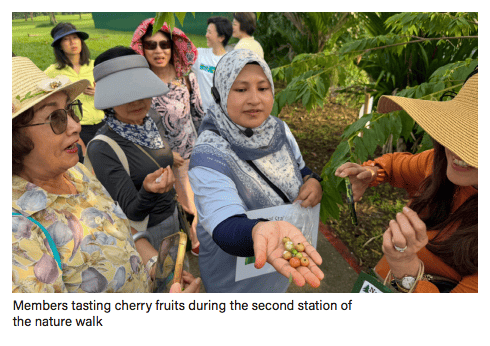
Its tiny fruits were collected from a nearby tree for tasting, with many describing the flavour as sweet and nostalgic, comparing it to popcorn berry and cotton candy. During childhood, the fruit was commonly enjoyed straight from the tree.
Members also learned how birds play an important role in dispersing the seeds, allowing the species to grow rapidly across many areas.
NESTING AREA OF HERONS
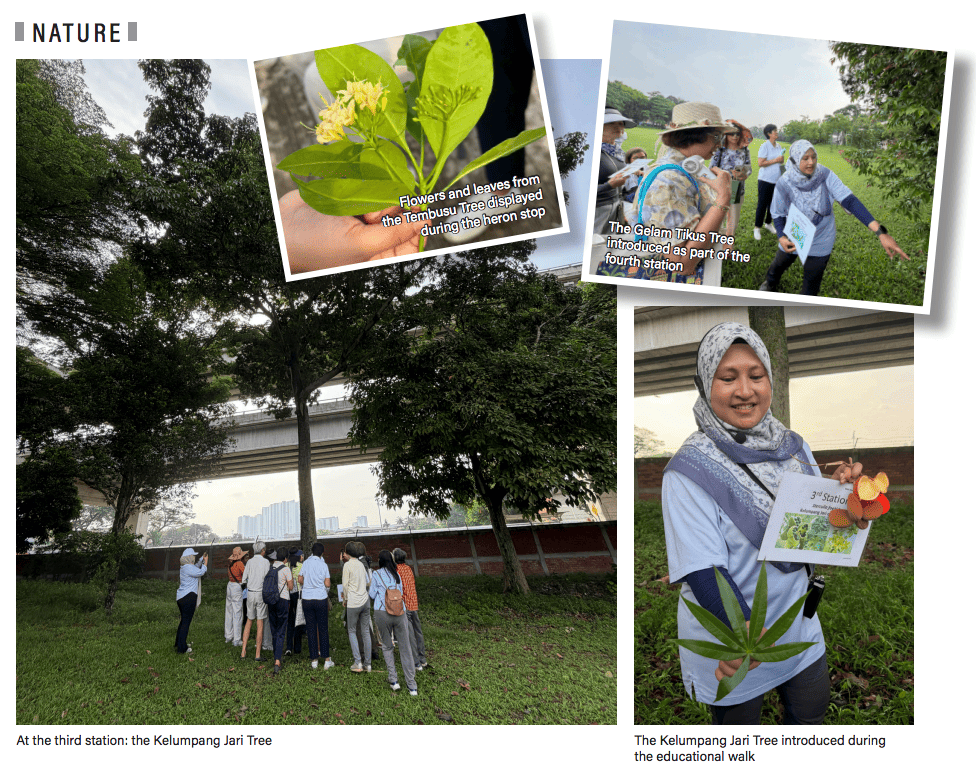
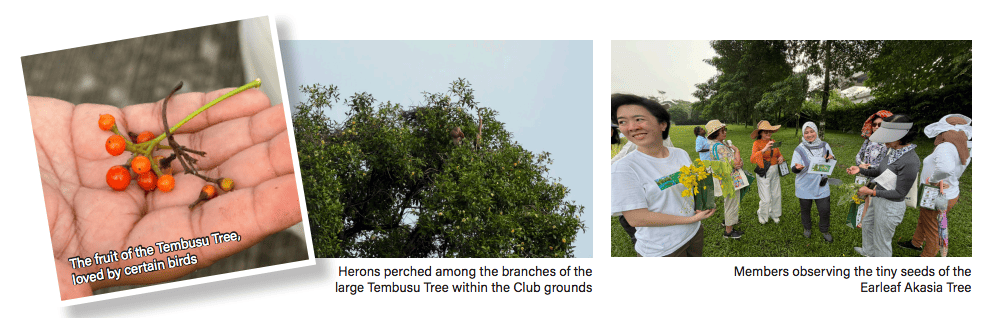
One of the highlights of the walk was the stop at a large Tembusu tree that supports the nesting activities of numerous herons.
A drone was flown above the tree, revealing nests and eggs hidden among the branches. Members watched in fascination as the herons repeatedly carried twigs back and forth to build safe homes for their young.
The flowers and fruits of the Tembusu tree were also introduced. Some Members tasted the fruit, although it was noticeably more bitter compared to the sweet cherry fruit sampled earlier.
As the walk continued, a giant monitor lizard unexpectedly crossed the path. Since it was undisturbed by the group’s presence, Members managed to capture photographs from a close distance. Stories were also shared about monitor lizards occasionally fighting each other to establish dominance within The Royal Selangor Golf Club grounds.
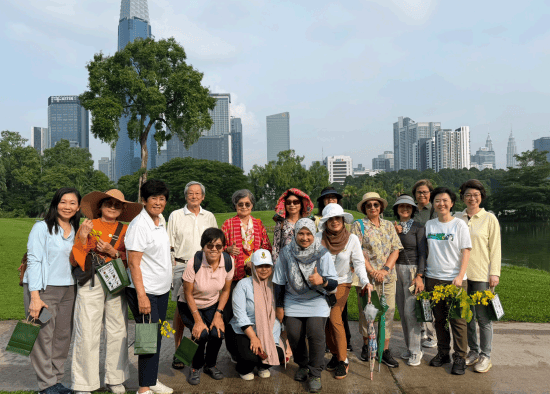
The group later stopped for a photo session overlooking the scenic lake at the 18th Hole of the Old Course, with a lone tree and the TRX building creating a picturesque backdrop.
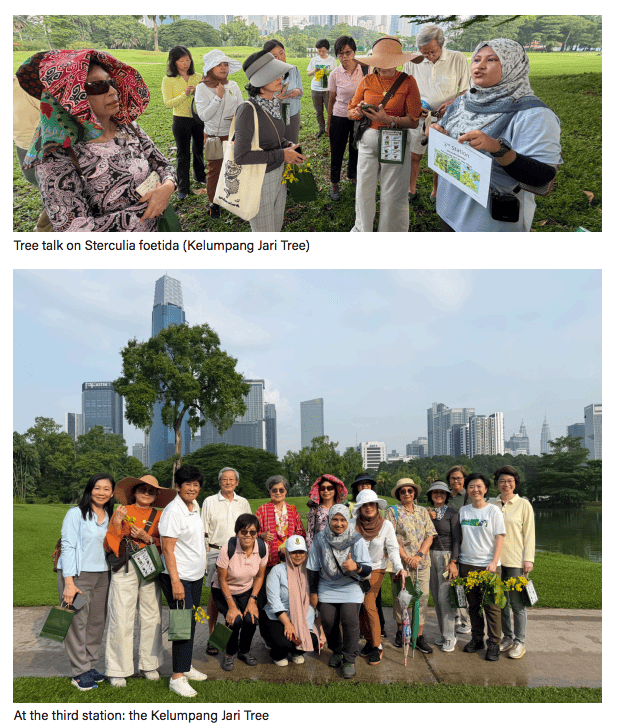
THIRD STATION – KELUMPANG JARI
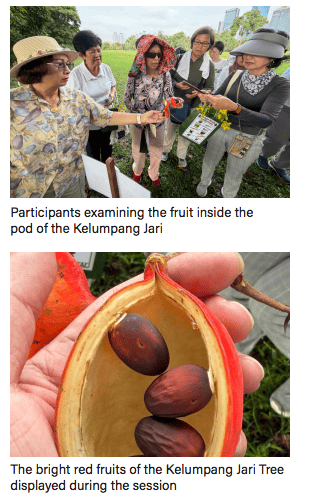
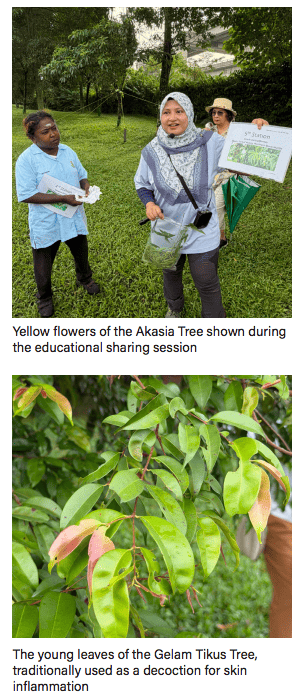
The next tree introduced was the Kelumpang Jari, recognised for its young leaves that resemble fingers or the shape of a palm.
Members were particularly fascinated by its bright red fruits, which split open when ripe to reveal dark seeds, also known as Java olive seeds. They were informed that the seeds are toxic if eaten raw and must first be roasted before consumption.
Another interesting feature of the tree is its natural defence mechanism, where it releases a smell similar to rotten meat to deter animals.
Members also learned that a natural jelly-like gum harvested from parts of the trunk can be dried and used in sweet dessert drinks, a practice commonly found in Vietnam.
FOURTH STATION – GELAM TIKUS
The walk then continued to the Gelam Tikus tree, a species from the Syzygium genus commonly associated with “kelat”, meaning bitter.
Its small fleshy fruits are especially popular among birds, while the young leaves are traditionally used in herbal preparations to help treat skin inflammation and related conditions.
FIFTH STATION – EARLEAF AKASIA
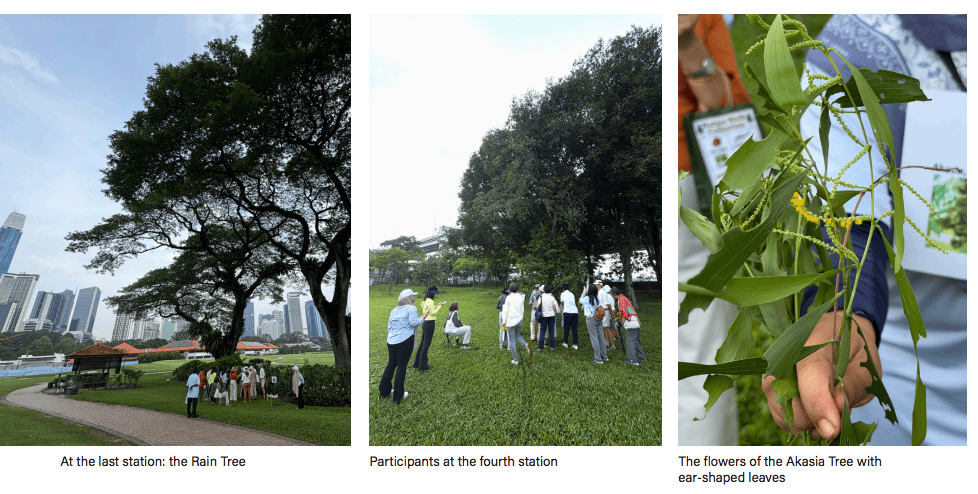
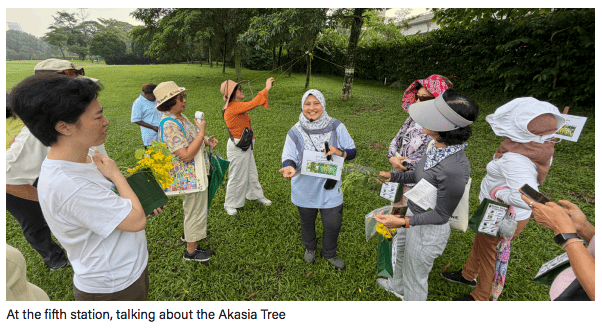
The next station featured the Earleaf Akasia, named after the ear-shaped structure of its leaves.
Members learned that this species is now becoming increasingly rare within The Royal Selangor Golf Club grounds, and the remaining tree is currently being closely monitored.
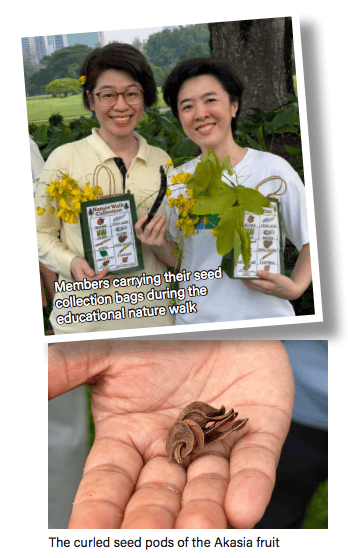
The horticulturist also demonstrated the tree’s tiny seeds, explaining that approximately 60,000 seeds are required to make up just one kilogram. Members were also shown its yellow flowers containing sweet nectar.
SIXTH STATION – RAIN TREE
The final station introduced the Rain Tree, named for its unique behaviour of folding its leaflets during cloudy weather, rainfall and at night, allowing rainwater to pass through the canopy.
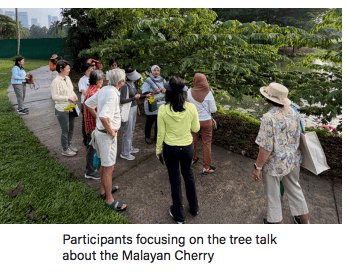
Its wide spreading canopy provides shelter during harsh weather, while the tree’s seed pods serve as a food source for birds. Members also learned how the pinkish flowers attract insects and support local biodiversity.
Many Members collected the seeds and placed them into their nature walk bags to bring home and attempt germination themselves.
QUIZZES AND LIGHT REFRESHMENTS
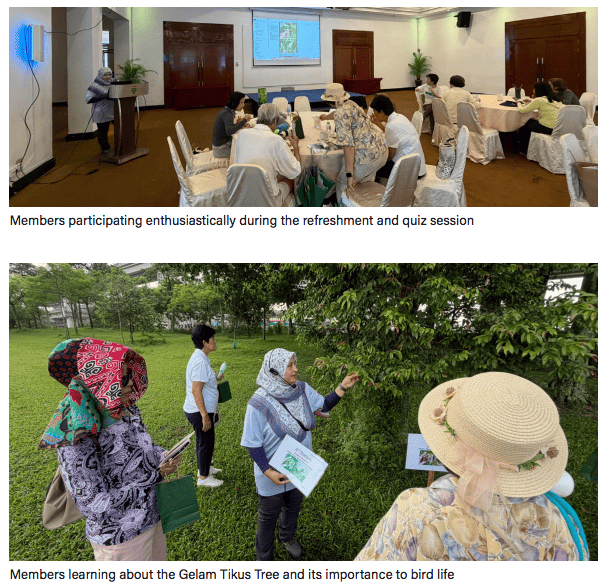
During the refreshment session, Members watched several short videos demonstrating seed germination techniques using the seeds introduced throughout the walk. The demonstrations encouraged many of them to begin propagating plants on their own.
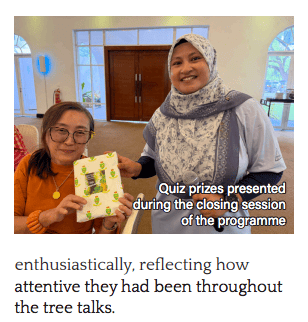
A short quiz session followed, with Members answering enthusiastically, reflecting how attentive they had been throughout the tree talks.
LOOKING FORWARD TO THE NEXT NATURE WALK
The horticulturist concluded the session by announcing that the next nature walk is expected to take place in early July and will focus on exploring the wetland and reserved forest sanctuary near the 11th Hole of the New Course during the Tuesday course closure.
One Member described the event as educational and expressed excitement about joining future nature walks.