A Movie Review of Michael (2026)
Just call my name and I’ll be there…” The moment I’ll Be There echoed through the cinema hall, I felt something shift quietly inside me. It was not merely nostalgia or another familiar melody from another era. It felt deeply personal, almost as though Michael Jackson’s music had somehow reached into the hidden corners of my heart that I rarely allow anyone to see.
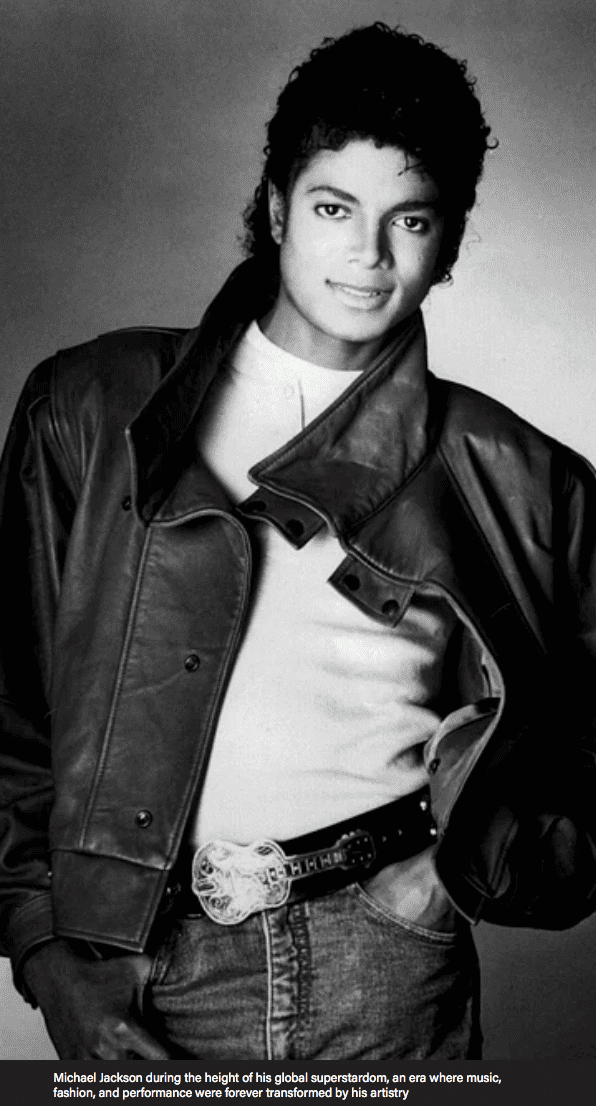
Watching Michael was not merely watching a movie. It felt like revisiting emotions that had been sleeping quietly for years. Directed by Antoine Fuqua, Michael is more than a musical biopic. It is an emotional journey into the life of a man the world idolised, misunderstood, loved, criticised, and ultimately never stopped listening to. By the time the film ended, I no longer saw Michael Jackson merely as “The King of Pop.” I saw the fragile human being behind the legend.
JAAFAR JACKSON – MICHAEL REBORN
I must honestly admit that I had doubts when I first heard Hollywood was recreating Michael Jackson’s story. Some legends simply feel impossible to replicate. How do you recreate a man whose presence, voice, movements, and aura once felt larger than life itself?
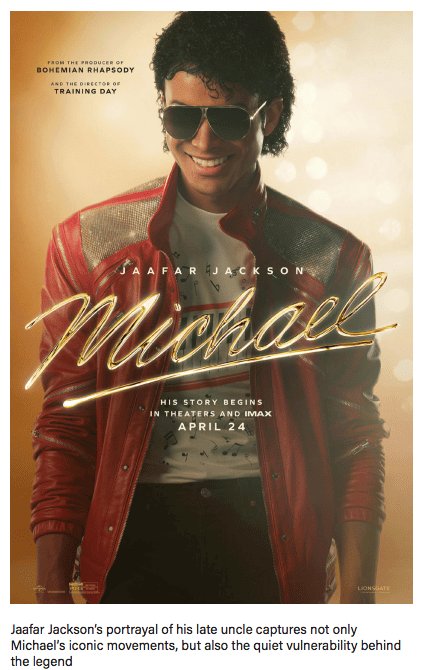
Then Jaafar Jackson appeared on screen. And suddenly, the doubts disappeared. The softspokenness. The gentle eyes. The quiet shyness. The graceful walk. The body movements. Even the subtle lowering of his head and the way he carried himself felt hauntingly familiar. There were moments where I genuinely forgot I was watching an actor. It honestly felt as though Michael Jackson had somehow been reborn through his nephew. Jaafar Jackson did not merely imitate Michael. He understood him. That is what made the performance extraordinary.
Director Antoine Fuqua deserves immense credit for refusing to portray Michael as an untouchable icon. Instead, the film allows him to feel vulnerable, lonely, gentle, and painfully human. Every performance scene felt alive, especially Billie Jean, Beat It, Thriller, Human Nature, Bad, and Don’t Stop ’Til You Get Enough. The Wembley-inspired Bad Tour scenes felt electrifying, but beyond the spectacular performances, Jaafar managed to capture something even more difficult to portray — Michael’s loneliness.
THE JACKSON FIVE — BROTHERHOOD BEFORE FAME
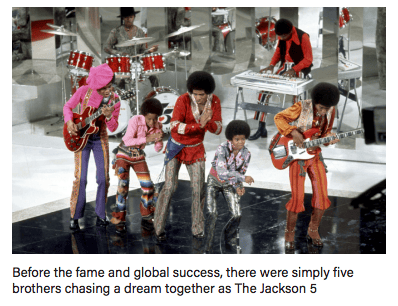
One of the most beautiful parts of the film was its portrayal of The Jackson 5. Before the superstardom, before the isolation, before the world knew Michael Jackson as a global icon, there were simply five brothers chasing a dream together.
The movie beautifully captured the warmth and brotherly love shared between Jackie, Tito, Jermaine, Marlon, and Michael. Yes, there was pressure from Joe Jackson’s strict discipline, but there were also moments of laughter, teasing, rehearsals, and genuine family warmth that gave the movie its emotional heart.
Watching the young Jackson brothers perform songs like ABC, I Want You Back, The Love You Save, Who’s Lovin’ You, and I’ll Be There filled the cinema with innocence and nostalgia. Those scenes reminded me that Michael Jackson’s story began not with fame, but with family.
And somehow, the movie reminded me how deeply Michael Jackson’s music had always been part of my life growing up.
THE MOONWALK — THE MOMENT THE WORLD STOOD STILL
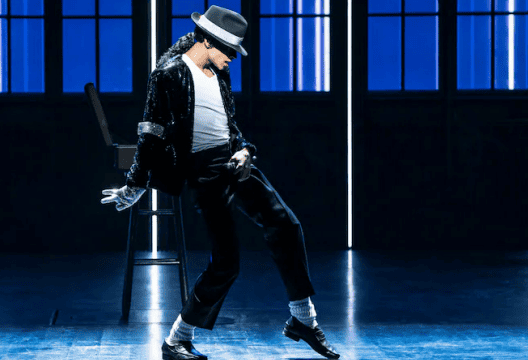
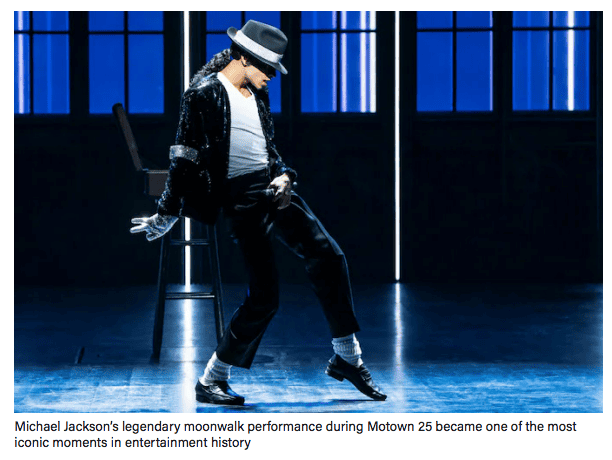
Of course, no story about Michael Jackson would ever feel complete without the moonwalk. The recreation of the legendary Motown 25 performance of Billie Jean was breathtaking. The moment Michael slowly stepped backwards across the stage in his iconic black sequined outfit, white socks, and black loafers, the cinema hall around me became silent.
Even though the world already knows the moonwalk, the scene still felt magical. It reminded me that there are certain moments in history where an artist no longer merely performs. They become immortal. The moonwalk became more than choreography. It became a symbol of elegance, mystery, confidence, and artistic genius. The sequence carried even greater emotional weight knowing the history behind it.
At the time, MTV had reportedly refused to heavily feature Billie Jean, reflecting the racial barriers that still existed within the music industry during the early 1980s. Walter Yetnikoff, the President of CBS Records, reportedly fought fiercely for Michael Jackson, threatening to pull CBS artists from MTV if the network continued sidelining Black artists and refusing to air Billie Jean. Yet Michael Jackson walked onto the Motown 25 stage and changed history forever. What followed was not merely a performance. It was rebellion through artistry.
The moment Michael glided backwards across the stage, the world stood still. Those few seconds of movement became one of the most iconic moments in entertainment history and helped force open doors that had long been closed to Black artists on mainstream music television. Michael Jackson did not ask permission to break barriers. He moonwalked through them.
FROM LAUGHTER TO LEGEND — THE BIRTH OF THRILLER
One detail in the movie that I unexpectedly found adorable was Michael Jackson’s love for The Three Stooges. Amid all the fame, rehearsals, emotional struggles, and pressure, the film showed Michael quietly laughing while watching the classic comedy trio. Those scenes revealed something important about him.
Behind the superstar image was still a boy who loved innocence, humour, silliness, and childlike joy. Perhaps that explains why Michael connected so deeply with fantasy, amusement parks, cartoons, animals, and magical storytelling throughout his life. The movie cleverly used this softer side of Michael before transitioning into one of the most iconic moments in entertainment history — Thriller.
The transition itself felt cinematic and brilliant. One moment we see Michael enjoying old comedy and harmless laughter, and the next, the screen transforms into darkness, fog, horror imagery, and the unforgettable opening beats of Thriller. What followed was pure magic.
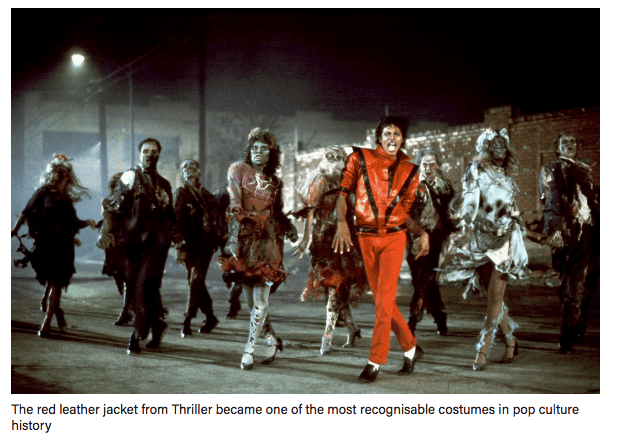
The Thriller sequence was absolutely electrifying. From the red leather jacket to the haunting atmosphere, glowing eyes, zombie choreography, and cinematic camera work, the film recreated the legendary music video with incredible energy. What impressed me most was how the movie reminded audiences that Thriller was never merely a song. It changed the music industry forever.
Michael Jackson transformed music videos into cinematic experiences. He was no longer simply creating songs. He was creating worlds.
THE SONGS WERE CHAPTERS OF HIS SOUL
One thing this movie did beautifully was allowing the music itself to narrate Michael’s life. The soundtrack did not feel like nostalgia inserted for entertainment purposes. It became emotional storytelling.
When Human Nature played, I felt the loneliness behind the fame. Even Don’t Stop ’Til You Get Enough, with its infectious rhythm and energy, reflected the excitement of Michael stepping fully into his own identity as a solo superstar.
Even Beat It, one of Michael Jackson’s most energetic and iconic songs, carried a message far deeper than many realise. Beneath the explosive rhythm and legendary guitar solo was a warning against violence, gangs, pride, and destruction.
And although songs like They Don’t Care About Us were not part of the movie’s timeline, they remain powerful reminders of how Michael Jackson consistently used music to speak about injustice, pain, humanity, and the struggles of the world around him.
Michael Jackson constantly encouraged the world to choose peace, kindness, compassion, and healing over hatred and conflict. Perhaps that is why his music still feels timeless today. Because beneath the spectacle, Michael was always singing about being human.
THE PAIN BEHIND THE PERFECTION
What truly broke my heart in the movie was not the fame. It was Michael’s relationship with his parents. Joe Jackson was portrayed as controlling, harsh, and deeply demanding. The film showed how fear shaped Michael’s perfectionism. Every rehearsal, every performance, every mistake carried emotional weight. Yet in complete contrast stood Katherine Jackson — gentle, warm, protective, and emotionally safe. The emotional difference between both parents shaped Michael’s entire life.
One scene that stayed deeply in my mind was when Michael hired John Branca as his legal advisor. Michael looked at him quietly and said: “Your first task is to fire my dad.” That single sentence carried years of pain. Not anger. Not rebellion. Just emotional exhaustion from a son who had spent his life trying to survive impossible expectations.
ENCINO — WHERE THE DREAM BEGAN
The movie beautifully portrayed the Jackson family home in Encino, California — the famous Hayvenhurst estate. To the world, it represented success. A poor family from Gary, Indiana had finally made it. But behind the gates of Hayvenhurst, the film quietly revealed another truth: success does not always heal emotional wounds. Some of the most touching scenes happened there — rehearsals, family tensions, late-night creative sessions, quiet moments with Katherine, and Michael practising alone.
THE PEPSI ACCIDENT — THE BEGINNING OF THE PAIN
One of the most heartbreaking moments in the film was the recreation of the Pepsi commercial accident. During the filming of a Pepsi advertisement in 1984, pyrotechnics exploded too early while Michael was performing, causing his hair to catch fire. The scene was horrifying.
The panic, confusion, sparks, and Michael continuing to perform despite the pain made the moment incredibly difficult to watch. The cinematography became chaotic and claustrophobic, making the audience feel Michael’s fear in real time. Watching that scene, I suddenly realised something devastating. This was not merely an accident. It was the beginning of a slow emotional and physical decline that would follow him for the rest of his life.
THE QUIET BATTLE WITH HIS APPEARANCE
Another emotional layer the movie explored was Michael Jackson’s insecurity about his appearance, especially his obsession with his nose. There were scenes of him staring into mirrors, hiding parts of his face, and becoming increasingly dissatisfied with himself despite the world idolising him. The film did not portray this as vanity. It felt more like emotional damage that slowly evolved into obsession. And honestly, it was heartbreaking to watch someone loved by millions still struggling to love himself.
THE QUIET LOYALTY AROUND HIM
One thing I unexpectedly appreciated was how the movie portrayed Michael’s relationship with the people closest to him outside fame and family — especially his trusted bodyguards and drivers. Behind the superstar image was a deeply lonely man. The film showed quiet conversations in cars, moments of exhaustion, and people simply trying to protect him from the overwhelming chaos surrounding his life. Those scenes made Michael feel profoundly human.
NEVERLAND — THE CHILD HE NEVER GOT TO BE
The movie also touched on Michael’s deep connection to the story of Peter Pan and the idea of Neverland — a place where childhood never ends. Alongside scenes of Michael’s affection for animals, including Bubbles the chimpanzee, llamas, giraffes, and snakes, the film quietly revealed his longing to preserve innocence, imagination, and childlike wonder. And suddenly, Neverland no longer felt strange. It felt heartbreaking. Perhaps Michael Jackson was never searching for extravagance. Perhaps he was simply searching for the childhood he never fully had.

THE KIND SOUL THE WORLD OFTEN FORGOT
One of the most beautiful aspects of the movie was how it reminded audiences that beyond the fame and controversies, Michael Jackson was a deeply compassionate soul. The film showed him visiting children in hospitals, comforting them quietly, holding their hands, and trying to make them smile. There was no stage. No spotlight. Just kindness. And this was not merely for the movie.
Michael Jackson spent much of his life supporting charities, humanitarian causes, and children around the world. Songs like Heal the World, Earth Song, and We Are the World now feel even more emotional after understanding the man behind them.
“Heal the world, make it a better place…”.
That was not merely a lyric. It felt like Michael’s prayer for humanity.
FINAL VERDICT
The greatest achievement of Michael is not that it recreates the performances flawlessly. It is that the movie dares to show the fragile human being behind the legend. Combined with Jaafar Jackson’s astonishing performance, Michael becomes more than a musical biopic. It becomes a cinematic memorial to a man the world celebrated, misunderstood, loved, criticised, and ultimately never stopped listening to. And perhaps that is why, when the credits rolled, the cinema hall did not feel loud. It felt emotional. Almost as though the world was quietly remembering a soul that never truly stopped singing to us.
Even though Michael Jackson is now resting in peace, his voice continues to calm the world gently through music, kindness, and memories that refuse to fade.