George Town has never lacked atmosphere. Wander almost any street within the UNESCO-listed core and you’ll find old clan houses sitting beside hip cafés, incense curling from temple courtyards, and fading colonial façades quietly carrying the weight of generations. Yet despite Penang’s wellpolished tourism scene, genuinely characterful heritage hotels remain surprisingly difficult to pull off well.
Too often, we find old buildings that have been restored into spaces that feel overly staged or disconnected from the neighbourhoods around them. Others preserve the shell but strip away much of the soul. That is what makes the newly relaunched 1926 Heritage Hotel on Jalan Burma feel rather refreshing. It’s all done very nicely, to be sure, but there’s still a palpable link to the past that the property seeks to honour.
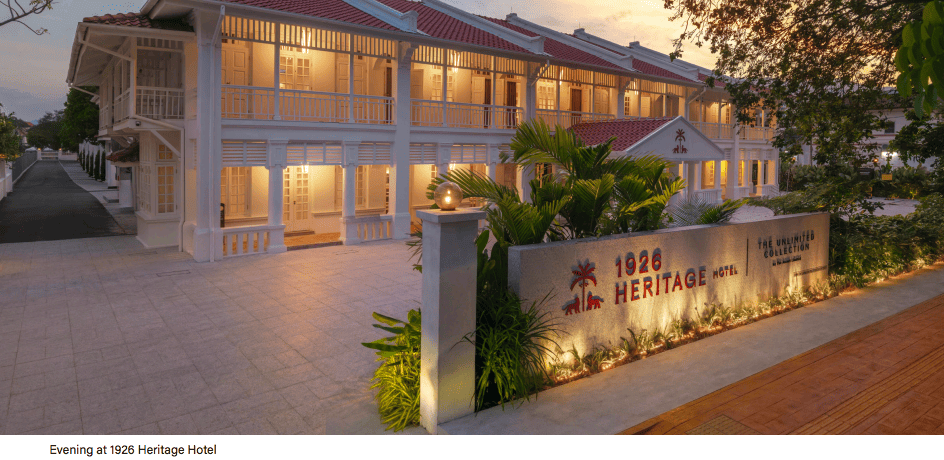
Reopened in April 2026 (and currently still in its soft-launch phase), the property marks exactly 100 years since the original buildings were first constructed as official residences for British administrative officers. Today, after a careful restoration, the hotel has entered a new life that feels respectful of its past without becoming hemmed in by it. The modern character is thoughtfully overlaid, so that the heritage ‘feel’ of the property isn’t completely lost, but rather accentuated.
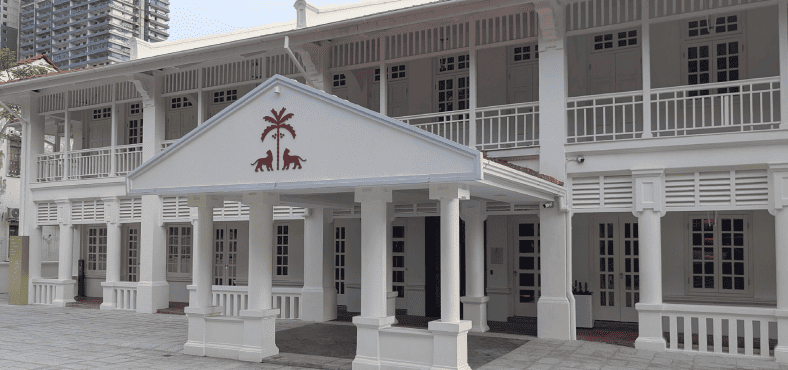
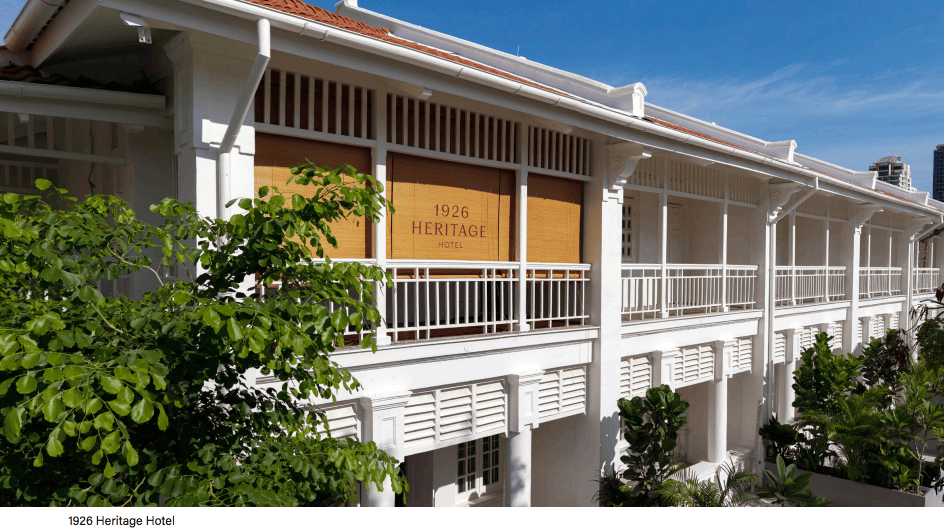
Occupying a leafy compound along one of George Town’s buzziest roads, the property immediately stands apart from many newer city hotels. There is space here – something increasingly uncommon in urban Penang. Broad verandas, tall windows, mature trees, airy corridors, and high ceilings all reflect an era when buildings were designed around tropical living rather than sealed environments and mechanical cooling.
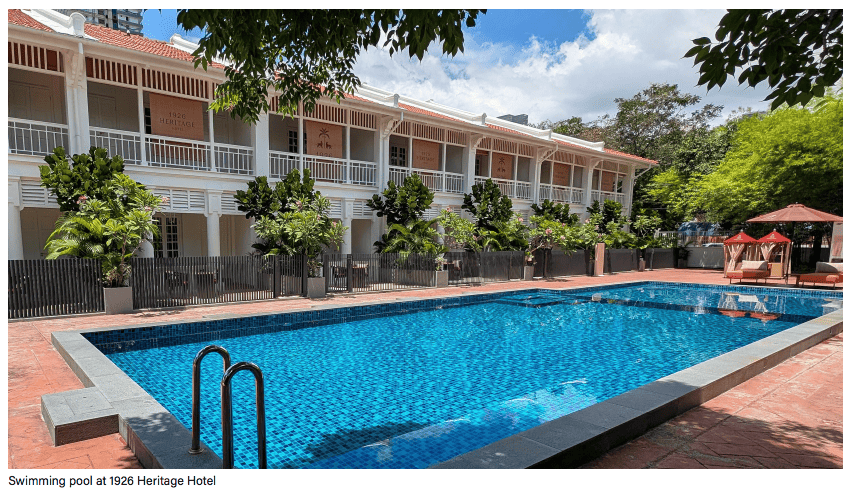
The restoration itself, led by a Singapore-based design practice that clearly understands the ethos of the Straits Settlement era, wisely resisted the temptation to overmodernise. Original masonry, timber staircases, wrought-iron balustrades, and structural details have been retained wherever possible, allowing the building’s age and personality to remain visible. Instead of polishing every surface into perfection, the designers appear to have understood that heritage often lies in texture, proportion, and atmosphere rather than decorative excess. But don’t misunderstand: the upscale nature of the restoration certainly shines through, but it doesn’t overwhelm the original character of the property. It’s a delicate balancing act, and we feel it was handled successfully here.
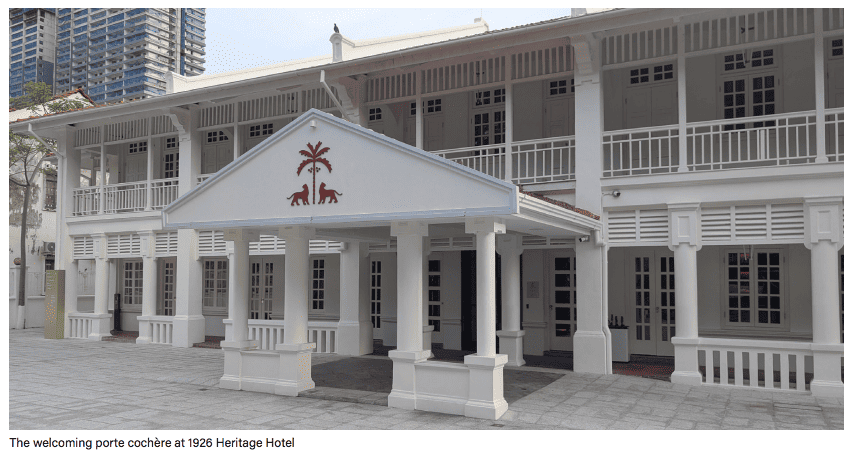
The hotel’s simple white-andbeige exterior reflects the AngloMalay architectural style once common during George Town’s colonial transitional period. It feels elegant without even becoming ostentatious. At the entrance, guests encounter the hotel’s recurring emblem – a palm tree flanked by two panthers – which subtly reappears throughout the property in artwork and detailing.
Inside the main bungalow reception area, the visual focal point is a striking straw-marquetry wall inspired by a French decorative technique. It gives the space a refined sense of craftsmanship while still feeling grounded in and connected to Penang’s tropical setting.
That sense of continuity becomes more and more apparent once guests step beyond the lobby. Indeed, for those who take the time to wander around the compound, it quickly becomes evident that the restoration was approached not simply as a commercial hospitality project, but as a tangible exercise of preserving Penang’s cultural fabric for future generations.
A HOTEL CONNECTED TO ITS SURROUNDINGS
One of the more appealing aspects of 1926 Heritage Hotel is that it does not isolate visitors from the city around it. Instead, the property seems intentionally woven into the surrounding neighbourhood. Viewed guestroom balconies on the upper floor, for example, residential row houses behind mature trees are immediately adjacent. Everything just blends comfortably together.
Just nearby are Nagore Square, Lorong Burma’s temples and heritage streets, as well as the marvellously creative energy around Hin Bus Depot, one of our long-favoured places to explore. More broadly, George Town itself remains one of Southeast Asia’s most fascinating urban environments precisely because it still feels lived-in rather than preserved solely for tourism, and 1926 Heritage Hotel taps into this almost effortlessly. Traditional kopitiams, old Chinese medicine halls, boutique bakeries, street murals, temples, and modern cafés all exist side by side in inimitable Penang fashion. The hotel’s location makes it easy to explore that layered cityscape on foot. We loved that a handful of hawker centres are very nearby, making it easy for local visitors to get their char kuey teow fix just as we did!
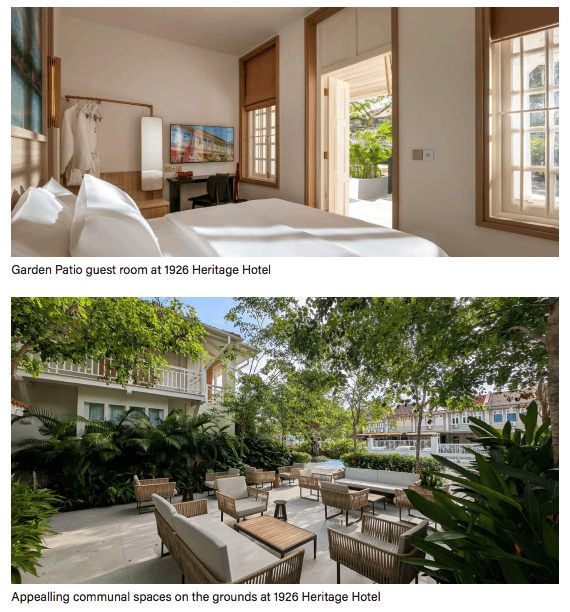
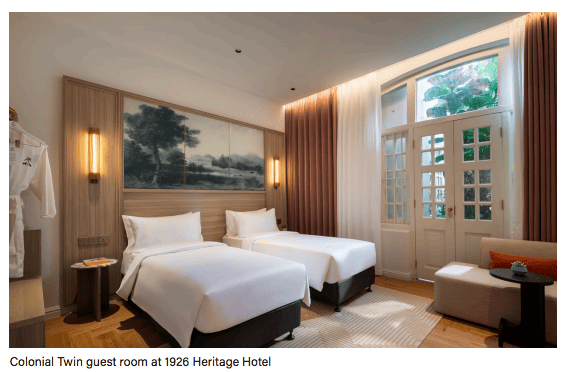
Inside the guest rooms, the storytelling continues through quieter details rather than staged historical theatrics. As one example, paintings depicting Penang during its Prince of Wales Island era appear behind bedheads, subtly referencing the island’s colonial history.
Accommodation ranges from Heritage Rooms to the considerably larger Straits Suite, which includes separate living and study areas. One particularly attractive option is the Heritage Garden Patio Room, a 52 sq m ground-floor space with a private patio and direct access to the pool area that’s framed by greenery. While the reimagined notes are easy to spot, it’s also accurate to say that the outside areas feel almost residential in character, offering a calmer and more intimate experience than many urban hotels manage to achieve.
Comfort levels are thoroughly modern, of course, but the property avoids the trap of becoming visually generic. Contemporary furnishings sit comfortably within the original architecture, allowing the building itself to remain the main attraction.
Dining also forms an important part of the hotel, though we didn’t get to experience the main restaurant this time. Root House by Gēn, the hotel’s Chinese bistro (gēn actually means ‘root’ in Chinese), is led by Chef Johnson Wong, whose acclaimed restaurant Gēn 根 returned to ‘Asia’s 50 Best Restaurants’ extended 51–100 list in 2026. Wong has become one of Penang’s most respected culinary names, routinely praised for elevating Malaysian ingredients and flavours while maintaining strong local identity. We’ll certainly look forward to dining here on our next visit!
Elsewhere, U-Bar offers a relaxed setting for evening drinks, while Heritage Collection by Daily Coffee serves casual all-day dining with both indoor and covered outdoor seating.
PENANG’S EVOLVING HERITAGE HOTEL SCENE
The reopening of 1926 Heritage Hotel also reflects the broader evolution of Penang’s hospitality scene over the past few years, one we’re quite pleased to see increasingly embraced and sought out by travellers.
When George Town first emerged as a major heritage destination following its UNESCO listing in 2008, many hotel projects understandably focused almost entirely on conservation. Today, however, the island’s accommodation landscape has become considerably more diverse, blending heritage with wellness, gastronomy, design, and contemporary luxury.
Several other recent openings illustrate that shift.
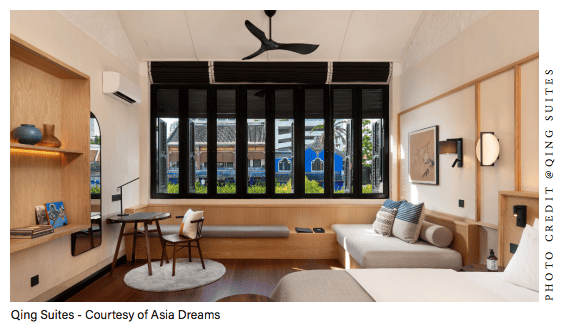
Across from the famous Blue Mansion on Leith Street, The Qing Suites occupies five restored terrace houses originally built in 1904 as servants’ quarters for the Cheong Fatt Tze household. Led by Shen Loh-Lim, son of renowned conservation architect Laurence Loh, the project preserves original terracotta flooring, salvaged timber, and traditional decorative craftsmanship while introducing just 13 spacious suites. Traditional Chinese Medicine wellness treatments further reinforce the property’s historical connections.
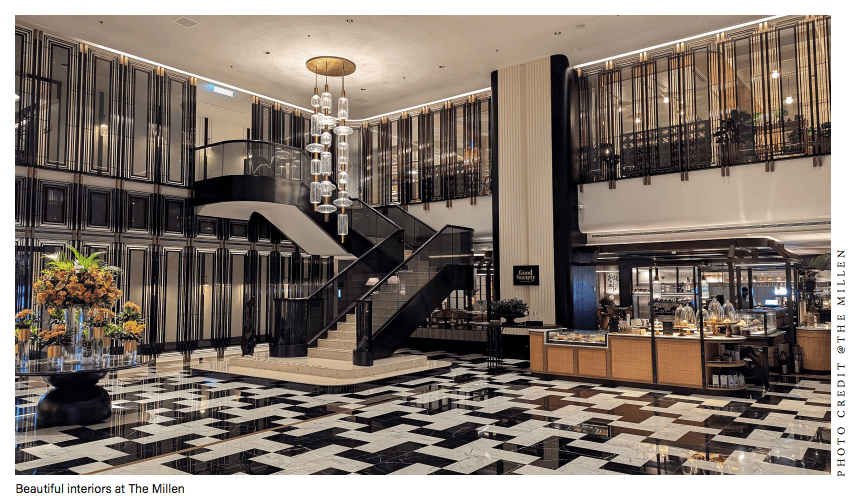
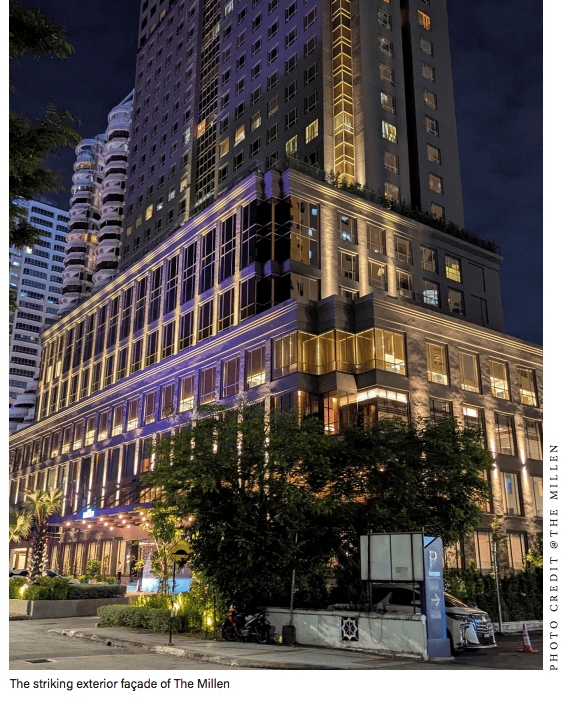
Meanwhile, The Millen Penang, Autograph Collection, takes a more contemporary direction altogether. Occupying the former Northam All Suite Hotel along Jalan Sultan
Ahmad Shah (‘Millionaire’s Row’), the redesigned property combines nicely sized rooms, curated artworks, sea views, and modern luxury amenities with subtle references to Penang’s colonial-era prestige. This one quickly took its place among Penang’s top hotels when it opened last year.
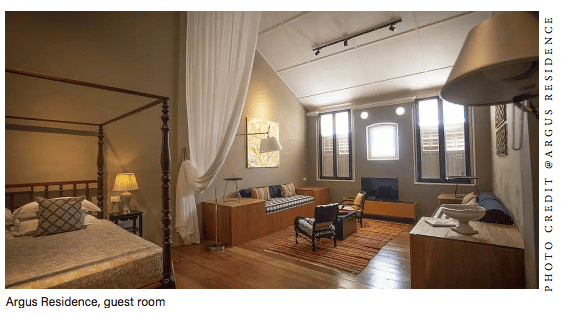
Tucked discreetly behind the Church of the Assumption, meanwhile, Argus Residence offers something more intimate. Restored by hospitality entrepreneur Chris Ong, the 1928 terrace houses once belonged to Eurasian Catholic families connected to the church community. Interiors blend British colonial domestic influences with personal historical touches, including salvaged architectural carvings, vintage furnishings, and traditional four-poster beds.
Not all of Penang’s new hospitality projects revolve around heritage conservation, either. On the mainland in Kepala Batas, Bertam Wellness Spa & Villas represents the state’s growing push into wellness tourism, which is just about as far removed from colonial heritage-focused stays as you could imagine. But what a lovely property! The lagoon-style retreat blends Moroccan riad influences with tropical landscaping, offering Ayurvedic rituals, floating baths, sound healing therapies, and private villas designed around relaxation and seclusion.
Still, among all these varied projects, 1926 Heritage Hotel perhaps best captures the balance Penang now seems to be striving for – preserving history while remaining very much part of the present.
ts doors, the property no longer houses colonial administrators overseeing the island. Instead, as any good heritage hotel should, it welcomes a new generation of travellers searching for more than just a place to sleep – seeking properties that can capably weave together texture, narrative, and a genuine sense of place.