Balance is easy to overlook when things are going well. But after 50, it becomes one of the most useful physical qualities to maintain.
For active adults, balance affects how well you move, how efficiently you change direction, and how confidently you handle the demands of sport and daily life.
Whether you play golf, tennis, badminton, or simply want to keep moving well, balance deserves specific attention.
WHAT BALANCE REALLY MEANS
Balance is your ability to control body position while standing, moving, turning, reaching, or reacting.
It relies on several systems working together:
• Vision
• Proprioception (your awareness of where your body is in space)
• Lower body strength
• Core and hip control
• Timing and coordination When these systems are working well, movement feels steadier and more efficient.
WHY IT MATTERS AFTER 50
As we age, balance can become less automatic if it is not challenged regularly.
Good balance supports:
• Stability on uneven ground
• Cleaner movement when changing direction
• Better footwork in sports
• More control during reaching, stepping, and turning
• Greater independence in everyday tasks
For active adults, balance also helps transfer strength into movement, making it easier to control the body when shifting weight, rotating, or stopping suddenly.
WHAT GOOD BALANCE TRAINING LOOKS LIKE
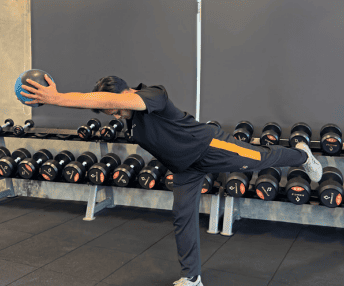
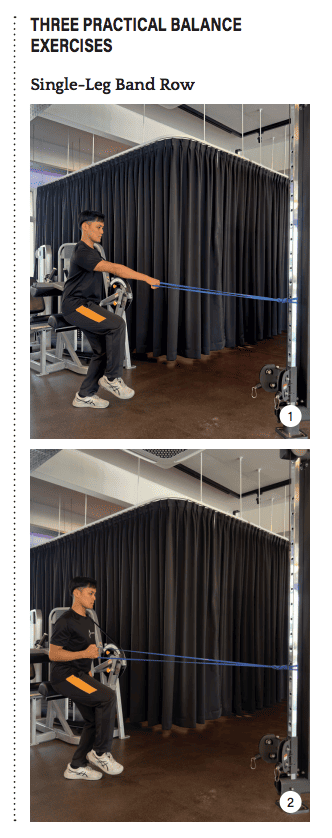
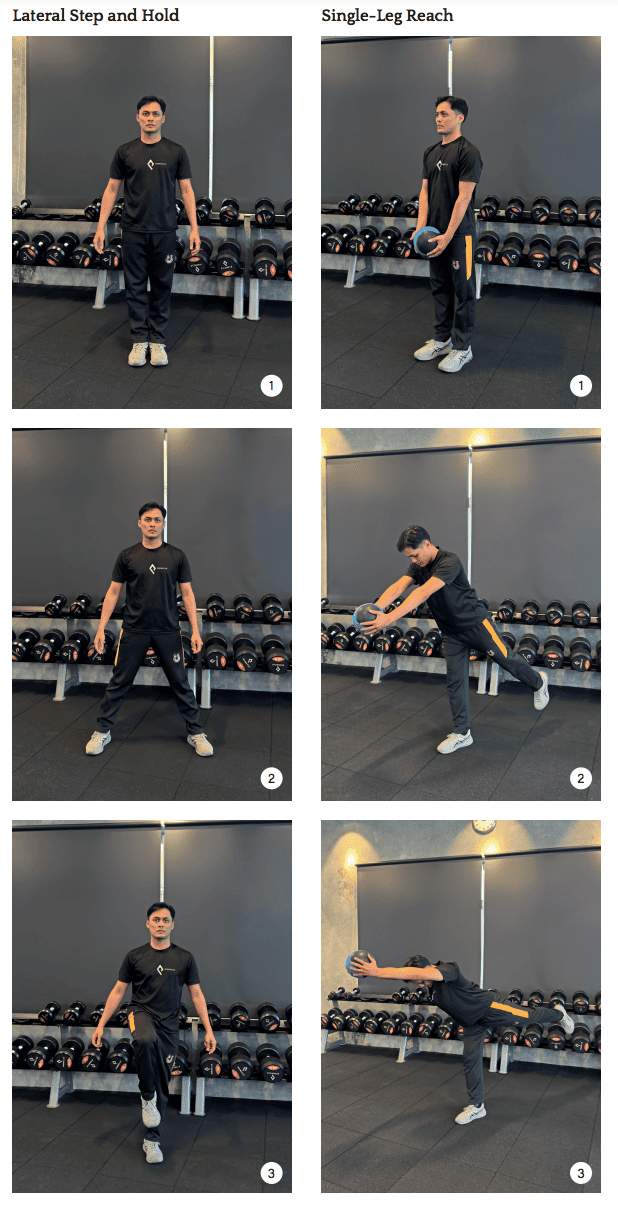
Balance training does not need to be elaborate. In most cases, the best drills are straightforward movements performed with attention and control, including single-leg work, controlled reaching, direction changes, and exercises that improve hip and trunk stability.
HOW OFTEN SHOULD I TRAIN BALANCE?
For most people, 2–4 short exposures per week is enough. That might mean:
• A few minutes at the start of a gym session
• One or two drills in your warmup
• A short home routine on nontraining days
KEY TAKEAWAY
After 50, regular balance work can improve movement quality, sharpen body awareness, and support the activities you want to keep enjoying. It does not require much time, but it does reward consistency.
NEXT IN THE SERIES
Train Smarter: Why Mobility Becomes More Personal After 50.
We’ll explore why two people of the same age can move very differently — and how to identify the mobility work that actually suits your body.