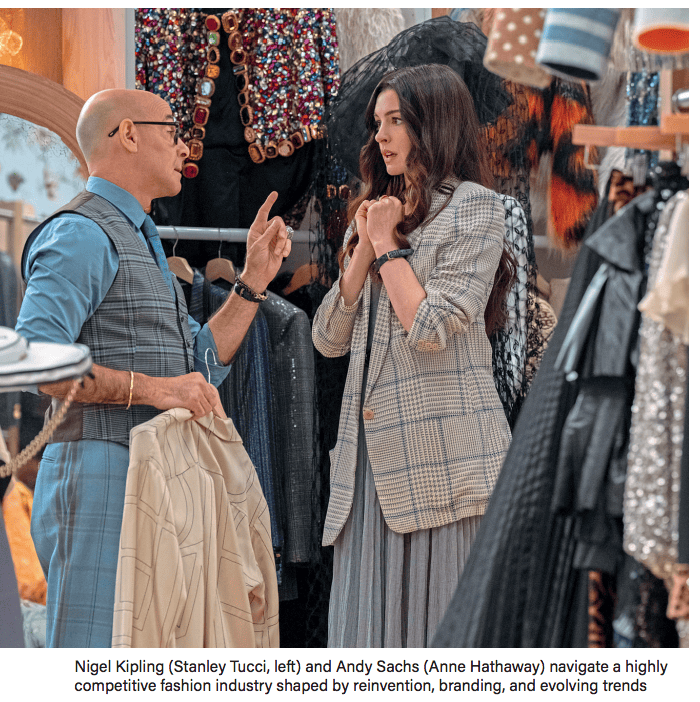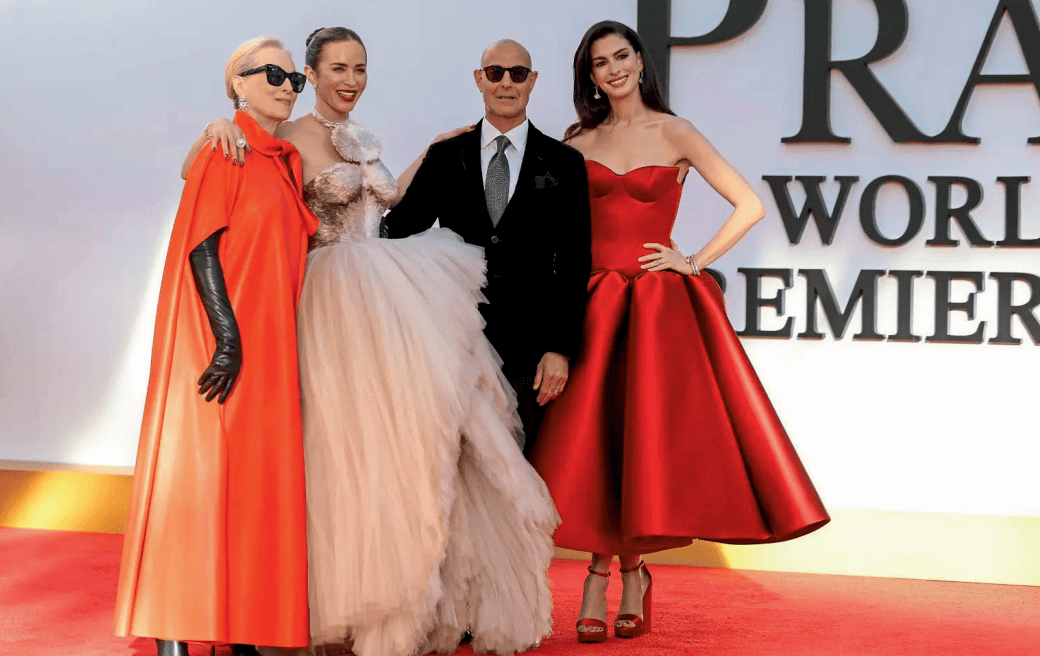
Miranda Priestly (played by Meryl Streep): “Details of your incompetence do not interest me.” Nearly twenty years after the release of The Devil Wears Prada, the iconic fashion drama returns with a sequel that feels surprisingly timely and relevant. What once appeared to be a glamorous story about luxury fashion and impossible bosses has evolved into something far deeper. A reflection on power, reinvention, legacy, and survival in a rapidly changing digital world.
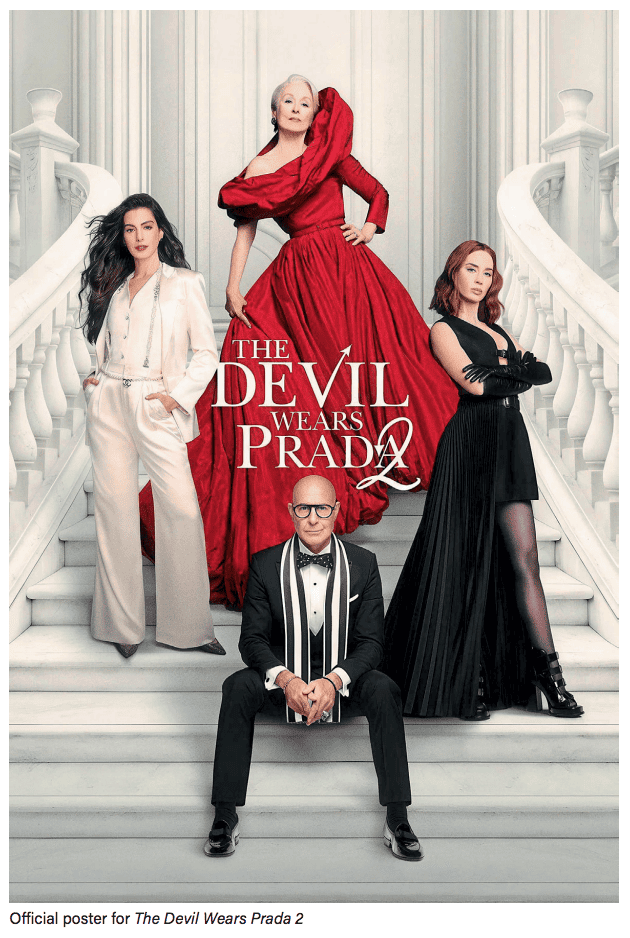
When The Devil Wears Prada first premiered in 2006, many audiences expected a stylish comedy set within the glamorous fashion industry. Instead, the film became a cultural phenomenon because beneath the designer labels and polished appearances lay a powerful story about ambition, identity, sacrifice, and the emotional cost of success.
The title itself carried symbolic meaning. “Prada” represented beauty, prestige, luxury, and the exclusive world of high fashion. Yet hidden beneath that elegance was the “devil” — ruthless ambition, emotional isolation, impossible expectations, and the pressure to survive within elite professional environments.
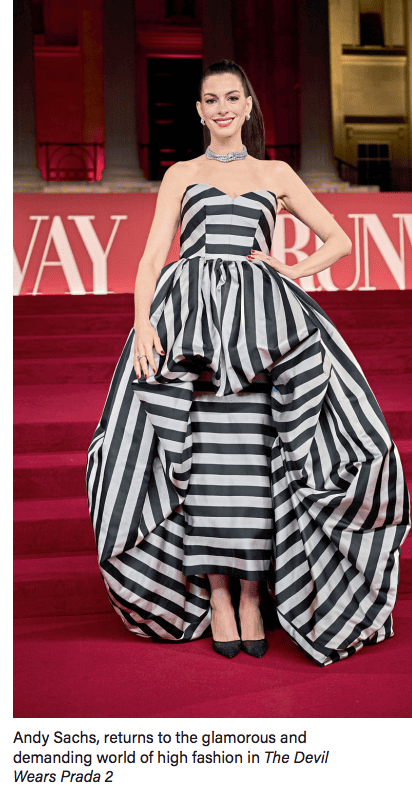
Nearly two decades later, The Devil Wears Prada 2 revisits that world through a far more mature lens.
One of the sequel’s greatest strengths is the return of its original cast, including Meryl Streep as Miranda Priestly, Anne Hathaway as Andy Sachs, Emily Blunt as Emily Charlton, and Stanley Tucci as Nigel. However, the emotional dynamics have changed significantly. Andy is no longer the insecure young assistant trying to survive Miranda’s impossible standards. Instead, she returns as an experienced professional navigating her own place within a transformed media landscape.
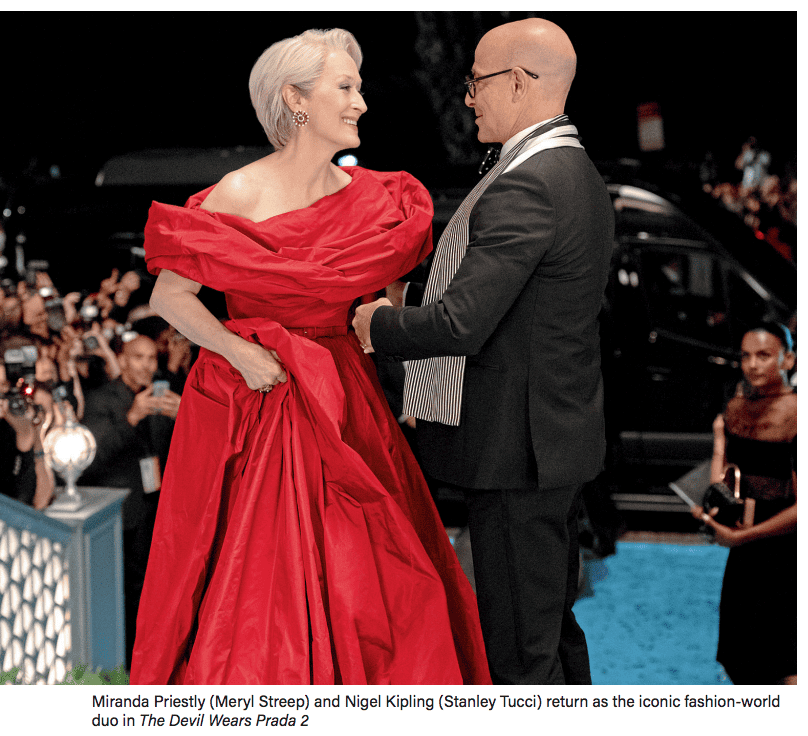
The fashion industry itself has also changed dramatically since 2006. During the era of the first film, glossy magazines and powerful editors largely dictated trends and influence. Today, fashion exists within a much faster and more digital ecosystem shaped by social media platforms, influencers, livestream runway shows, artificial intelligence, online branding, and viral culture. The sequel cleverly reflects this transformation by presenting a world where traditional fashion authority now competes with digital relevance and rapidly changing consumer behaviour.
This evolution is visible throughout the film’s larger and more extravagant fashion show sequences. In the original movie, runway events symbolised glamour, exclusivity, and aspiration. In the sequel, fashion shows feel more like media spectacles — highly visual branding platforms designed for global online audiences, social media engagement, and digital influence. Fashion is no longer confined to magazines or physical runways alone. It now lives across livestreams, viral clips, celebrity culture, and online storytelling.
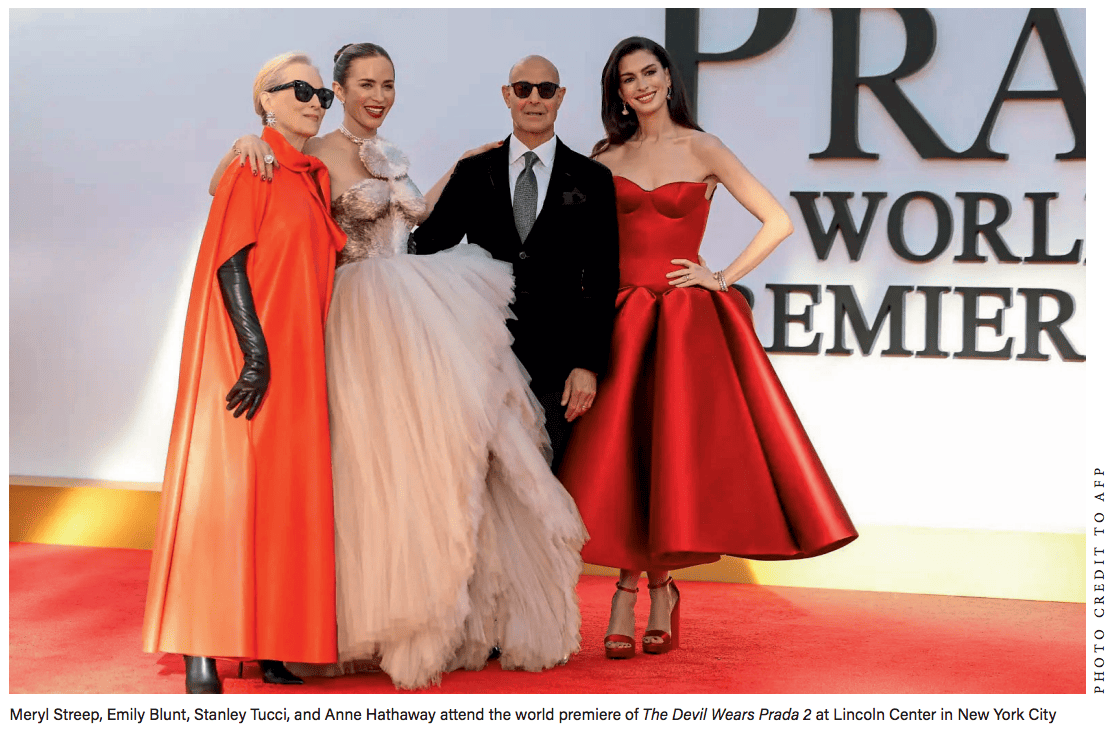
The sequel also arrives during a period where the fashion industry itself has transformed dramatically.
From legendary supermodels such as Naomi Campbell, Kate Moss, and Linda Evangelista to modern digital-era figures like Bella Hadid and Kendall Jenner, fashion today exists within a world shaped by social media, online branding, celebrity culture, and constant reinvention. In many ways, The Devil Wears Prada 2 reflects that same struggle between legacy, relevance, and survival in an everchanging industry.
One particularly interesting addition to the sequel is the involvement of Lady Gaga, whose music and fashion persona perfectly reflect the evolution of modern fashion culture. Her soundtrack contribution, particularly the much-discussed track Runway featuring Doechii, has already generated strong online attention for its couture-inspired visuals, theatrical presentation, and strong connection to the film’s themes of reinvention, identity, and influence.
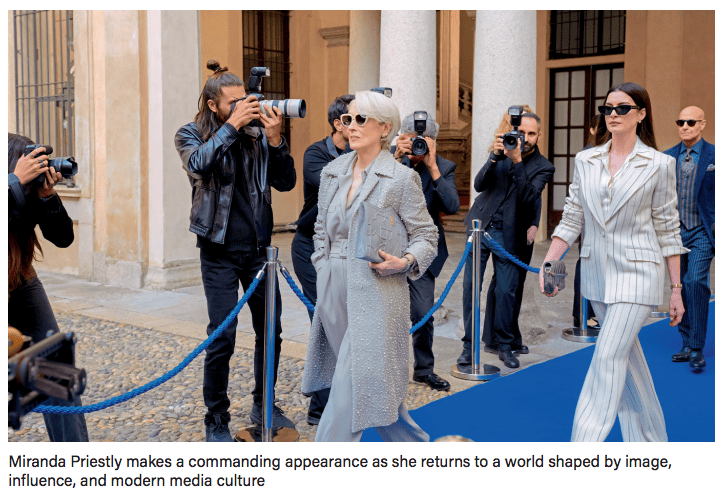
In many ways, Lady Gaga’s presence symbolises how much the fashion world itself has evolved over the past twenty years. The world Miranda Priestly once controlled through glossy editorial pages is now influenced by digital media, celebrity branding, music culture, social media algorithms, and online visual storytelling. Fashion today is no longer experienced only through magazines — it is consumed instantly across smartphones, streaming platforms, and digital communities worldwide.
What makes The Devil Wears Prada 2 especially compelling is that the story has matured together with its audience. The original film asked an important question:
“What are you willing to sacrifice in order to become successful?”
The sequel appears to ask a far more reflective question:
“What happens after success?”
Miranda Priestly now faces a world she no longer fully controls. The once untouchable queen of fashion publishing must navigate changing industries, digital disruption, and the fear of becoming irrelevant in an era dominated by technology and online influence. It is a surprisingly emotional direction for the sequel and one that gives the story far greater depth than many may expect.
In the end, The Devil Wears Prada was never truly about fashion alone. Prada symbolised the beauty, prestige, and aspiration that attracted people into Miranda Priestly’s world. The “devil” represented the sacrifices, loneliness, pressure, and emotional cost hidden beneath that polished surface.
Perhaps that is why the story continues to resonate nearly twenty years later. Beyond the glamour, iconic fashion moments, and unforgettable one-liners lies a timeless reflection on ambition, identity, reinvention, and the difficult balance between success and staying true to oneself.
In a world increasingly shaped by technology, algorithms, digital influence, and fast-changing trends, The Devil Wears Prada 2 reminds audiences that power and relevance are never permanent — even within the most glamorous industries.
And perhaps Miranda Priestly, portrayed so memorably by Meryl Streep, summarises that reality best with one chilling line:
Miranda Priestly: “You don’t have what it takes. I’m sorry, but you’re not a visionary. You’re a vendor. … That’s all.”
And if you are curious enough to step once more into the glamorous and ruthless world of The Devil Wears Prada 2, try searching the film online yourself. You may just notice the iconic red heels elegantly walking across the page. A stylish reminder that even after nearly twenty years, Miranda Priestly still knows how to make an entrance.