An RSGC membership can take us considerably farther than the familiar fairways of Jalan Kelab Golf. Across Malaysia and around the world, The Royal Selangor Golf Club has established reciprocal and affiliation arrangements that allow Members travelling for business or leisure to experience other clubs, their courses and their traditions.
Beginning this month, The Circular goes Beyond RSGC, a new series exploring these clubs one destination at a time.
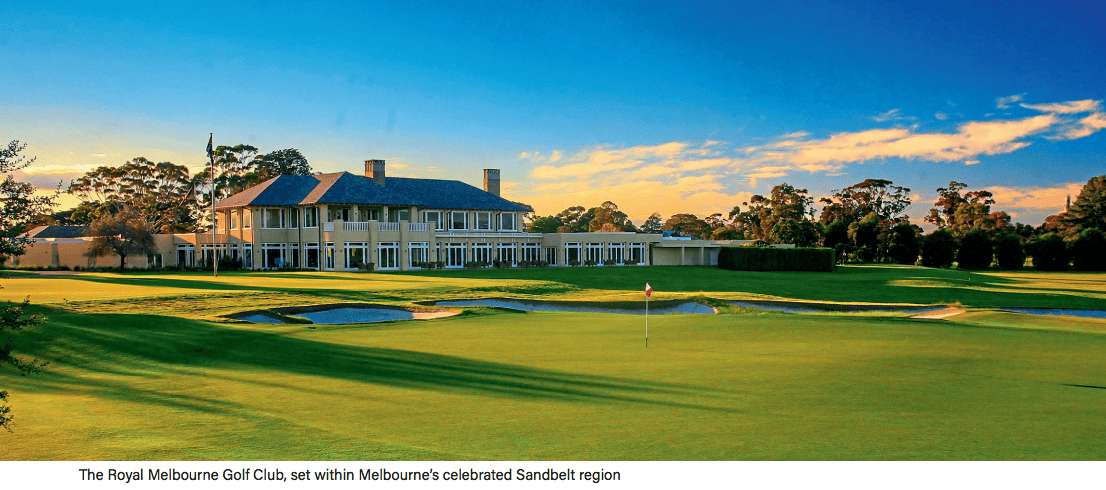
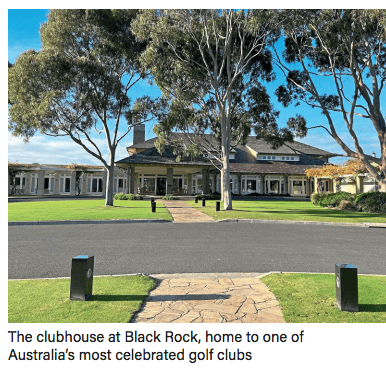
We begin in Australia, where RSGC Members have a substantial network of clubs to discover across the country. And for our first stop, we travel to Victoria — more specifically, to Black Rock, southeast of central Melbourne. Here stands one of the great names in Australian golf: The Royal Melbourne Golf Club.
MORE THAN 130 YEARS OF GOLF
Royal Melbourne’s story began in 1891, when its first course opened at Caulfield on 4 July, barely two months after the Club was established. Just four years later, in 1895, Queen Victoria granted the Club the privilege of using the Royal prefix.
The Club moved from Caulfield to Sandringham in 1901, where it remained for three decades and hosted numerous national championships before its eventual move to the present Black Rock site. It was that move that would help create Royal Melbourne as golfers know it today.
THE MACKENZIE CONNECTION
In 1926, Royal Melbourne brought Scottish golf course architect Dr Alister MacKenzie to Australia to advise on its new course at Black Rock. For golfers familiar with the history of course architecture, the name carries considerable weight. MacKenzie’s other celebrated work includes Cypress Point and Augusta National.
After studying the Black Rock site, MacKenzie produced the routing for what would become Royal Melbourne’s West Course. Club Member, Australian Open champion and course architect Alex Russell supervised its construction alongside head greenkeeper Mick Morcom. The West Course opened for play in 1931.
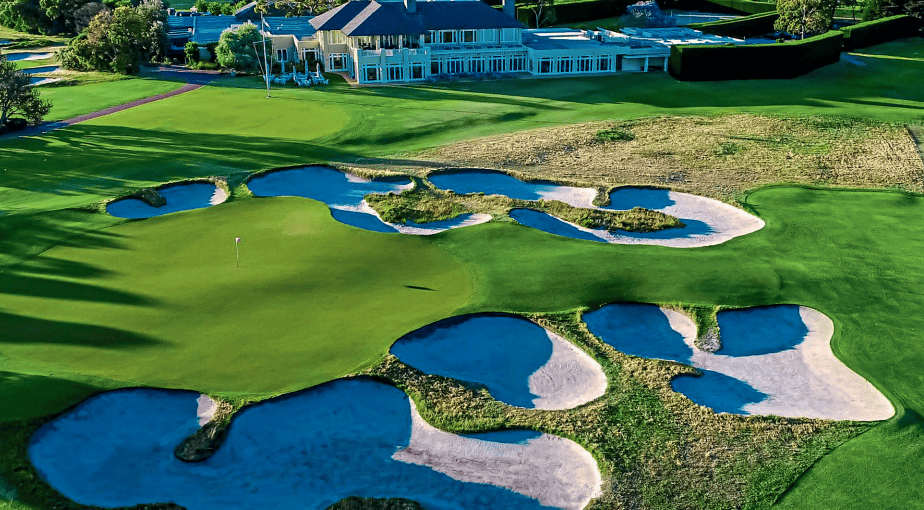
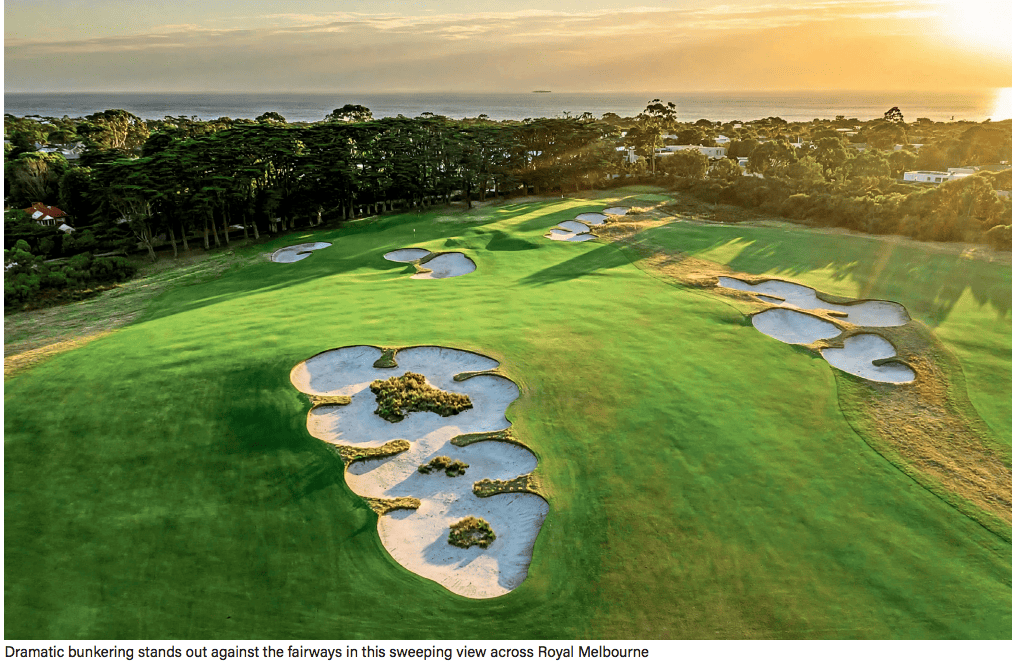
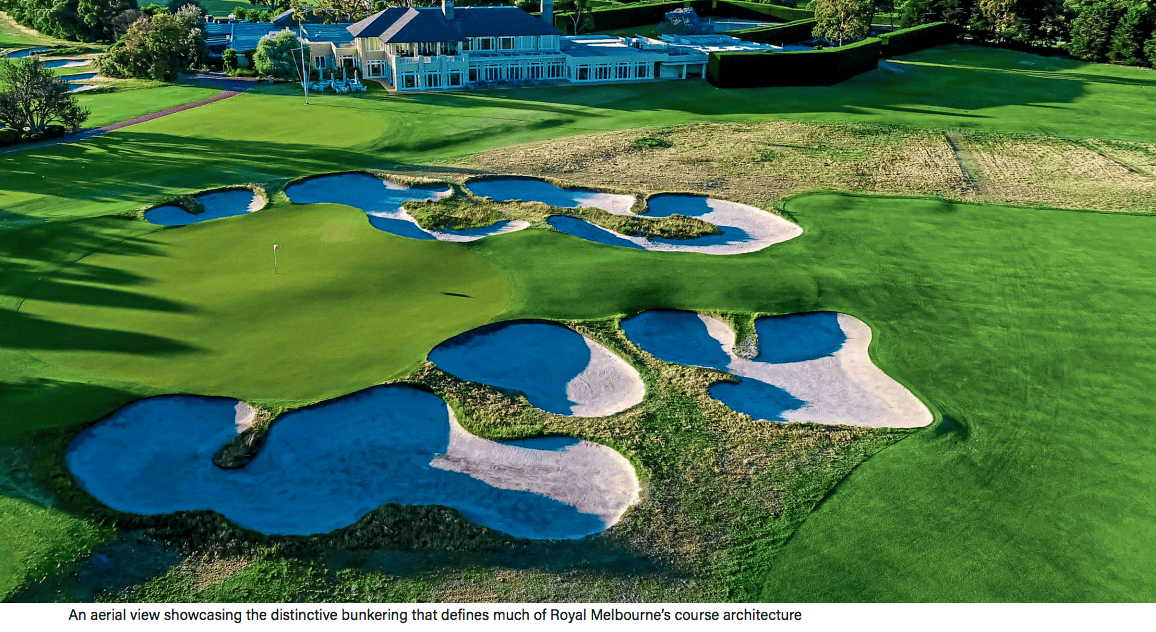
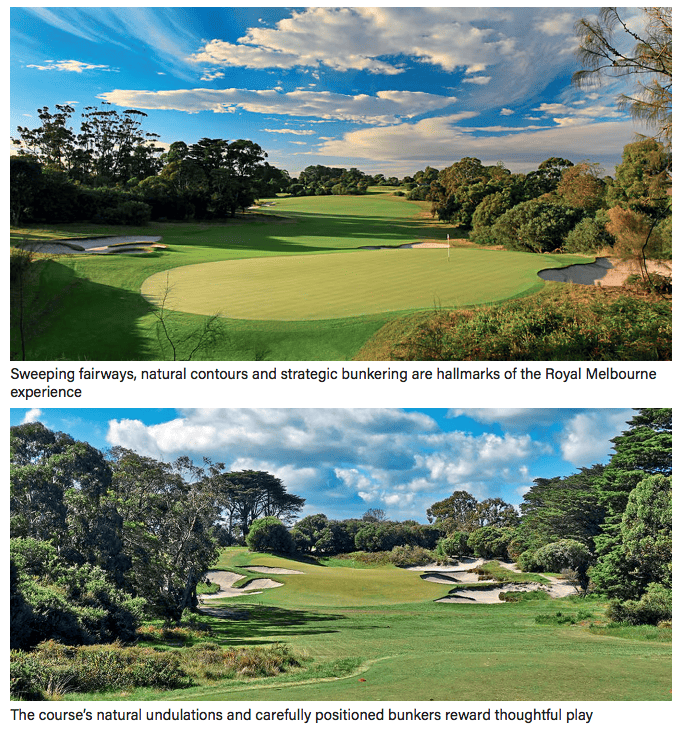
Today, Royal Melbourne describes it as Australia’s finest course and one consistently recognised among the world’s top 10. Its character comes not simply from length, but from strategy: generous fairways, dramatic undulations, bold bunkering, firm conditions and large contoured greens that reward golfers who find the right angle rather than merely hit the longest drive. It is a course designed to make a golfer think.
WEST AND EAST
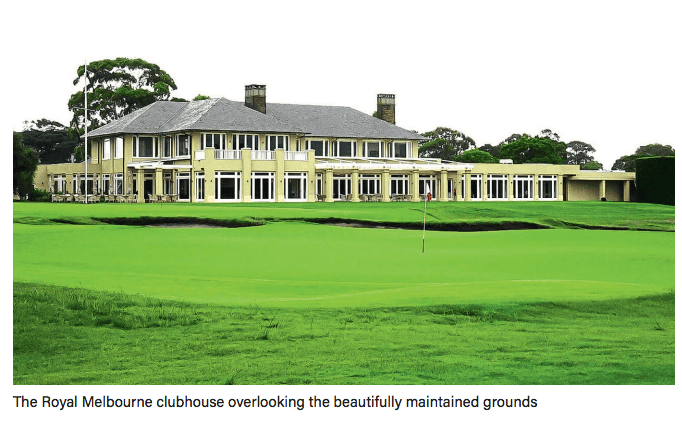
Royal Melbourne does not stop at one celebrated course. After working with MacKenzie on the West, Alex Russell designed the East Course, which opened in 1932. Its greens are generally smaller than those on the West, but the course shares many of its neighbour’s defining characteristics — strategic bunkering, beautifully shaped putting surfaces, natural undulation and choices that ask golfers to weigh risk against reward. Royal Melbourne says the East is routinely ranked among Australia’s leading courses and within the world’s top 100.
Together, West and East provide Royal Melbourne with something unusual: two highly regarded courses occupying the same golfing landscape. And then there is a third name Members may recognise.
THE COMPOSITE COURSE
When Royal Melbourne was selected to host the Canada Cup in 1959, organisers wanted a tournament layout that avoided players and spectators having to cross surrounding roads. The solution was ingenious.
Twelve holes were selected from the West Course and six from the East, creating what became known as the Composite Course. Australia, represented by Peter Thomson and Kel Nagle, won that inaugural event at Royal Melbourne by 10 strokes.
The Composite has remained Royal Melbourne’s principal tournament course ever since. It has provided the stage for major international golf and some of the game’s most recognisable players. Royal Melbourne became the first venue outside the United States to host the Presidents Cup in 1998 and welcomed the event again in 2011 and 2019.
In 2004, Ernie Els produced one particularly memorable round on the Composite, shooting a courserecord 60 during the Heineken Classic.
THE SANDBELT EXPERIENCE
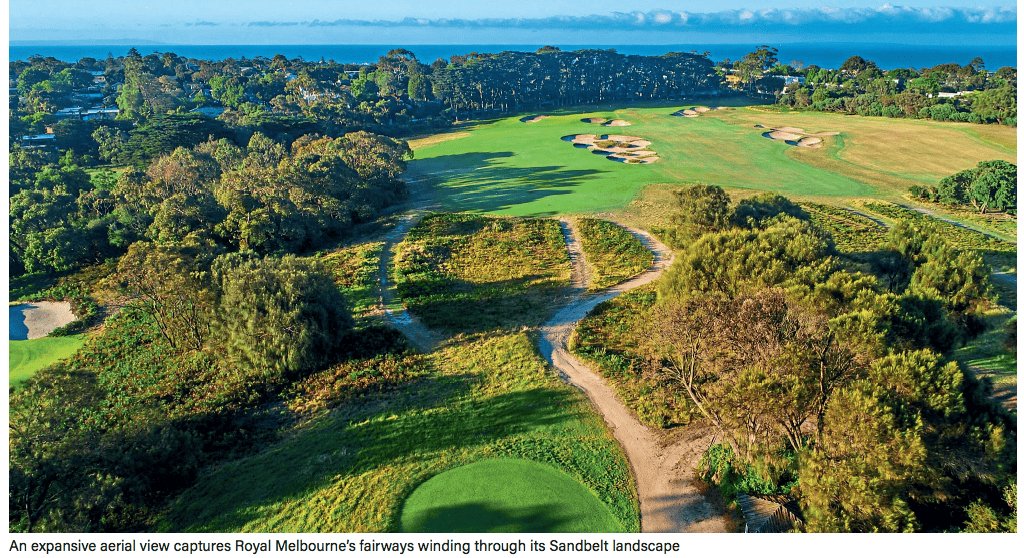
Part of what makes Royal Melbourne distinctive lies beneath a golfer’s feet. The Melbourne Sandbelt is renowned for its sandy terrain, which lends itself to firm playing surfaces and distinctive course architecture. At Royal Melbourne, MacKenzie’s routing works with the natural contours of the land rather than fighting against them.
The West Course’s rugged appearance, native grasses and imposing bunkers create much of its visual identity, but its greens are arguably its signature. Large, contoured and designed to accept approaches from different angles, they make positioning from the tee an integral part of playing each hole.
That philosophy helps explain why Royal Melbourne remains compelling for golfers of different abilities. The fairways may appear generous, but where the ball finishes can dramatically change what comes next.
A CLUB THAT CONTINUES TO EVOLVE
A club with more than 130 years of history has not remained frozen in time. Royal Melbourne opened a new clubhouse in 2003, with spacious interiors and an upper level overlooking the property. More recently, a major upgrade completed in 2023 transformed its parking, practice and putting facilities.
The project introduced underground parking, an expanded putting green, upgraded practice facilities, golf simulator technology and a practice pavilion with a café. It is an interesting juxtaposition: a club deeply conscious of its history and architectural heritage, yet continuing to invest in how today’s golfer practises and experiences the game.
WHY ROYAL MELBOURNE?
For an RSGC Member travelling to Victoria, Royal Melbourne represents more than simply another opportunity to fit a round of golf into an overseas trip. It is an opportunity to walk a course shaped by one of golf architecture’s most influential figures; to experience the distinctive character of Melbourne’s Sandbelt; and to play within a club whose history has intersected repeatedly with Australian and international golf.
That, ultimately, is what we hope to discover through Beyond RSGC. Our reciprocal relationships are not merely names on a list. Behind every club is a course, a history, a landscape and a different experience of the game we share.
Royal Melbourne is our first. There are many more waiting beyond RSGC.
THE ROYAL MELBOURNE GOLF CLUB AT A GLANCE
- Location: Black Rock, Victoria, Australia
- Established: 1891 • Royal status: Granted by Queen Victoria in 1895
- Courses: West Course and East Course
- West Course: Designed by Dr Alister MacKenzie
- East Course: Designed by Alex Russell
- Tournament layout: Composite Course — 12 holes from the West and six from the East
- Notable events: Presidents Cup, Australian Open, Australian Women’s Open and numerous national and international championships
Planning a visit? Members should contact the RSGC Front Office for the latest reciprocal arrangements and requirements before travelling