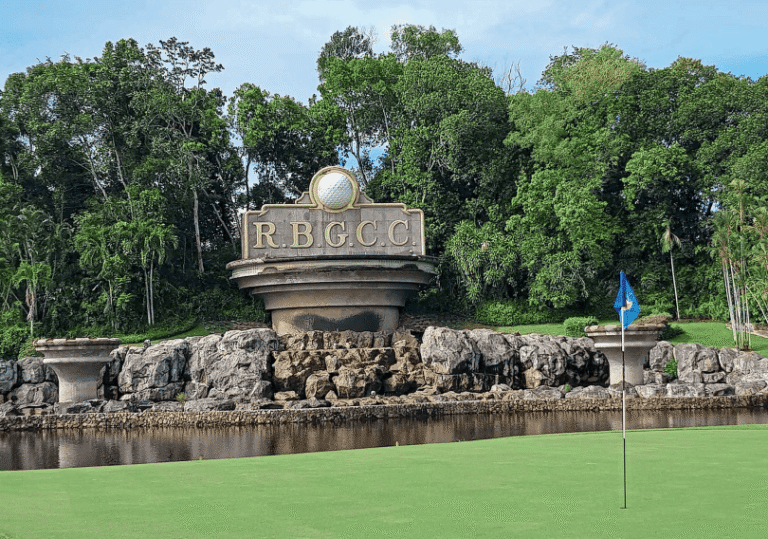
Prestige. Heritage. Tradition. Respect. These are timeless values, steeped in a legacy that spans generations — and they remain part of how RSGC defines itself today.
What makes a great golf club? The obvious answers are easy to see.
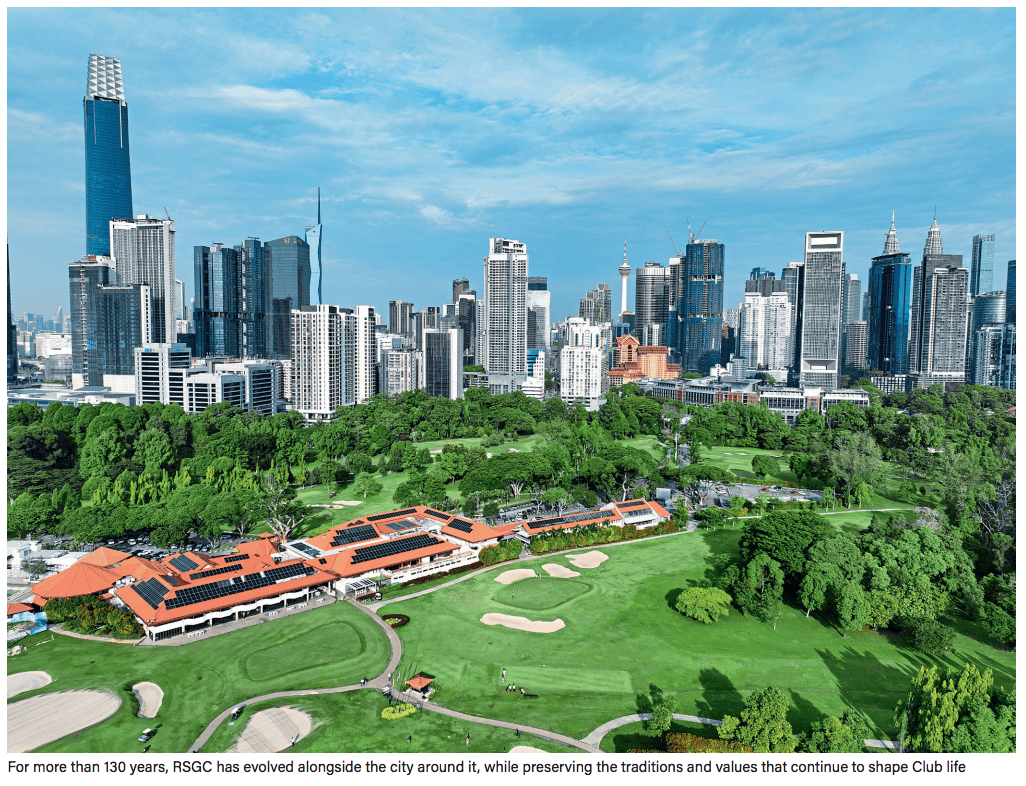
A beautiful course. Meticulously maintained facilities. A distinguished history. Strong traditions. Perhaps a particularly memorable round of golf followed by friendly banter over Tigers and Guinness. But spend enough time in any great Club and you begin to notice something else. It is often the little things — gratitude, empathy and mindfulness.
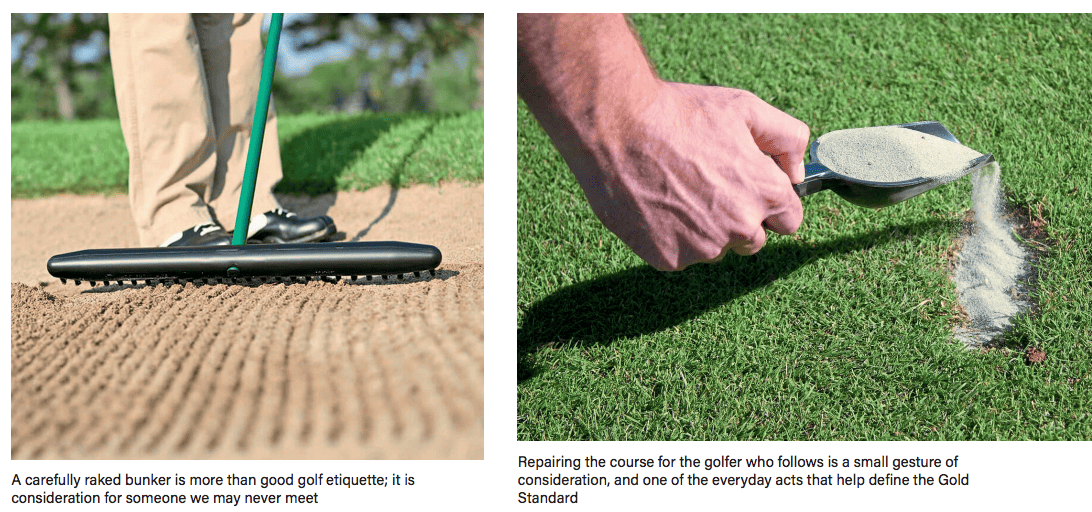
The golfer who repairs a pitch mark that is not his own. The Member who holds the door for someone walking behind him. The player who rakes a bunker carefully for the next golfer. A greeting exchanged in the corridor. A word of thanks to an employee. The consideration shown to another flight on the course. A quiet yet common understanding that a shared space belongs not simply to us, but to everyone around us. None of these gestures is particularly remarkable on its own.

Together, however, they create something we recognise immediately: the culture of a Club. A fraternity of honour, where courtesy is never optional.
In the August issue of The Circular, “The RSGC Standard” reflected on the benchmarks that have long defined The Royal Selangor Golf Club. It considered courtesy, mutual respect, grace, personal responsibility and the everyday choices that shape our experience of Club life.
There are, of course, Bye-Laws and rules governing many aspects of the Club. Pragmatic and definitive, they establish boundaries and provide a common framework for Members, guests and everyone within the RSGC community. But there are no prescribed rules for every situation we encounter.
There is no need for a rule telling us to greet someone warmly. There is no need for a notice reminding us to be patient with an employee during a particularly busy afternoon. And while golf has rules governing the game, we must also remain faithful to the etiquette that elevates golf beyond sport — where the game is played as it was meant to be, with reverence and ritual.
That is where The Gold Standard begins.
WHAT IS THE GOLD STANDARD?
The Gold Standard is not another rulebook. Nor is it intended to be didactic, guiding Members on how they should behave at every turn. Rather, this series is an invitation to look at some of the customs, courtesies and traditions that form part of life at RSGC — and to consider why they exist in the first place.
Then there are traditions that may once have been understood instinctively but today prompt questions, concerns or even doubts:
Why do we still do this? That question is worth asking.
TRADITION IN A CHANGING CLUB
Since its establishment in 1893, RSGC and the world around it have undergone many transformations. Generations of Members have passed through its hallowed gates. Over more than 13 decades, golf equipment has evolved, fashions have changed and technology has transformed almost every aspect of modern life. The way we communicate, dine, socialise and spend our leisure time has changed radically.
The Club has embraced change too. It must. A living institution cannot simply preserve every custom because “that is how it has always been done”. But neither should every tradition be discarded merely because it belongs to another generation.
ALL ARE EQUAL
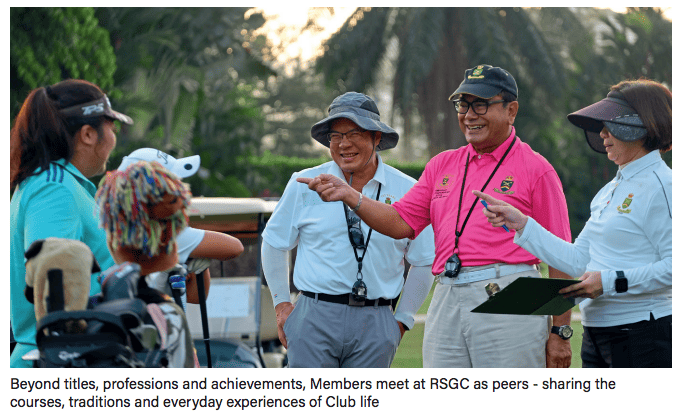
The Club has a longstanding tradition of equality among its membership. At RSGC, the game has always been a great equaliser. While we respect Members’ achievements beyond the Club’s gates, within them we meet as peers. Titles, positions and professional standing need not define our interactions here. It is part of what allows.
Members from different backgrounds and generations to share the same courses, facilities and Club life as equals. The composition of that membership has also evolved.
There was a time when the Club’s golfing and social life was predominantly male. Over the decades, women have made their own indelible mark on the course and across Club life.
Change came gradually. There was a time when access to parts of the Club’s golfing and social life differed considerably between men and women. Historical records indicate that the Old Course was once reserved for men, although limited access for women was introduced as early as the 1960s.
By January 2006, Club records confirm that women were playing on the Old Course. The Club continued to evolve, and another significant milestone came in 2007 with the admission of women to Ordinary Membership. Lady Membership was subsequently closed to new entrants after 30 June 2007, while existing Lady Members retained their established privileges.
Sometimes an old custom survives because the value behind it remains relevant. Courtesy does not become outdated. Consideration does not belong to one generation. Sportsmanship does not cease to matter because golf has changed. Respect for a shared space is as meaningful today as it was decades ago.
The interesting question, therefore, is not simply whether a tradition is old. It is whether the principle behind it is still worth preserving.
ONE SUBJECT, ONE MONTH
Over the coming months, The Gold Standard will explore one aspect of Club life at a time. Some subjects may be familiar. We may look at why golfers repair divots and pitch marks, and why leaving a bunker properly raked is ultimately an act of consideration for someone we may never meet.
We may explore dress and decorum, not simply by repeating what the dress code says, but by asking why clubs have traditionally distinguished between the golf course, clubhouse and different social spaces.
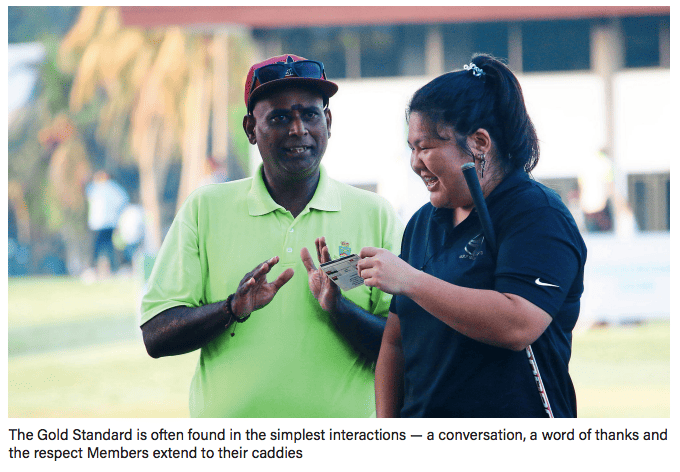
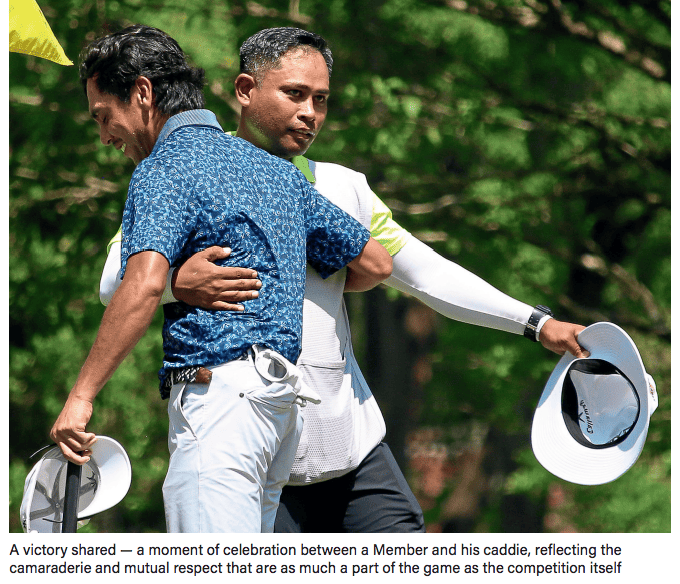
We may talk about courtesy towards employees, welcoming guests, pace of play, sportsmanship and the many small behaviours that influence another person’s experience of RSGC.
We may also consider how we conduct ourselves at reciprocal clubs and during interport games, both home and away.
We may even revisit traditions that divide opinion. Perhaps that is where the most interesting conversations will begin. Because the purpose of this series is not to insist that every old convention must remain unchanged.
It is to understand why it existed, what it was intended to represent and whether the value behind it still has a place in the Club we are today.
THE STANDARD WE CREATE TOGETHER
A Club’s character is built over generations, but it is expressed every day. Not only in major tournaments, formal dinners or important occasions. It appears in far smaller moments.
• In how we leave the green for the golfer behind us.
• In how we respond when service takes a little longer than expected.
• In how we welcome someone visiting RSGC for the first time.
• In whether we acknowledge the person serving our coffee.
• In how we observe and respect the dress code.
• In how we conduct ourselves when there is nobody around to remind us of the rules.
Perhaps that is the real Gold Standard.
Not perfection. Not formality for its own sake.
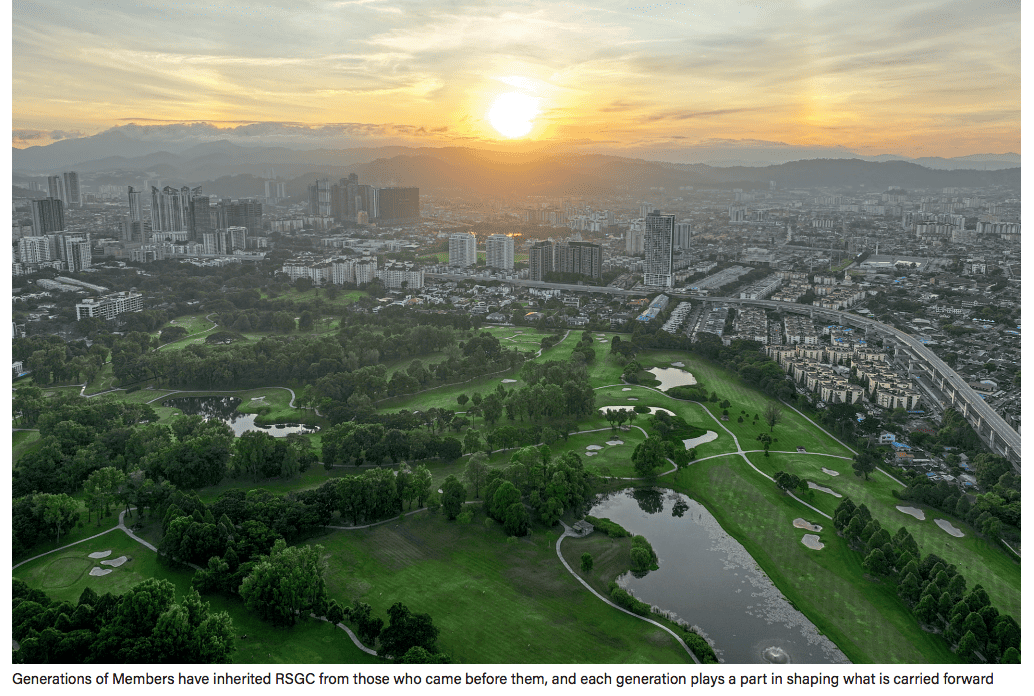
But an awareness that the way each of us behaves contributes, in some small measure, to everyone else’s experience of the Club. Over more than a century, generations of Members have inherited RSGC from those who came before them. Each generation has also changed it.
The responsibility we share is to decide what is worth carrying forward. And sometimes, the best place to begin is with the smallest things.
Character counts here as much as your handicap.
Because ultimately, the Gold Standard of a great Club is not simply the standard it expects from its Members.
It is the standard its Members choose to uphold for one another.