
There are many Titles we carry through life. Some are earned through our professional and academic pursuits. Others come with the office, achievement, seniority or standing in society. They may tell the world something about what we have accomplished, the responsibilities we hold or the positions we occupy. But there is one place where those distinctions should matter a little less: at the gates of The Royal Selangor Golf Club.

In our previous instalment of The Gold Standard, we reflected on a longstanding principle of Club life: all are equal. Within RSGC, Members meet one another first and foremost as Members — sharing the same Club, enjoying the same traditions and carrying the same responsibility for the character of the institution we have inherited. This month, we take that thought one step further. What does equality look like in practice? Very often, it looks remarkably simple.
It is in the way we greet another Member. The way we speak to an employee. The patience we show when something has gone wrong. The manner in which we respond when reminded of a Club requirement. It is the acknowledgement of the person standing before us, regardless of his or her position — or ours. That is why perhaps one of the simplest expressions of The Gold Standard is this:
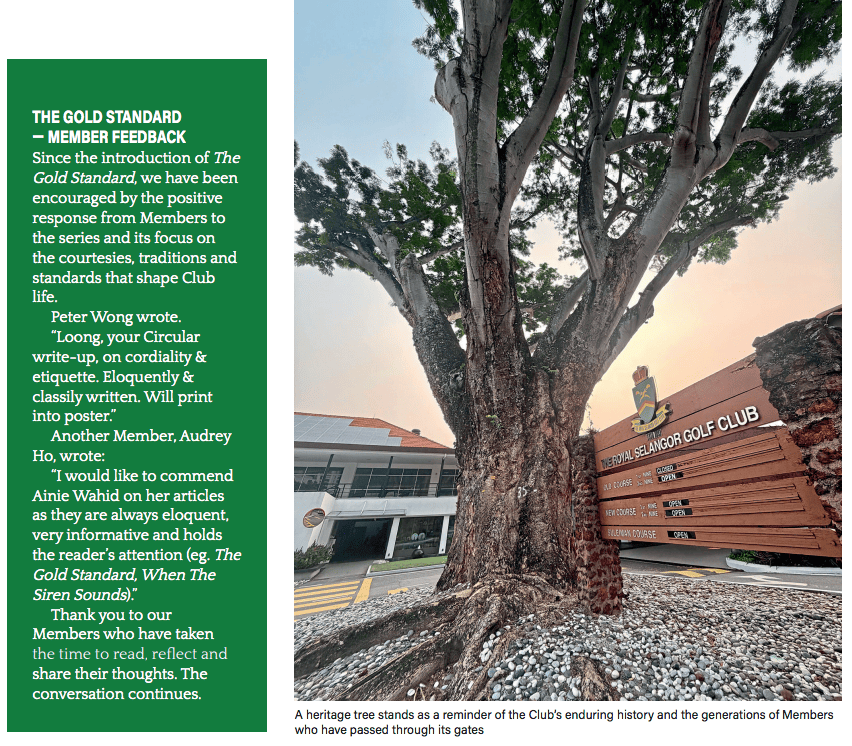
Leave your Title at the gate.

THE SPIRIT OF A GENTLEMEN’S CLUB
RSGC was founded in 1893, in an era when the private club was not merely a place for recreation. It was also a social institution, a place of fellowship, camaraderie and social interaction. In our discussions on The Gold Standard, we returned to an expression associated with that tradition: the gentlemen’s club.
The phrase belongs to another age. RSGC itself has evolved enormously over more than 130 years, as has the society around it. Yet there is something in the older ideal of the gentleman that remains relevant, not as a description of gender, rank or social standing, but as a standard of conduct.

To be a gentleman was never simply a matter of possessing a title, holding an important position or occupying a particular place in society. The better measure was found in behaviour: courtesy, restraint, consideration for others and respect extended without first asking what position the other person held. That distinction matters.

A person may arrive at the Club carrying an impressive title. Another may have considerable professional standing, achievement or seniority. Those distinctions have their proper place beyond the Club. But within it, they should never determine the courtesy we extend to the person standing before us. This is perhaps where an old idea acquires a very modern meaning.
The gentleman. And today, we might simply say the gentle Member does not need status to demonstrate stature. It is demonstrated in conduct.
COURTESY DOES NOT REQUIRE RANK
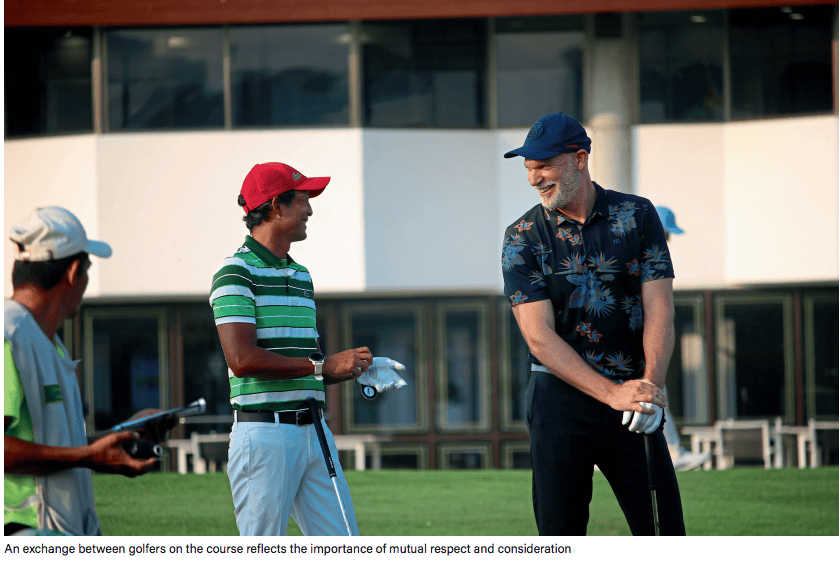
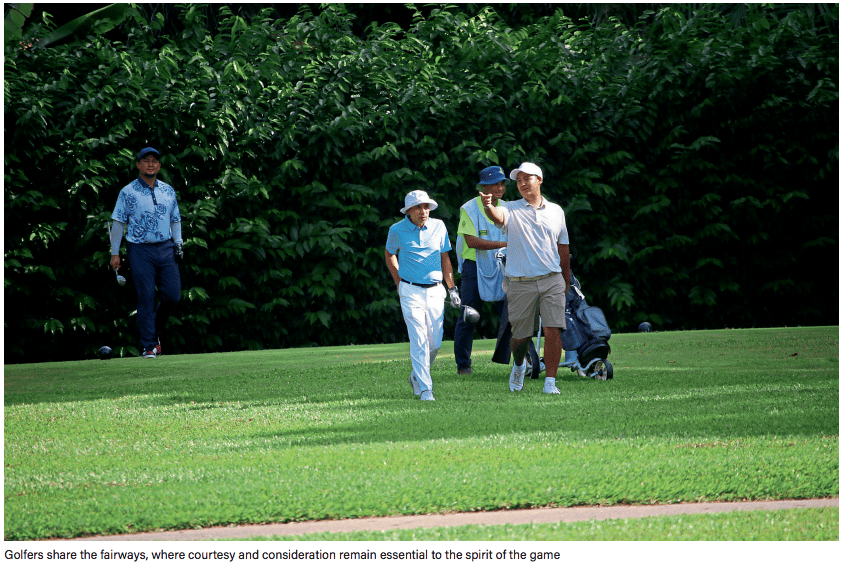
During our discussions for this series, we returned repeatedly to two words: courtesy and respect. Neither should depend upon who is speaking to whom. A Member should not need to know another Member’s profession, title or standing before deciding how much courtesy to extend. Nor should an employee’s position determine the respect with which he or she is treated.
Courtesy is not something reserved for those we consider important. Indeed, perhaps its truest measure is how we treat someone when there is nothing to be gained from treating them well. A greeting costs nothing. Neither does a “please”, a “thank you” or the patience to allow another person to finish speaking. These are small things. But Clubs, like communities, are shaped by an accumulation of small things.
WHEN THINGS DO NOT GO OUR WAY
Courtesy is easy when everything is going smoothly. Its real test comes when it is not. A booking may not be where we expect it to be. A registration requirement may be inconvenient. Service may take longer than anticipated. An employee may have to explain a procedure with which we disagree, or remind us of a Club requirement we would rather not observe.
There is nothing wrong with asking questions. There is nothing wrong with disagreeing. Members should expect proper standards from their Club, and when something is genuinely wrong, it should be raised and addressed. But disagreement need not become disrespect.
An employee explaining or enforcing a Club requirement is carrying out a responsibility entrusted to him or her by the Club. The employee standing before us did not necessarily make the rule, and the rule does not become more or less applicable according to the seniority or standing of the Member being reminded of it. Nor does a raised voice strengthen an argument.
If we believe a decision or requirement is wrong, there are proper avenues through which it can be questioned. Courtesy does not prevent us from being firm. Respect does not require us to remain silent. They simply govern how we conduct ourselves while doing so. And how we respond in such moments says considerably more about us than how we behave when everything goes our way.
MEMBERSHIP HAS RESPONSIBILITIES TOO
It is easy to think of membership in terms of privileges. And there are many. But membership of a Club with RSGC’s history also carries responsibilities towards the institution, towards fellow Members and towards the people entrusted with looking after it.
In our introduction to The Gold Standard, we made an important distinction: rules establish the minimum standard, while courtesy determines the experience we create for one another. That distinction matters because no Club can write a Bye-Law for every interaction between two people.
There can be rules governing dress, conduct and the use of Club facilities. There can be procedures for registration, bookings and the countless practical matters required to run a Club of RSGC’s size. But a rule cannot legislate warmth into a greeting. It cannot put patience into a conversation. It cannot create consideration in a disagreement. And it cannot compel someone to recognise the dignity of another person. Those standards must come from us.
THE CLUB WE INHERITED
Every generation of Members inherits RSGC for a time. Those who established the Club in 1893 could hardly have imagined the RSGC of today. Through more than a century of change, successive generations have shaped it, added to it and passed it forward. We are merely its present custodians.
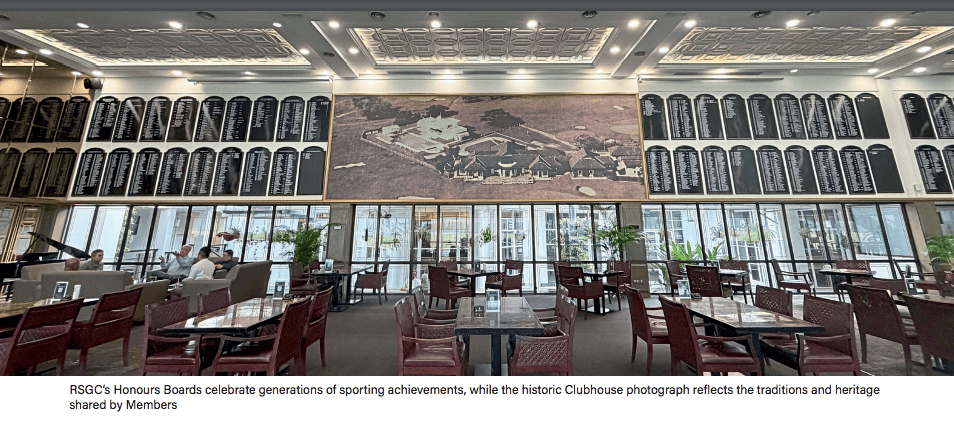
That inheritance is not confined to the golf courses, trophies, photographs, Honours Boards or buildings that surround us. It also exists in less tangible things. The customs, courtesies and expectations of conduct that give a Club its character. Some traditions naturally change with the times. They should. Others endure because the values beneath them remain relevant. Courtesy is one of them. Respect is another.
preserving from the old ideal of a gentlemen’s club: not the social conventions or exclusions of another era, but the expectation that membership should be accompanied by standards of personal conduct.
To greet another person with warmth and respect.
• To exercise restraint when frustrated.
• To disagree without humiliating
• To correct without belittling.
• To treat the people who work for the Club with dignity.
• And to extend these courtesies without first considering the Title, occupation, wealth, seniority or standing of the person before us.
These may seem like small gestures. Collectively, they determine what kind of Club we leave to those who come after us.
THE MEASURE OF A MEMBER
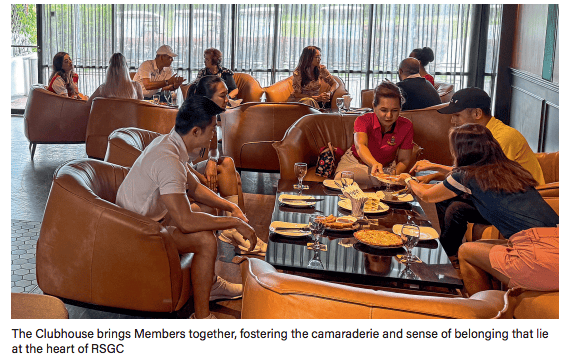
Beyond RSGC’s gates, we will continue to carry our Titles, positions and achievements. Many are hard-earned and deserving of recognition. But perhaps one of the quiet privileges of belonging to a Club is that, for a few hours, those distinctions can recede. Here, we can simply be Members among Members.
The first instalment of The Gold Standard concluded that the character of a Club is revealed in small moments. How we behave on the course, how we respond when service is delayed, how we welcome visitors, how we acknowledge employees, how loudly do we converse in the Main Lounge, and how we conduct ourselves when nobody needs to remind us.
The same is true of individual character. Our Titles may tell people what we have achieved. Our conduct tells them who we are. So perhaps the old-fashioned idea of the gentleman still has something useful to teach a modern Club.
A Title may command recognition outside the gates. Character commands respect inside them. And that, perhaps, is the greater Title to carry.
THE STANDARD WE SHARE
Shakespeare captured something of this spirit in Henry V (Act 4. Scene 3).
“We few, we happy few, we band of brothers.
The words speak to comradeship, of people standing together not because of rank or station, but because of a shared bond.
Perhaps that is also the simplest expression of the Gold Standard at RSGC. Courtesy, respect and fellowship are not determined by Title or position; they are standards that belong to all of us.
Leave your Title at the gate. Bring your character with you.