I t’s not often you come across a place where heritage is not only preserved but lived every day. Kampung Morten, located in the heart of Melaka, is one of those rare places – a traditional Malay village quietly holding its ground as the city around it evolves into a modern tourist magnet. We recently discovered the charms of this almost-hidden pocket of the city on a recent trip to Melaka.
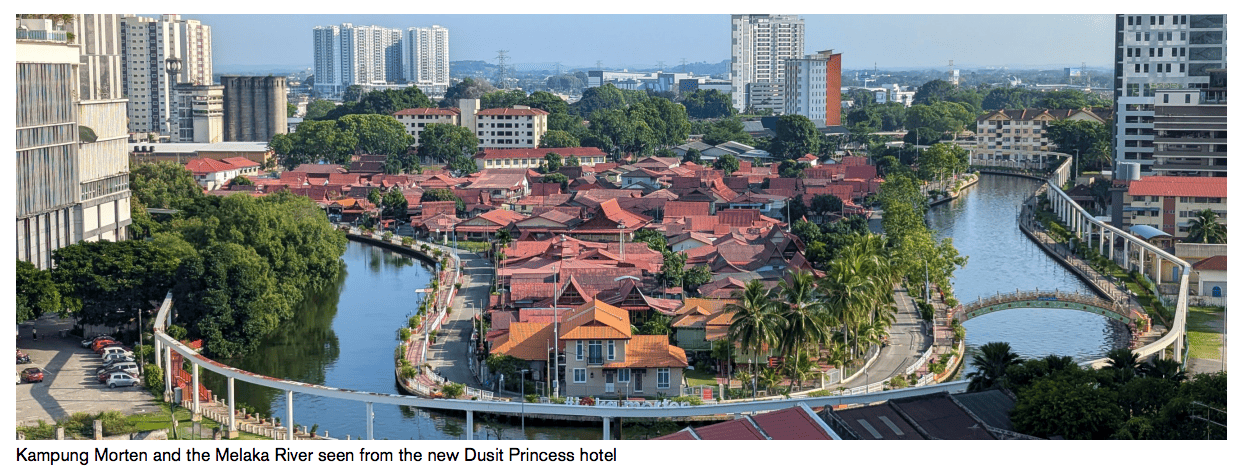
Named after British land commissioner Frederick Joseph Morten, the village was founded in 1920 with the help of a $10,000 government loan. It was carved out of what was then a mangrove swamp, intended as a new settlement for displaced Malay communities. In an unusual show of colonial gratitude, the village was named after Morten himself – a name it retains to this day.
Today, Kampung Morten is gazetted as a heritage village under the Malacca Preservation and Conservation Enactment, and it’s easy to see why. Home to around 85 traditional Malay houses, the village is a walkable open-air museum – but one that’s still very much lived in. Residents continue their daily routines here, often inviting curious travellers to witness or even participate in cultural demonstrations, from weaving pandan mats to putting on small gamelan performances.
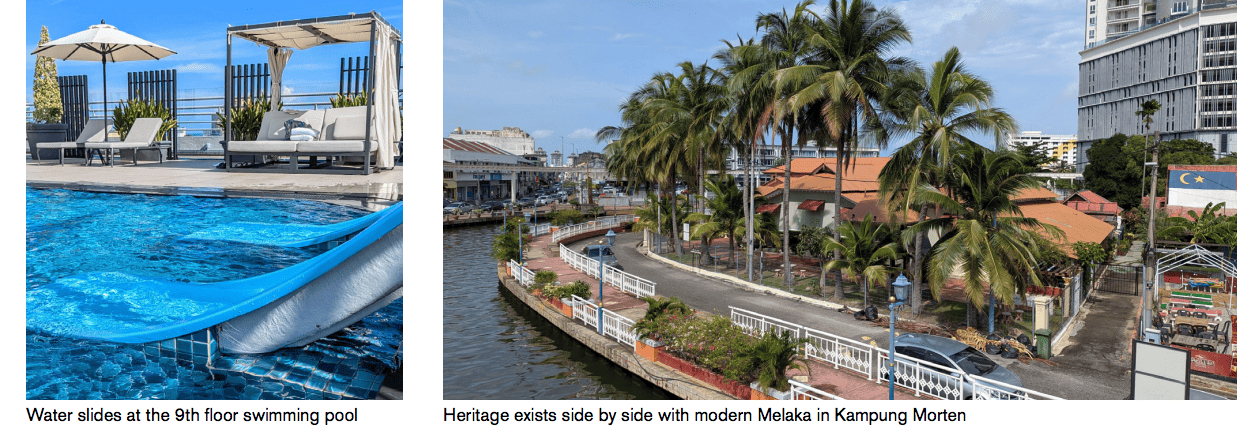
The architecture is one of the key attractions. Built mostly from wood, bamboo, and nipah thatch, the houses follow the traditional Malay design of being raised on stilts. They feature wide verandas, pitched roofs, and are often brightly painted in pastel shades with hand-carved embellishments. Many houses still follow the traditional system of post-and-beam construction without nails, allowing them to be dismantled and moved in times of flooding – a clever feature from an earlier era that speaks volumes about local ingenuity. As we strolled through the riverside village, we saw a number of residents going about their daily routines, the quiet air of the neighbourhood only occasionally broken by the cawing of crows.
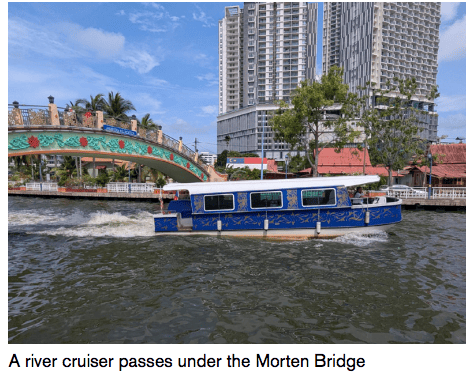
The village is fronted by the winding Melaka River, a onceimportant trade route that’s now better known for leisurely cruises and evening strolls. Boats still pass regularly, offering glimpses of Kampung Morten that contrast sharply with the notably more tourist-heavy stretches downstream. Here, the view is quieter and more authentically lived-in – traditional houses, clotheslines, and the occasional resident tending to potted plants by the water’s edge. The riverside path is a pleasant place to walk, certainly in the cooler morning hours, but also especially around sunset, when the village lights come on and the animated chatter from visiting neighbours carries across the river. Our own leisurely visit took place in the midmorning, and we found it one of the standout delights of the entire trip.
We were in town to visit the newly opened Dusit Princess hotel, just nearby. The hotel marks the first entry of the expansive Thai hospitality brand in Malaysia, and our first impressions here were very favourable. The 296-room property was previously operated as a Ramada hotel, and while it’s still under the same ownership now, the extensive refurbishment and rebranding really brings the Dusit hotel into its own.
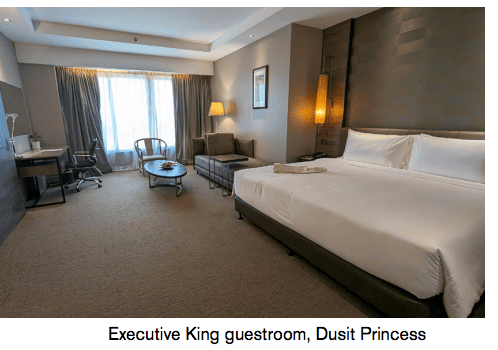
The staff are keen to blend Thailand’s legendary hospitality with Melaka’s rich heritage, so don’t be surprised to get the occasional “Sawasdee ka” greeting here! The hotel is already making a name for itself in Melaka’s hospitality market, too, with attractive rates, excellent service, and a long list of upscale offerings, including spacious rooms, onsite restaurants, a well-appointed gym, a welcoming lobby lounge and bar, a lovely club lounge, and what is surely one of the best hotel pools to be found in Malaysia.
The large swimming pool, located on level 9, stands out for a number of reasons. First, the elevated views in all directions are superb, offering guests a sweeping vantage point of the cityscape as they relax poolside. Curtained, cabana-style daybeds, wide sunloungers, and plentiful greenery and topiary give a “lazy tropics meet the elegant Mediterranean” vibe! Partially submerged loungers are available in the pool’s shallowest end, while a pair of waterslides offer kids (and the occasional adult) plenty of fun. But the most surprising thing about this pool – beyond its sheer size – is its depth! In a world that seems to eschew any swimming pool deeper than 1.5 m, Dusit offers guests a chance to not just wade, but truly swim. The pool gradually deepens as you move from one side to the other, eventually reaching an impressive depth of 2.7 m.
Rooms at the Dusit Princess are smartly decorated and appointed, most offering eye-catching views of either the city or the Straits of Malacca, depending of course on which side you’re located. Ours boasted a separate bathtub and walk-in shower, a spacious writing desk, a large lounge/daybed, and the accoutrements expected in any upscale hotel, such as a fridge with minibar, coffee and tea-making facilities, Nespresso pod coffee machine, comfy robes, and a safe.
As for neighbourhood wandering, not only is Kampung Morten immediately nearby, so is the classic Majestic Hotel, and you need not be a guest to nip in to its old-school colonial-style lobby and enjoy a classic gin and tonic at the beautiful bar. (Our advice? Go from 5 to 7 pm and take advantage of their excellent buy-one-free-one happy hours.) A number of popular food stalls and hawker centres are also within a one- or two-block stroll if you’re craving some of Melaka’s local delicacies.
But surely the fondest memory of our stay at the Dusit Princess was that impromptu morning walk which, over a leisurely hour and a half, took us along the winding river, by the api-api mangrove forest (Avicennia marina) – which was replete with numerous massive water monitors – and over the colourful Morten Bridge and among the dozens of old Malay kampung houses with their characteristic Melakan style. That such an enlightening experience could be found such a short stroll away from the hotel made it all the more enjoyable.
Kampung Morten stands as perhaps one of the last remaining Malay kampungs within a Malaysian city centre, offering a genuine, unfiltered window into the past. It’s not a performance, nor is it a museum-like set piece, frozen in time. It’s real heritage that still lives and breathes – and that’s what makes it special.