INTRODUCTION
In this training-focused series, we explore the principles behind smart, effective, and sustainable workouts. This edition focuses on movement quality — a foundational concept often overlooked in the pursuit of intensity. If your goal is to train painfree, move better, and make lasting progress, how you move matters more than how hard you push yourself.
WHAT IS MOVEMENT QUALITY?
Movement quality refers to how well your body performs basic movement patterns like squats, lunges, pushes, pulls, hinges, and rotations. It’s not just about strength — it’s about joint mobility, motor control, alignment, and coordination. Training with good movement allows you to load the body safely, reduce the risk of injury, and improve performance efficiently.

WHY GOING HARD ISN’T ALWAYS SMART
Training hard with poor movement patterns can lead to overuse injuries, compensations, and long-term setbacks. Common issues include knee pain, lower back strain, shoulder impingement, and general joint discomfort. These often develop when intensity increases before movement is properly addressed. Training smarter means focusing on movement first — then adding load, volume, and complexity.
HOW TO CHECK YOUR MOVEMENT QUALITY AT HOME
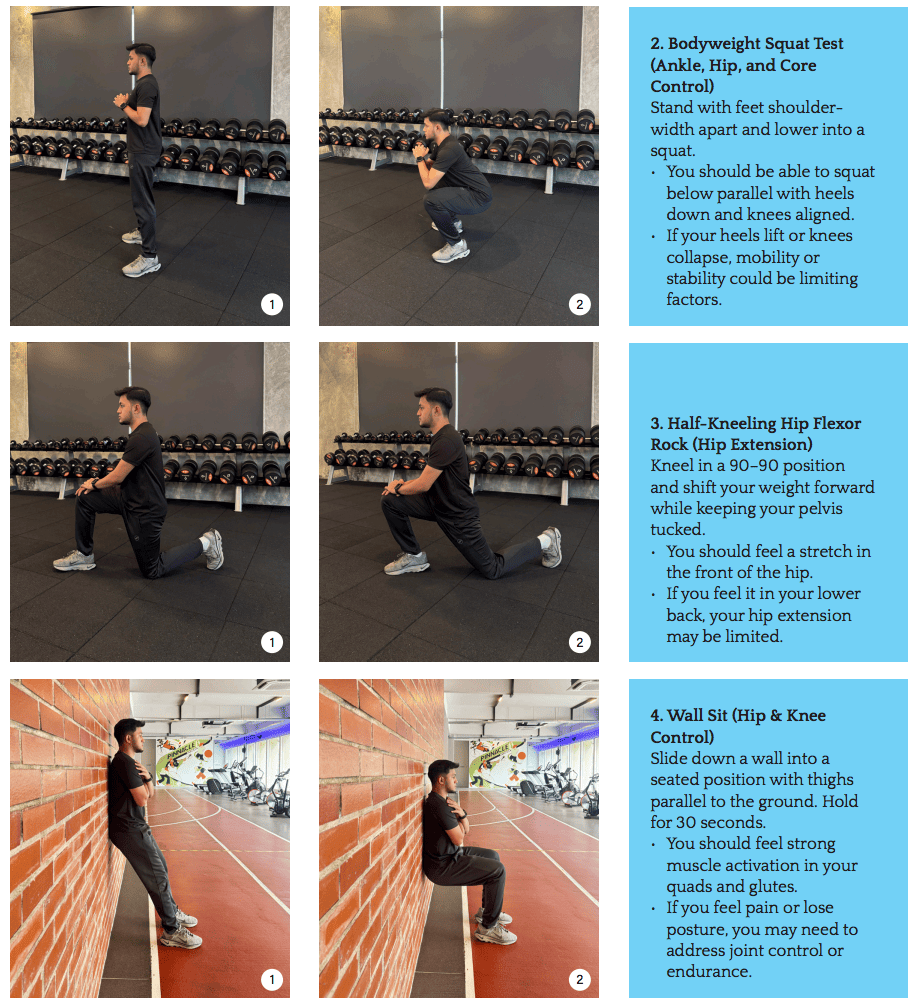
Here are four simple movement checks you can try at home to assess your mobility and control:
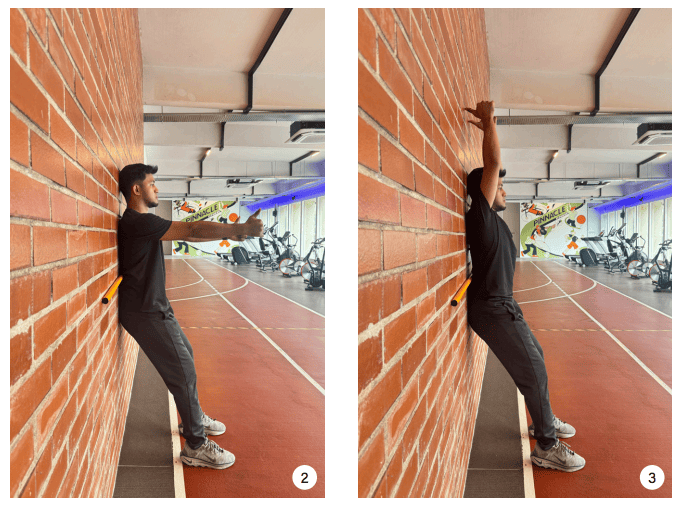
1. Overhead Reach Test (Shoulder & Upper Back Mobility)
Stand with your back against a wall, feet about 10cm away. Keep your head, shoulders, and lower back in contact with the wall. Raise both arms overhead without arching your back or letting your ribs flare.
- You should be able to touch your thumbs to the wall with straight arms.
- If your ribs pop or your arms can’t reach, shoulder or thoracic mobility may be limited.
If any of these movements feel restricted or unbalanced, don’t skip training — just adjust your focus. Work on mobility, control, and technique before pushing intensity. This sets the foundation for sustainable progress and long-term joint health.
NEXT IN THE SERIES
How to Structure Your Weekly Training for Results: A practical guide to balancing strength, cardio, mobility, and recovery.