Travel has a way of rewarding curiosity, but few places stir the soul quite like Cambodia, a country I first visited in 2016. This year’s trip was my third time there, and as before, only left me wanting to return yet again. For many, the name Cambodia itself is synonymous with the sandstone spires of Angkor Wat rising out of the mist, a monumental relic of the Khmer Empire’s brilliance. Visitors come from around the world to marvel at the ancient ruins of Angkor – crumbling yet, etched with both timeless artistry and a sort of defiant beauty as they nevertheless succumb in slow motion to the passage of centuries. Although I didn’t visit Angkor Wat this time, this unmissable stop was of course at the very top of my itinerary on my first trip to Siem Reap, and I spent large chunks of three days exploring the expansive grounds and quite a few of the many surrounding temples, as well. As that trip in 2016 was my first visit to Cambodia, the time spent at the Angkorian ruins left an indelible impression. For me, as for so many others, by day, the temples of Angkor dominated my travel time, while by night, the small city’s legendary Pub Street beckoned with cheap beer, delectable lok lak, amok, and other Khmer dishes, surprisingly good takes on Mexican and Greek food (of all things), and the giddy hum of travellers swapping g stories and chatting with locals.
Yet beneath the surface pleasures of temple exploration and tourist nightlife lies another, far deeper story – one of resilience, survival, and the sheer will to reclaim joy and hope after unimaginable suffering.
Although this is a travel article and not a history lesson, no one can properly understand and appreciate Cambodia today without acknowledging the pain of its past. Less than 50 years ago, this was a country broken apart by civil war and subsequently consumed by one of the most brutal and ruthless genocidal crusades in modern history, a campaign that led to the violent purge of nearly a quarter of Cambodia’s entire population at the time. The Khmer Rouge years (1975– 1979) left a scar that has not yet fully faded: some two million lives lost, families shattered, and a generation traumatised. Entire institutions were dismantled, from schools to theatres to monasteries – and artists, writers, and performers were among those most brutally targeted, along with monks, the educated, and all manner of minorities. Going beyond even ethnic cleansing, it was a calculated attempt to erase culture itself, to strip away the very soul of a nation.

RESILIENT AND REBORN
And yet – Cambodia endures. In the aftermath of such unfathomable horrors, the very fact that Siem Reap is once again alive with colour, music, and laughter is nothing short of extraordinary. Every motorbike buzzing down Sivutha Boulevard, every crowded night market stall, every volleyball match played on improvised streetside pitches, every tuk-tuk weaving through traffic is part of a wider story of revival, a testament to Cambodian resilience. If you know anything of Cambodia’s recent past, you cannot help but marvel at its ability to rise again, to create something vibrant out of unimaginable loss.

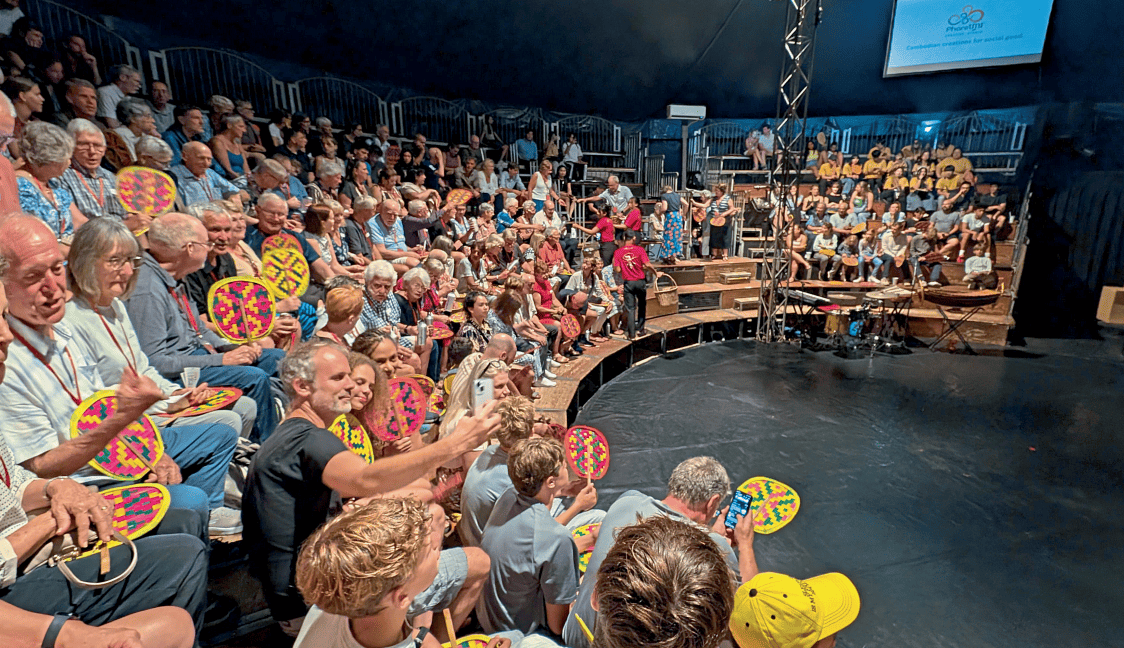
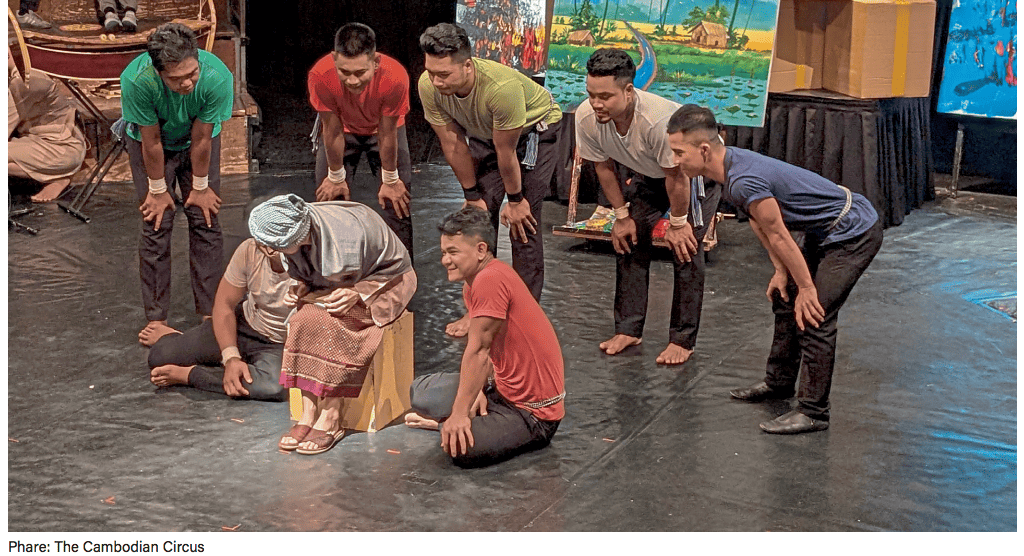
No experience in Siem Reap captures this spirit better than Phare, The Cambodian Circus. On the surface, it’s an evening show – acrobatics, live music, theatre, all performed under a big top tent. But Phare is more than entertainment; it is healing put into motion. The troupe is the public face of Phare Ponleu Selpak, an NGO founded by a group of Cambodian refugees in the early 1990s. Having fled across the border to escape the horrors at home, they found solace in drawing classes offered in the camps. Those classes became a lifeline, a way to process trauma and reclaim dignity. When they eventually returned to Cambodia, they brought that gift back with them. What began as a small arts school for disadvantaged youth in Battambang has over time grown into an organization that transforms young lives through creativity

If you visit Siem Reap, you quite simply must attend a Phare performance. To sit under that tent is to get a sense of Cambodia’s spirit today. It’s raw, youthful, imperfect, and wonderfully hopeful. It’s the kind of experience that makes you rethink the role of travel itself – not just consuming sights and posting on social media, but really engaging with stories, sharing in victories both small and profound, and genuinely feeling the pulse of your destination. In the case of Phare, it’s an explosion of Cambodian culture, history, and art – all shared in an intimate, breathtaking performance that will leave you feeling exhilarated and moved in equal measure.

Watching a Phare performance is to witness not just skill and artistry, but purposeful defiance. Every flip, every beat of the drum, every burst of laughter from the audience is a statement: Cambodia refuses to be silenced, and its people will not be defined solely by the tragedy of its past. The young performers are often the children of poverty, some carrying the legacy of their parents’ trauma, all now channelling that hardship into something astonishing. They juggle, they amaze with feats of strength and balance, they act out stories of daily life and folklore, often with humour and wit, sometimes with searing intensity. It is entertainment with purpose – and for the traveller, it offers a deeper connection to the country than almost anything else that you could do in Siem Reap.
A COMFORTABLE HOME BASE
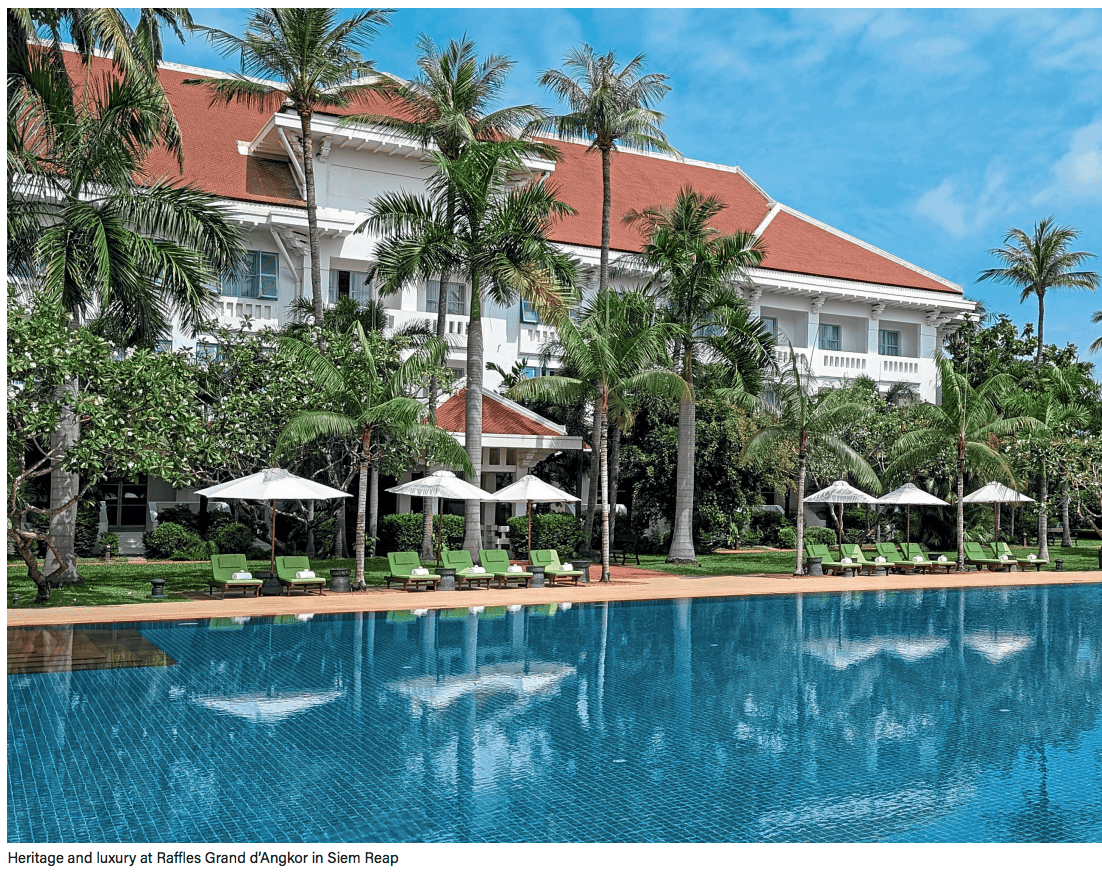
On this visit, we stayed at the legendary Raffles hotel, or the Raffles Grand Hotel d’Angkor, as it’s fully and properly known. This renowned hotel has been welcoming travellers since 1932 and remains one of Southeast Asia’s most storied heritage hotels. Originally built as a luxury rest stop for those coming to marvel at the then-newly rediscovered temples of Angkor, the property has hosted royalty, statesmen, artists, and film stars over the decades as it marches steadily onward to its centennial celebrations. The colonial-era architecture, manicured gardens, and grand façade exude an oldworld elegance that still resonates today, while recent refurbishments have carefully balanced historical preservation with modern comforts. We particularly enjoyed the oldschool Otis elevator, which has been perfectly restored and maintained, along with the beautiful in-room rotary dial telephones. Remember those?
Speaking of the rooms, those at Raffles are virtually flawless. Everything is cleaned and polished to perfection, the linens are crisp and spotless, the bathroom fixtures sparkle, and not a single thing is out of place. The attention to detail was on full display, and we were enamoured from the moment we entered the room. It’s history, yes, but given a modern touch of the highest calibre. And we found the staff to be uniformly outstanding, too – never sterile or performative, but friendly, gracious, and personable. No request was too small, no need went unmet.
At Raffles, guests can enjoy a choice of dining venues, each superb, each with its own sense of occasion. Café d’Angkor offers refined international and Khmer cuisine, and this is where we enjoyed the hotel’s signature daily Champagne breakfast each morning.
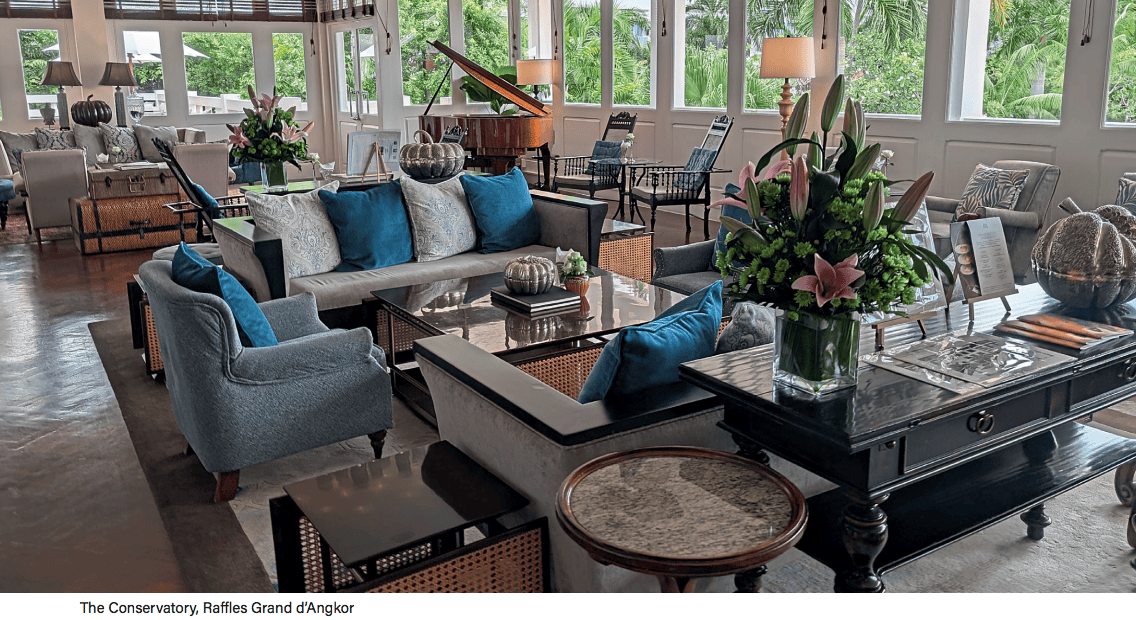
Meanwhile, The Conservatory is a favourite spot for afternoon tea and light bites beneath high French windows overlooking the gardens. At Restaurant 1932, traditional Cambodian dishes are presented with finesse, drawing on timehonoured recipes and seasonal ingredients. Meanwhile, the Poolside Terrace delivers a more relaxed option, with alfresco dining by one of the largest swimming pools in Cambodia. Unsettled weather precluded us from making much use of the pool or the Terrace, but we availed ourselves a leisurely multi-course dinner at 1932, and to say it was terrific would be an understatement. The dishes were executed to perfection, paired nicely with a range of excellent wines, and the service was crisp, friendly, and nicely paced. We’d recommend making a dinner here a special part of any stay at Raffles.
No visit to this grand old hotel would be complete without a stop at the iconic Elephant Bar, which has long been a social hub in Siem Reap. Frankly, if there’s any regret from our time spent at Raffles, it’s that we didn’t linger long enough in the alluring Elephant Bar. With its dark wood panelling, rattan chairs, and signature cocktails – including the famed Femme Fatale, created for Jacqueline Kennedy during her 1967 visit – the bar embodies the hotel’s rich history of glamour, elegance, and intrigue. For travellers looking to blend timeless sophistication with heritage, hospitality, and a genuine sense of place, Raffles Grand Hotel d’Angkor remains the quintessential choice in Siem Reap. Trust us, you’ll be sad to leave!
Our stay at Raffles was an absolute delight, and we spent a fair bit of time just strolling around the property, taking in the various sights and historic design elements as we talked with staff, listening to their fascinating tales, and even partaking in a most enjoyable gin class hosted by Nisha, the property’s amiable Gin Butler!
So yes, Siem Reap is a tourism magnet worth considering. The Angkor ruins inspire awe, the food and nightlife deliver fun, but it’s the stories behind the surface – of endurance, of artistry, of sombre stories told and joyful performances staged – that will linger in your memory long after your flight home.
TRAVEL TIPS
Getting There
Though Siem Reap draws tourists from near and far, it still hasn’t quite rebounded to its pre-pandemic numbers, and it’s a small city (about 140,000 in the city proper), so flights are not numerous. In fact, now, AirAsia is the only game in town if you want to fly direct. For travellers in Kuala Lumpur, this is of course great news. Book your seat on AirAsia, and enjoy the short two-hour flight to Siem Reap’s new international airport. You can always take connecting flights through Bangkok or Phnom Penh, but we prefer the direct route, so were pleased to learn AirAsia still offered this option. (https://www.airasia. com/en/gb)
Arrival
Malaysian nationals are welcomed visa-free to Cambodia as fellow ASEAN members. Most other nationals will need a visa. The easiest way is to pre-purchase the visa online at www.evisa.gov.kh. This is the official government site, and we feel it’s the best and most secure. Getting through immigration at Siem Reap is generally quite smooth and efficient.
Siem Reap’s new international airport (SAI) is just over 40 km from the city itself, much further away than the old airport. Transfer options, if not covered by your hotel, include an airport shuttle bus to a central drop-off point (about RM35), tuk-tuk (about RM70), or private car (RM140). You can use your local Grab account to summon a ride and check prices, or you can negotiate with a taxi driver at the airport and sometimes get a better fare. The journey takes about an hour. (https:// english.sai-airport.com/)
Stay and Do
Raffles Grand Hotel d’Angkor provides timeless elegance across its 119 rooms, suites, and villas, located within 15 acres of landscaped gardens just 8 km from Angkor Wat and directly opposite the Royal Palace. Its location strikes the perfect balance: close enough for quick temple visits, yet secluded enough to feel like your own colonial retreat. The hotel’s wellness offerings stand out — the Raffles Spa weaves ancestral Khmer healing traditions with contemporary luxury across six treatment rooms, plus steam rooms, saunas, yoga sessions, and a stunning 35-meter pool inspired by the royal baths of Angkor. Elegant restaurants, the iconic Elephant Bar, and top-tier service round out an experience that’s grand but never imposing. Having first opened in 1932, the hotel still retains its timeless elegance today, offering travellers a luxurious stay that feels both authentically Cambodian and effortlessly refined. (https://www. raffles.com/siem-reap)
Phare The Cambodian Circus is a must-do experience to put on any Siem Reap itinerary. A quick check of Tripadvisor will affirm that nobody leaves this incredible show feeling they didn’t get their money’s worth. Any of the four currently running productions will be riveting, but for a programme that’s as moving and inspiring as it is amazing, choose Sokha, which tells a powerful and emotional story. It’s based on the true-life experience of Phare Ponleu Selpak’s founders – from when they were young students in a thriving Cambodia, their survival of the Khmer Rouge era, and through to their vision and creation of a school using art to help heal and educate other children. (https://pharecircus.org/calendarproductions/#productions)
Shopping and Dining
The entire area around Pub Street (Street 08) in the heart of Siem Reap is filled with options for dining, drinking, and shopping. Prices are usually clearly stated and may be in USD, the local currency (KHR), or both. Credit and debit cards are accepted in many, but not all, outlets. ATMs are widely available, but a US$5 fee is imposed for cash withdrawals. Moneychangers are available here and there, as well, but it’s recommended to just do your cash exchanges before leaving Malaysia. When paying with US dollars, you’ll almost always get any change returned in Cambodian riel.
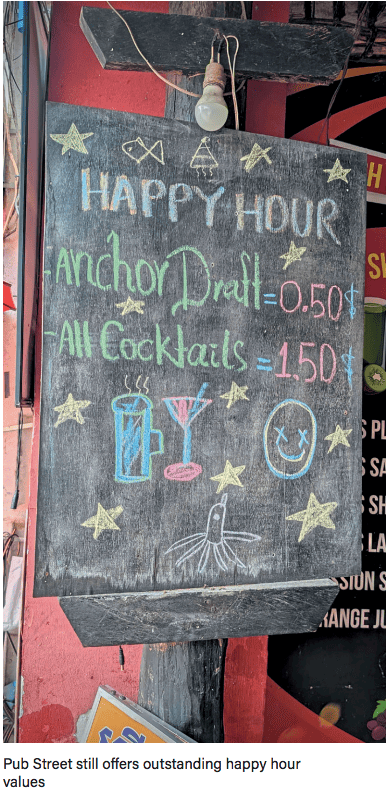
Even in the off season, Pub Street is a hive of activity, but much more so at night. Cold draught beers are available nearly everywhere for 75¢ (about RM3), although some places off the main street still serve up beers at the ‘old’ price of 50¢. Local Khmer cuisine is offered all over the place (be sure to wander down the narrow alleyways between streets), but if you want to sample some very respectable Mexican food, head to Viva Mexican Restaurant – there are two outlets in the Pub Street district. True Tex-Mex aficionados can also seek out Maybe Later Mexican Bar & Grill, just nearby on Street 14. (Try the excellent birria tacos, three for $7,50. www.maybelatertaco. com). For Greek food, check out Elia Greek Kitchen (https:// eliathegreekkitchen.com), which offers tasty Mediterranean fare in a lovely, expansive restaurant with plenty of live plants.
For a posh dinner of authentic local cuisine that will certainly impress, either dine at Shinta Mani’s Kroya (https://kroya. restaurant/) or walk down the river to Malis Siem Reap, a beautiful restaurant that serves impressively prepared Cambodian dishes in an upscale setting. (www.malis.thalias. com.kh/malis-siem-reap)
For something less extravagant, but no less delicious or authentic, consider Amok by Chef Kimsan, in the Pub Street area. In addition to fabulous meals, Amok also offers regular cooking classes, which seem to be enthusiastically attended and well-received. (https:// amokrestaurant.com)
Getting Around
Depending on how far you want to wander, Siem Reap is very walkable. Many hotels and resorts also have bicycles available for guest use. Of course, tuk-tuks are ubiquitous, and you can either flag these down on the street, or use your Grab app to summon them. Fares are incredibly cheap because the distances are often fairly short. Buy a roaming package for Cambodia before you travel to make life with your phone much easier while in Siem Reap.