INTRODUCTION
When most people think of core training, they picture crunches, situps, or maybe a few planks thrown in at the end of a workout. But your core is far more than just “abs”, and the way you train it should reflect that.
If you’re over 50 and want to protect your spine, improve your posture, or move more efficiently in golf, tennis, or everyday life, you need a smarter approach to core work. In this article, we’ll explain what your core actually is, why traditional ab exercises often fall short, and which movements deliver the most benefit.
WHAT IS YOUR CORE, REALLY?
Your core includes more than just your six-pack muscles. It’s a system of deep and superficial muscles that stabilise your spine, pelvis, and rib cage.
KEY PLAYERS INCLUDE:
- Transverse abdominis (deep stabiliser around your trunk)
- Obliques (rotation and side bending)
- Rectus abdominis (your “abs”)
- Multifidus and spinal erectors (postural support)
- Diaphragm and pelvic floor
Together, they allow you to transfer force, stay upright, and move safely. And for anyone still doing crunches on the floor, that’s only a tiny part of what your core is supposed to do.
WHY CORE STRENGTH MATTERS AFTER 50
As we age, we lose muscle mass and postural strength, particularly in the trunk. This can lead to:
- Lower back discomfort
- Difficulty rotating (e.g. golf swing, reversing a car)
- Reduced balance or stability increasing the risk of slipping and falling
Smart core training helps:
- Protect your spine during daily movements
- Improve rotational control and power
- Support pelvic stability for balance and posture
- Reduce injury risk in sport and general activity
HOW OFTEN SHOULD YOU TRAIN CORE?
2–3 focused sessions per week is more than enough. Think of it as skill work and not a race to exhaustion. Precision is far more valuable than volume.
NEXT IN THE SERIES
Train Smarter: Are You Losing Muscle Without Realising It?
We’ll explore agerelated muscle loss (sarcopenia), why it matters, and how to build it back safely and effectively
TRY THESE 3 SMARTER CORE MOVEMENTS
These drills build real-world control and stability.
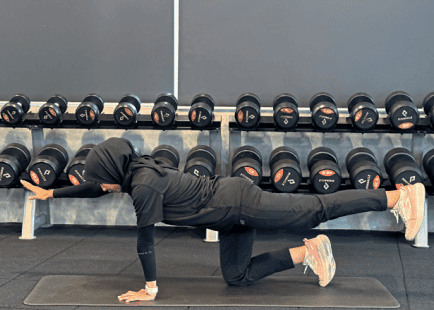
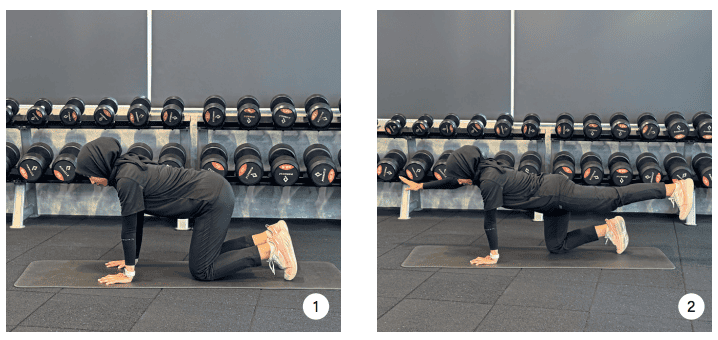
- Begin on all fours, hands under shoulders, knees under hips
- Extend opposite arm and leg straight out
- Hold for 5–10 seconds without shifting your hips
- Repeat 5 reps per side
- Builds deep core stability and balance
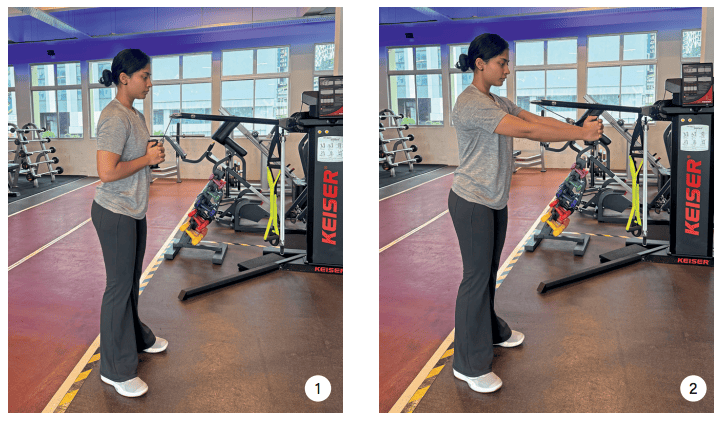
- Stand perpendicular to a cable machine or band
- Hold the handle at chest height and press it straight out
- Hold briefly, then bring it back in
- Repeat 10 reps per side
- Trains anti-rotation and core endurance
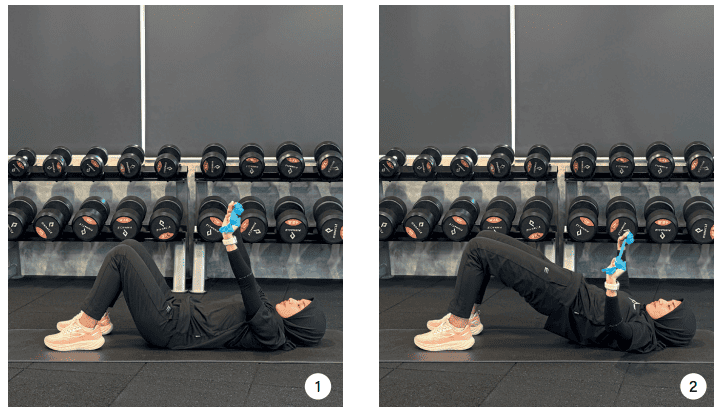
- Lie on your back, knees bent, feet flat
- Hold a resistance band above your chest
- Raise your hips into a bridge while pulling the band apart
- Lower slowly and repeat
- Combines glute strength and shoulder/core stability