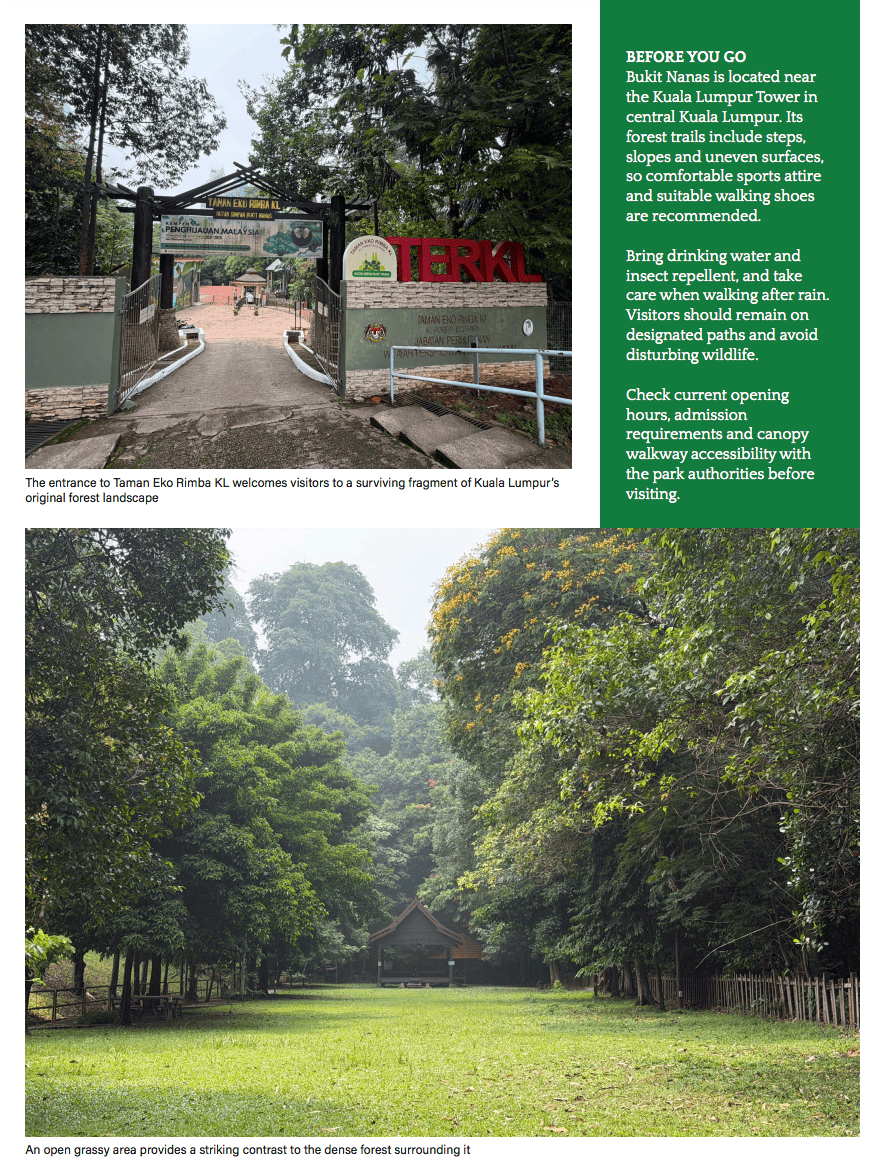
Bukit Nanas: A Walk Through Kuala Lumpur’s Living History
Some places survive because we remember them. Others remind us why remembering matters.
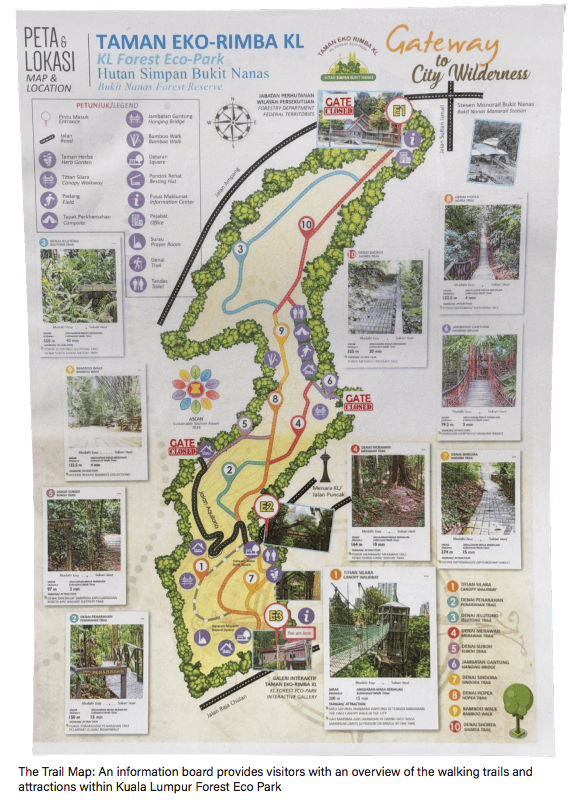
There is something extraordinary about a forest that has watched an entire city grow around it. In the heart of Kuala Lumpur, where skyscrapers rise above busy streets and the city seems forever in pursuit of something newer, faster and taller, a small rainforest continues to stand its ground.
Bukit Nanas.
Its name is familiar to generations of Malaysians, often associated with the Kuala Lumpur Tower rising above its green canopy. Yet how many of us have stopped to consider the remarkable history of the hill itself? Long before the skyscrapers and highways, there was a forest. And remarkably, part of that forest remains.
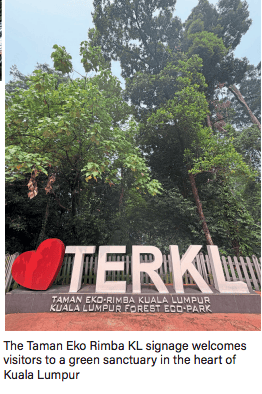
Today, known as the Kuala Lumpur Forest Eco Park, Bukit Nanas offers more than a refreshing walk. It is a surviving fragment of Kuala Lumpur’s original landscape, carrying a story of conflict, conservation and the passage of time.
THE HILL WITH A PINEAPPLE STORY
The name Bukit Nanas translates simply as Pineapple Hill. It sounds almost charming for a place surrounded by the imposing architecture of modern Kuala Lumpur. Its origins, however, are associated with a turbulent chapter of Selangor’s history
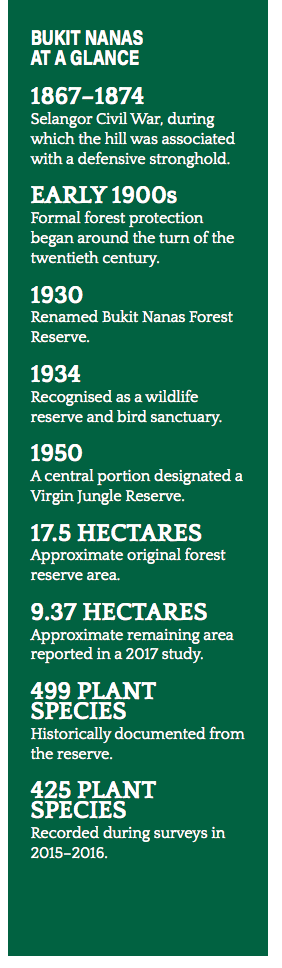
During the Selangor Civil War, also known as the Klang War (1867– 1874), competing political interests struggled for control of the state’s increasingly valuable tin-mining economy. Kuala Lumpur, then an emerging mining settlement, became caught in the conflict. The hill occupied a strategic position overlooking the surrounding area. Historical accounts associate it with a defensive stronghold used during the fighting.
According to a longstanding local account, pineapple plants were grown around the fortification as a defensive barrier. Their sharp, spiny leaves were intended to discourage attackers, particularly at a time when many fighters travelled barefoot. Although the precise details are difficult to establish conclusively, the story has endured in the hill’s name.
It is curious to imagine that a place now visited for its peaceful forest trails was once associated with barricades, armed conflict and the struggle for control of a growing settlement. Yet such contrasts are part of Kuala Lumpur’s history.
A FOREST SURROUNDED BY A CITY
As Kuala Lumpur developed under British administration, Bukit Nanas became known as Weld Hill, after Sir Frederick Weld, a colonial administrator. Around the turn of the twentieth century, its forest began receiving formal protection, becoming one of the country’s earliest forest reserves.
In 1930, it was renamed Bukit Nanas Forest Reserve. Four years later, it received additional recognition as a wildlife reserve and bird sanctuary. In 1950, a central portion was designated a Virgin Jungle Reserve for scientific research and conservation. These decisions proved remarkably important.
As Kuala Lumpur expanded, forests were cleared for roads, buildings and commercial development. Bukit Nanas remained, although not without loss. Historical records indicate that the reserve originally covered approximately 17.5 hectares. By the time of a botanical study published in 2017, the remaining forest was estimated at approximately 9.37 hectares. Almost half its original extent had disappeared.
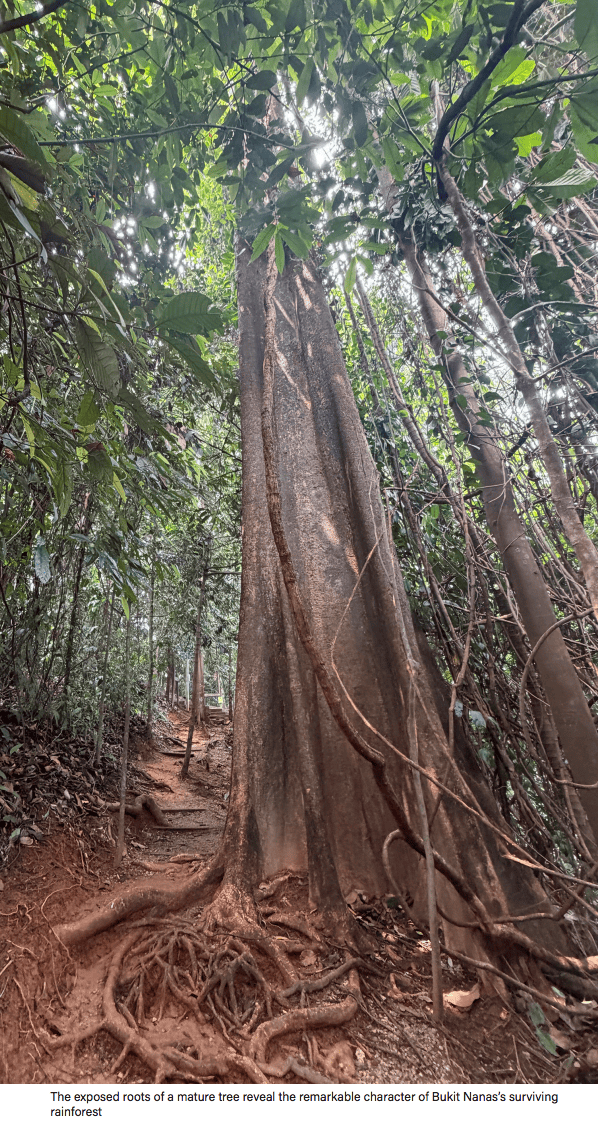
Yet within this relatively small area, researchers documented remarkable biodiversity. The 2017 study recorded 499 plant species historically documented from the reserve, with 425 species encountered during surveys conducted in 2015 and 2016. Among them are members of the dipterocarp family, the towering forest trees characteristic of Malaysia’s tropical rainforests.
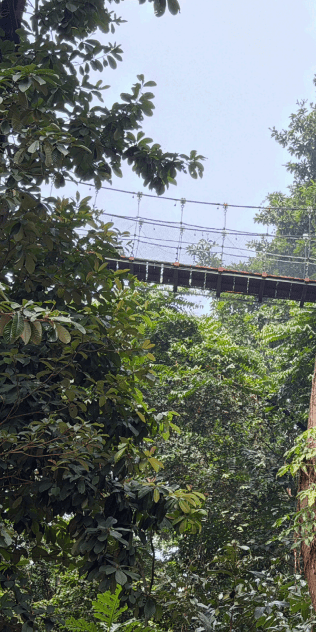
A mature tree cannot simply be replaced by planting a sapling. The shade it provides, the wildlife it supports and the ecological relationships developed over decades are not immediately recreated. Bukit Nanas is therefore more than a collection of trees. It is a living ecosystem whose survival has become increasingly significant as the city around it has grown.
A WALK BETWEEN TWO WORLDS
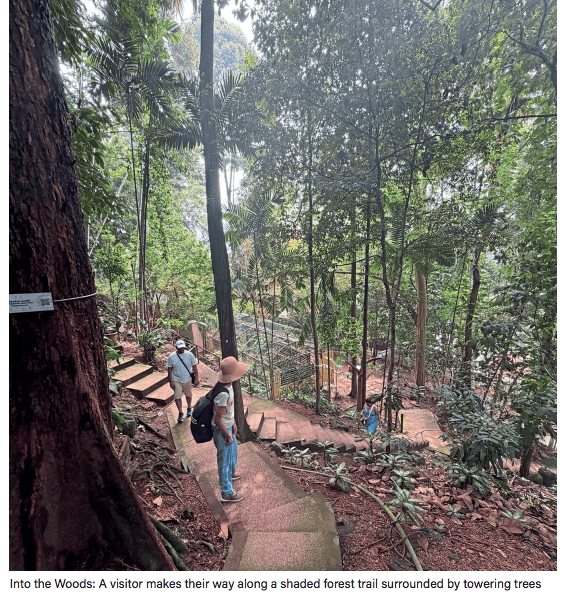
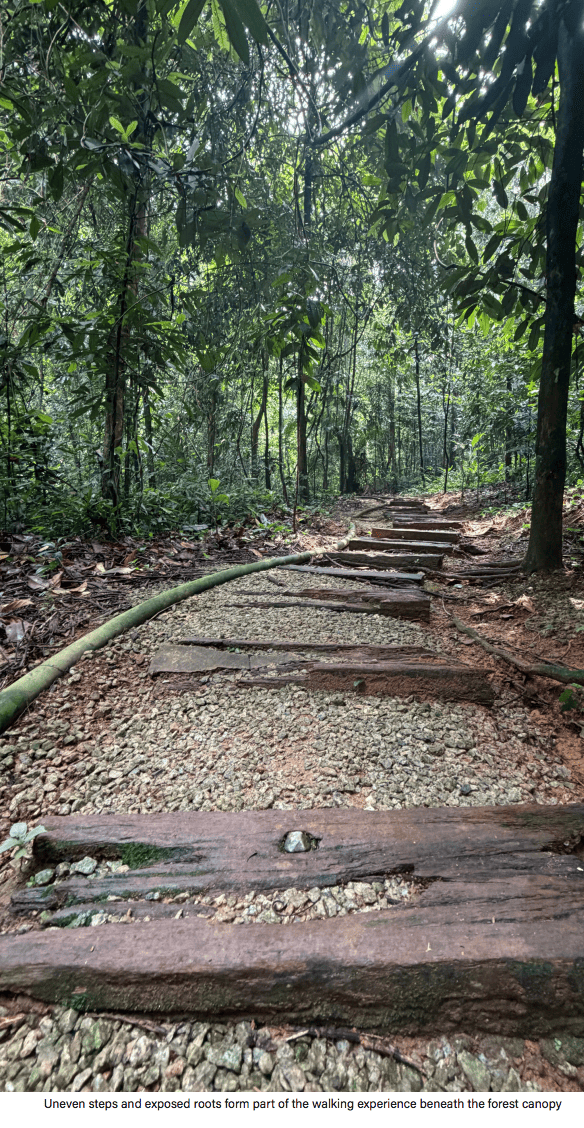
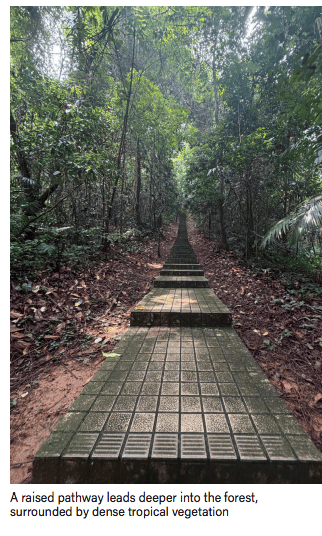
Step beneath the forest canopy and the character of the place begins to change. The city has not vanished. Somewhere beyond the vegetation, traffic continues and thousands of people go about their daily routines. Yet beneath the trees, life seems to move at a different pace. Sunlight filters through overlapping branches. Tall trunks rise from the forest floor, while vines, ferns and smaller plants occupy the spaces beneath the canopy.
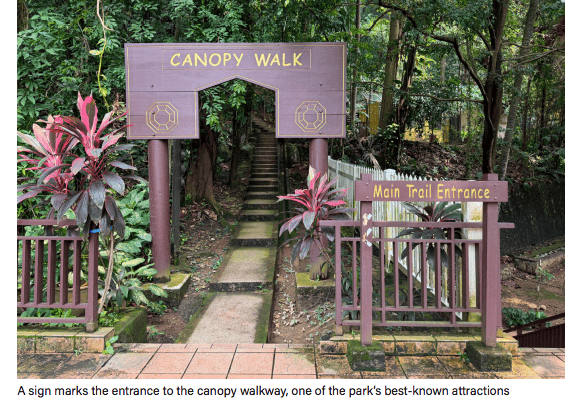
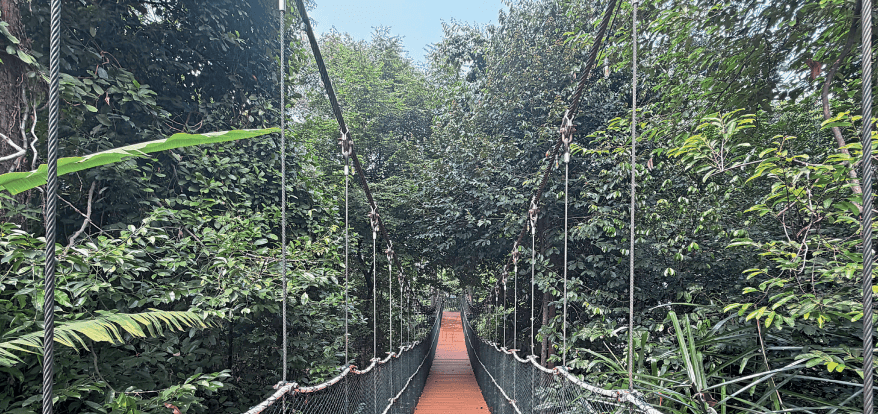
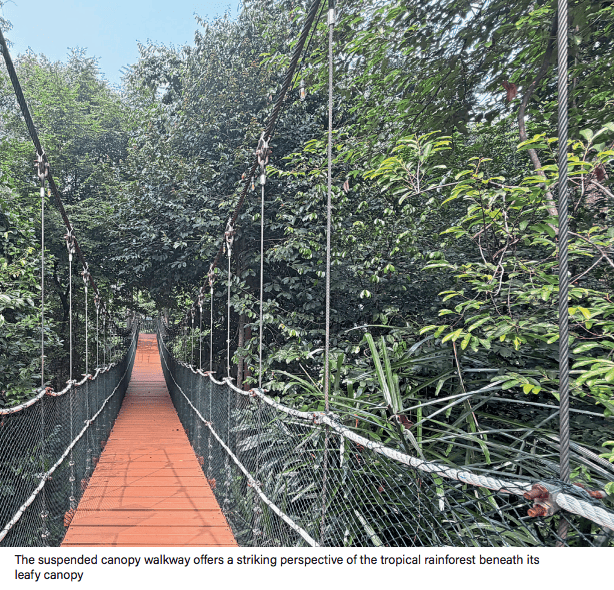
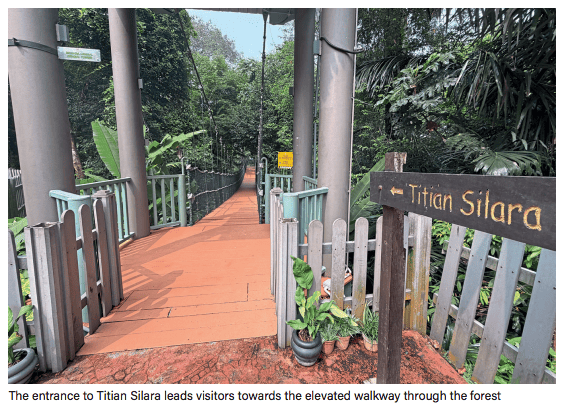
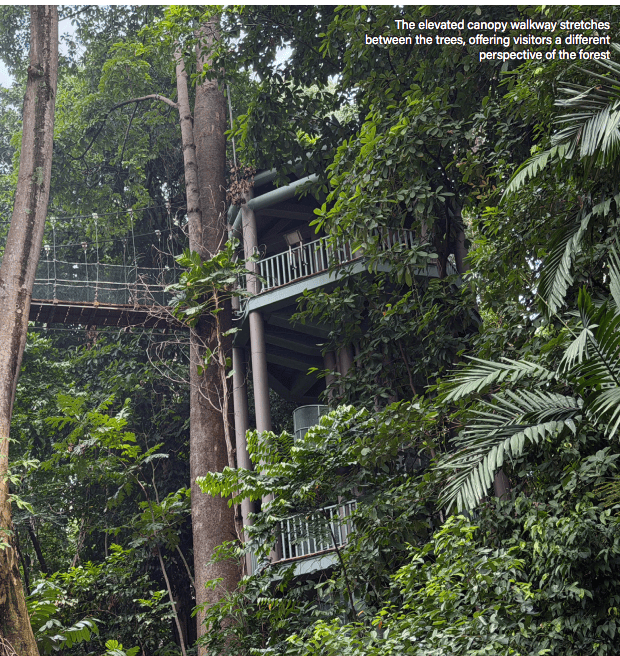
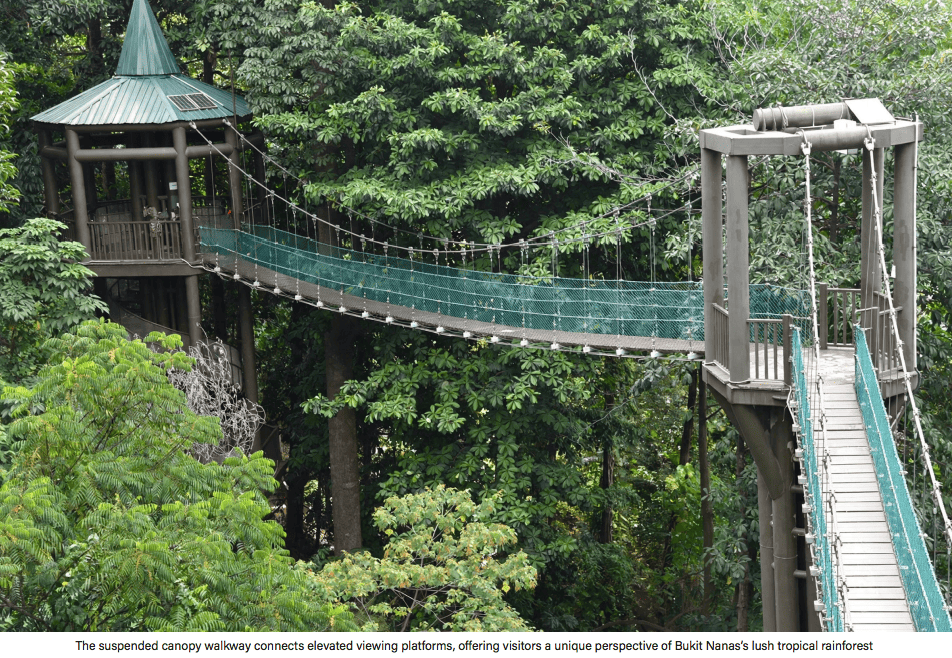
The forest’s best-known attraction, its canopy walkway, offers an unusual perspective of Kuala Lumpur. From above the forest floor, visitors can appreciate the surrounding greenery while glimpsing the towers and buildings of the modern city beyond. It is a striking meeting of two worlds.
The rainforest represents a landscape that existed long before Kuala Lumpur became a city. The skyline represents the extraordinary transformation that has taken place in little more than a century. At ground level, the forest trails offer their own quieter pleasures. There is no great mountain summit to conquer, and the experience need not be measured by distance alone.
For those accustomed to longer treks, Bukit Nanas may seem modest in scale. Yet few places offer the opportunity to experience a tropical rainforest so close to the centre of a major capital. Sometimes the most memorable walks are not the longest. They are the ones that encourage us to notice what we might otherwise overlook.
TWO STORIES, ONE CITY
There is an interesting historical parallel between Bukit Nanas and The Royal Selangor Golf Club. RSGC was established in 1893, when Kuala Lumpur was still developing into the city that would eventually become Malaysia’s capital. Bukit Nanas was already part of that early landscape, its forest subsequently receiving protection around the turn of the twentieth century. Their histories and purposes are very different, yet both have witnessed more than a century of the city’s transformation.
For generations of RSGC Members, green spaces have been part of the Club’s identity. Our fairways, mature trees and landscaped surroundings provide more than a setting for recreation. They contribute to the character of a place shared and cared for by successive generations.
A golf course and a rainforest are, of course, very different ecosystems. Yet both remind us that green spaces possess value beyond their immediate use. The trees that shade our paths today may have begun growing long before many of us were born. Those we protect and nurture may continue providing shade long after we are gone.

Perhaps that is one of the quieter responsibilities that comes with enjoying such places. We inherit their beauty for a time, but we are not their final beneficiaries.
THE THINGS WE CHOOSE TO KEEP
Eventually, the trail leads us back towards the city. The traffic grows louder. The buildings reappear. Kuala Lumpur resumes its familiar pace, as though the little forest behind us were merely a brief interruption. Yet perhaps we leave with a different appreciation of what remains.
We live in a world that often celebrates progress through what is new — taller buildings, wider roads, greater convenience and the constant transformation of familiar places. Progress has its place. Cities must evolve, and each generation inevitably leaves its mark. But there is another measure of progress, one that receives far less attention. It is found in the things we have the wisdom to preserve.
Bukit Nanas has no need to compete with the skyscrapers surrounding it. Its significance cannot be measured in height or commercial value. It is a reminder of what Kuala Lumpur once was, of what has already been lost and of what can still be protected.
Perhaps the greatest gift of Bukit Nanas is not simply the opportunity to walk beneath its trees. It is the chance to understand that we are passing through a landscape whose story began long before ours and, with care, may continue long after.
Not everything valuable needs to change with the times. Some things become more precious simply because they remain.