When did simply sitting still become something we needed to justify?
When was the last time you did absolutely nothing? Not watching television. Not scrolling through your phone. Not listening to a podcast while folding laundry. Not even planning what you should be doing next.
Just sitting. Looking out of the window, perhaps. Watching the rain. Allowing your thoughts to wander without expecting them to arrive anywhere useful. If you are struggling to remember, you are probably not alone.
Somewhere along the way, doing nothing acquired a rather unfortunate reputation. It became associated with laziness, wasted time and that dreadful modern accusation: being unproductive.
We have become remarkably good at filling every available minute. Waiting for someone? Check your messages. Standing in a queue? Read the news. Having a quiet morning? Perhaps it is time to organise the cupboards, clear the inbox or finally learn Italian.
Even our leisure activities now come with performance indicators. We count our steps, measure our sleep, track our reading and congratulate ourselves for completing a meditation session. Apparently, we cannot even relax without keeping score.
WHEN REST BECAME AN ASSIGNMENT
There was a time when an afternoon could simply unfold. You might sit on the veranda with a cup of tea, watch the neighbourhood go about its business or spend half an hour wondering whether it might rain. Nobody expected a report on what you had accomplished.
Today, we are encouraged to make the most of every moment. There are books about maximising our mornings, articles about optimising our evenings and endless advice on becoming more efficient versions of ourselves. All very useful, no doubt. But must every waking hour produce a result?
Even holidays can become exhausting exercises in achievement. We prepare itineraries so ambitious that returning to work almost feels like a rest. Every attraction must be visited, every recommended restaurant sampled and every picturesque moment photographed. A perfectly pleasant afternoon spent doing nothing beside a swimming pool can somehow feel like a missed opportunity.
THE UNEXPECTED PLEASURE OF IDLENESS
Perhaps we have forgotten that doing nothing is not necessarily the absence of something worthwhile. Some of our most enjoyable moments happen when there is no particular objective.
A conversation that wanders from one subject to another. A quiet afternoon watching the world pass by. Sitting with friends long after the plates have been cleared, with nobody particularly eager to leave. These moments rarely appear on a calendar. They do not improve our efficiency or help us achieve our goals. Yet they often become the ones we remember
There is something wonderfully liberating about spending time without feeling obliged to explain how it was spent. Of course, responsibilities do not disappear simply because we decide to embrace idleness. Deadlines remain deadlines, bills still need paying and the laundry will not fold itself. But perhaps we can occasionally resist the urge to turn every spare minute into another opportunity for accomplishment.
NOTHING TO REPORT
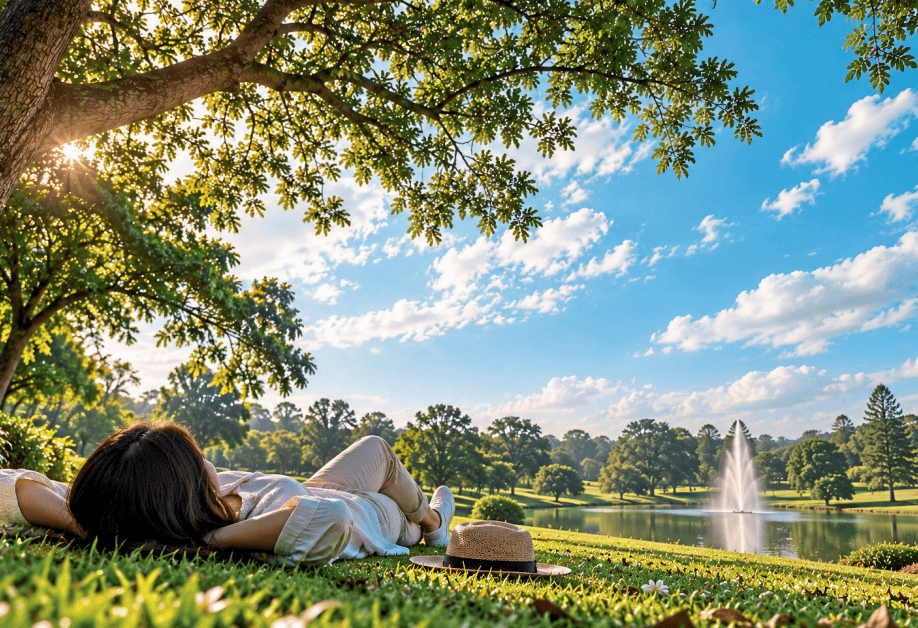
The next time you find yourself with an unexpected halfhour, consider leaving it unoccupied. No checklist. No self-improvement project. No urgent need to become a better version of yourself before dinner. Have a cup of coffee. Watch the clouds. Sit quietly and allow the world to carry on without your immediate contribution. And if someone asks what you have been doing, resist the temptation to invent something impressive.
Simply tell them, “Nothing.”
You might be surprised how satisfying that answer feels.
After all, in a world determined to make every moment count, perhaps the occasional moment that counts for absolutely nothing is precisely what we need.