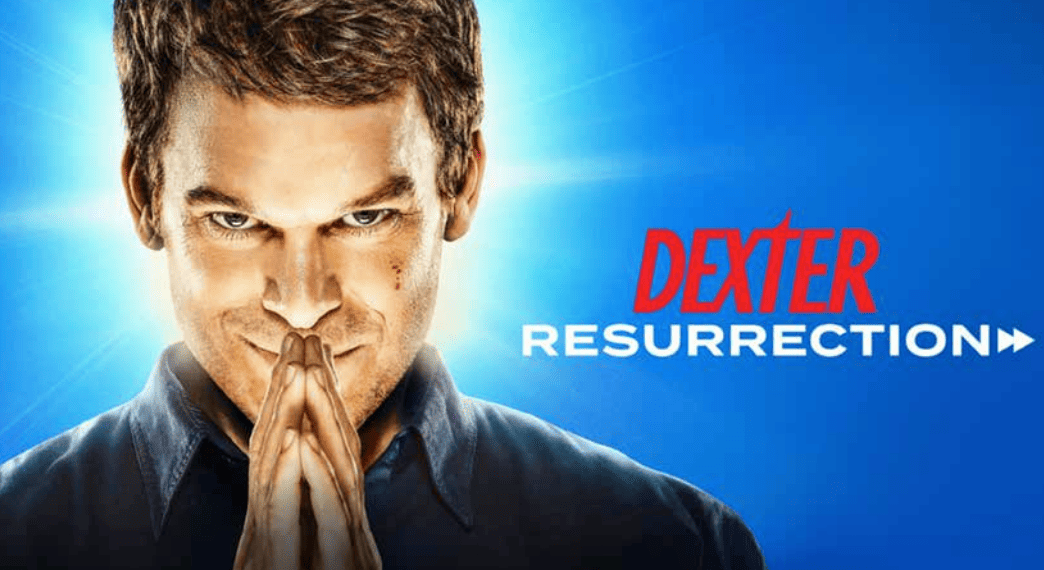
Why a Serial Killer Drama Continues to Hold a 9.1 Rating and an Unshaken Grip on Its Viewers.
There are television shows we watch, and then there is Dexter. He does not simply entertain. He lingers. Long after the episode ends and the streaming platform suggests another title, something remains. A quiet unease, a strange sympathy, a question we rarely admit to ourselves. If justice fails, would we do what he did?
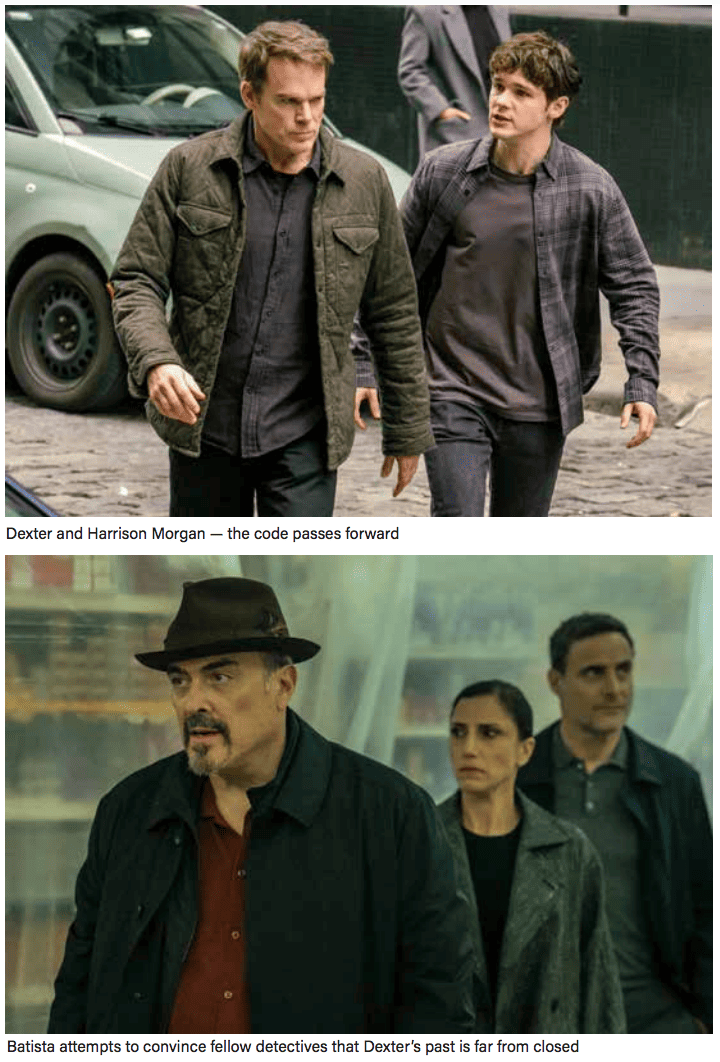
In a media landscape saturated with content, it is almost unheard Batista attempts to convince fellow detectives that Dexter’s past is far from closed of for a revival to outperform its predecessors. Yet Dexter: Resurrection, the latest evolution in the franchise, enters with a commanding 9.1 audience rating, signalling not just strong viewership but devotion. This is not nostalgia viewing. This is fascination. Deliberate, enduring and remarkably personal.
A CHARACTER WHO REFUSES TO DIE EVEN WHEN HE DOES
Dexter Morgan, portrayed with eerie finesse by Michael C. Hall, began his life on screen as a forensic analyst by day and a vigilante killer by night. He was a man who lived by a personal code carved from childhood trauma. While television has since produced many anti-heroes, none have achieved Dexter’s balance of horror and restraint. Where others rage, he observes. Where others justify, he simply acts.
And perhaps that is why audiences cannot let him go. Dexter does not ask for our approval. He earns our attention by remaining terrifyingly consistent in his principles, even when those principles are unspeakable.
RESURRECTION NOT JUST A TITLE BUT A QUESTION ABOUT LEGACY
Resurrection does something bold. It asks a simple yet haunting question. Can darkness be inherited?
Through Harrison Morgan (Jack Alcott), Dexter’s son, we no longer observe the killer. We observe the aftermath. Harrison does not mirror Dexter. He fractures him. He carries the same instinct but with an entirely different emotional vocabulary. Where Dexter was cold and calculating, Harrison is heated and impulsive. Less a scalpel and more a flame
This passing of the code, not by instruction but by blood, becomes the true tension of Resurrection. Viewers are no longer watching a man manage his darkness. They are watching a boy decide whether to embrace or reject it. And that decision is far more unsettling.
THE WORLD AROUND DEXTER MIRRORS OF HIS EXISTENCE
While Dexter remains the core of the series’ gravitational pull, the supporting figures in Resurrection serve as reflective surfaces of his legacy.
• Ángel Batista (David Zayas) stands for justice that refuses to fade. His quiet fixation on unresolved investigations makes him cling to the belief that Dexter is tied to Rita’s death. In holding on so tightly to that conviction, he sets himself on a path that ultimately costs him more than justice ever demanded.
• Detective Claudette Wallace (Kadia Saraf), comes from the NYPD with methodical focus and unblinking precision. She does not chase killers with emotion but with calculation.
• Blessing Kamara (Ntare Guma Mbaho Mwine) offers his friendship with a quiet sincerity, unaware of the monstrous world he has stepped into. Grounded, human and beautifully ordinary, he stands as a reminder of the life Dexter could never hold on to, the kind of existence that slips through fingers trained to kill.
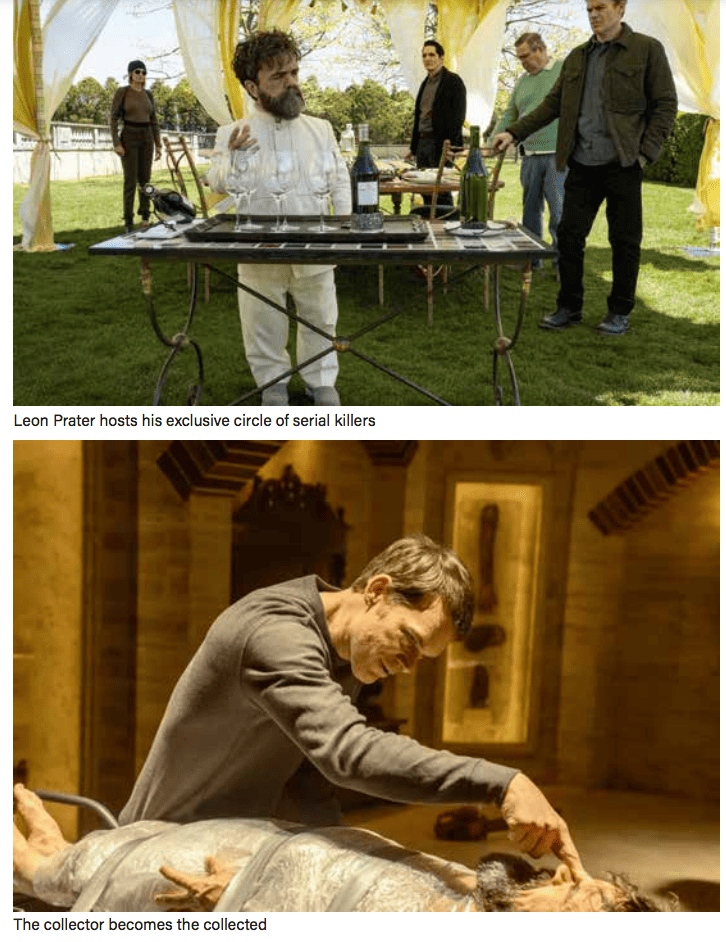
• Leon Prater (Peter Dinklage), a wealthy collector of serial killer artefacts, turns murder into spectacle. Where Dexter kills to uphold a code, Leon collects killers as one would collect art. He believes he has found a kindred spirit in Dexter’s persona “Red”, only to learn that darkness cannot be curated. In the end, the very darkness he glorified decides to curate him instead.
Each character orbits Dexter like a constellation around a dark star, pulled steadily into his gravity. Some seek justice, some seek understanding, and some, disturbingly, seek spectacle. Yet all of them are bound, knowingly or not, to the legend of Dexter Morgan.
WHY A 9.1 RATING MEANS MORE HERE THAN ANYWHERE ELSE
A high rating usually suggests popularity. Here, 9.1 means something else entirely. Endurance.
To hold that level of acclaim this late into a franchise is not a reflection of marketing or hype. It is proof that the world of Dexter is not built on murder. It is built on discipline, philosophy and the haunting lure of controlled morality. Dexter stands apart not because he kills, but because he kills with a reason, however flawed. In a world where justice often feels inconsistent, audiences respond not with approval but with recognition.
THE QUIET THOUGHT THAT DEXTER LEAVES BEHIND
Most crime dramas end with resolution. Dexter never does.
Instead, it leaves you with a quiet internal knock. The sense that a part of you understood him more than you expected to. That is why the show continues to thrive. Not because it shocks us, but because, with unnerving clarity, it makes us question how far we would go if pushed into moral corners.
pushed into moral corners. In the end, Dexter Morgan is less a character and more a mirror. He is elegant, clinical and unsettling. Perhaps that is why, even after all these years, he has not left. He has simply learned to live quietly inside the audience.
DEXTER VIEWING GUIDE: A LEGACY ACROSS FOUR SERIES
For readers who wish to explore or revisit the evolution of Dexter Morgan, here is a concise viewing timeline of the franchise.
• Dexter (Rating 8.7) Year Released: 2006 – 2013 Total Episodes: 98
• Dexter: New Blood (Rating 8.1) Year Released: 2021 – 2022 Total Episodes: 10
• Dexter: Original Sin (Rating 8.0) Year Released: 2024 Total Episodes: 10
• Dexter: Resurrection (Rating 9.1) Year Released: 2025 Total Episodes: 10
• Total Viewing Commitment 126 episodes of controlled chaos, morality and obsession, with Dexter Morgan at the centre of every ripple.
A PERSONAL VIEWING NOTE
If you are new to the world of Dexter, I would suggest beginning from the very first season. Only by starting at the beginning will you understand the evolution of the code, the silence he lives with and the true meaning of his “dark passenger”. Watching it in sequence allows the psychology to unfold gradually, the way it was meant to be experienced.