The Nature Walk: Trees for the Birds highlights how selected tree species support bird life by providing food, shelter and nesting habitats. In our upcoming walk, we will explore fascinating plant stories that are often overlooked. Below are some of the key species that participants will encounter:
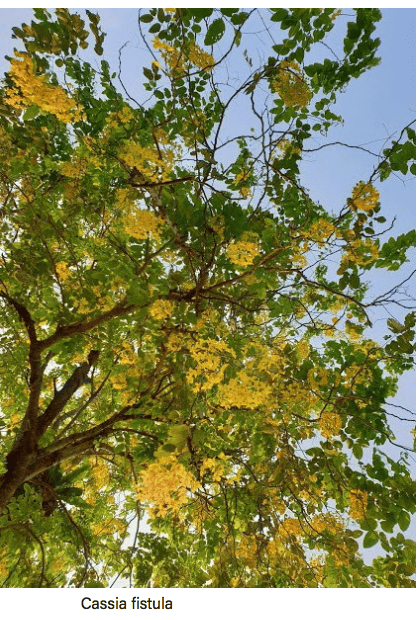
CASSIA FISTULA
Rajah Kayu, Golden Shower, Indian Laburnum
Cassia fistula, locally known as Rajah Kayu, is a medium-sized deciduous tree that can grow up to 20 metres tall. It features an irregular crown with drooping branches and relatively smooth bark.
Its leaves are pinnately compound, arranged alternately, with three to eight pairs of opposite leaflets and no terminal leaflet. During dry periods, the tree sheds its leaves and produces striking cascades of bright yellow flowers, which hang in clusters up to 60 centimetres long.
The fruit is a cylindrical pod, 40 to 60 centimetres in length, turning from green to black when ripe. Inside are numerous sticky seeds traditionally used in medicine. The wood is strong and durable, suitable for cabinetry, while the bark, rich in tannins, is used in leather processing.
Beyond its ornamental value, Cassia fistula plays an important ecological role. Its nectar-rich flowers attract insects, which in turn provide food for insect-eating birds. Nectar-feeding birds may also visit the blooms directly. The tree’s moderate canopy offers perching, shelter and occasional nesting sites, making it a valuable contributor to urban biodiversity.
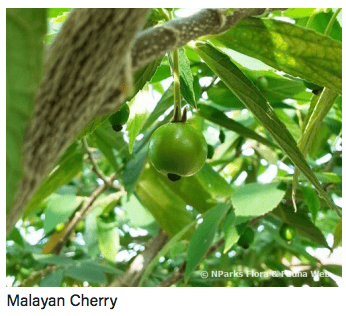
MUNTINGIA CALABURA
Buah Ceri, Malayan Cherry
Muntingia calabura, from the Muntingiaceae family, is widely known across tropical regions and recognised by various names such as Malayan Cherry, Singapore Cherry and Panama Berry.
This small tropical tree typically grows between 3 and 12 metres tall and features a distinctive drooping branch structure. Its leaves are simple, ovate-lanceolate and slightly hairy, while its small white flowers measure approximately 1.25 to 2 centimetres in width.
The tree produces small, round fruits that turn red when ripe. These sweet fruits are popular among both people and wildlife, including birds and bats. The flowers attract pollinators such as bees, further supporting the ecosystem.
Muntingia calabura thrives in a wide range of soil conditions and is drought-tolerant, making it highly adaptable. Its fruits are a key food source for frugivorous birds, while its structure provides perching opportunities, making it an important species for supporting bird populations.
STERCULIA FOETIDA
Kelumpang Jari, Java Olive, Kalupat, Kabu-Kabu
Sterculia foetida is a large deciduous tree that can reach up to 30 metres in height. It is known for its distinctive tiered branching structure and ability to withstand dry conditions.
The leaves are palmately compound with seven to nine leaflets, clustered at the ends of branches. Young leaves appear pinkish, while the twigs are thick and slightly sticky.
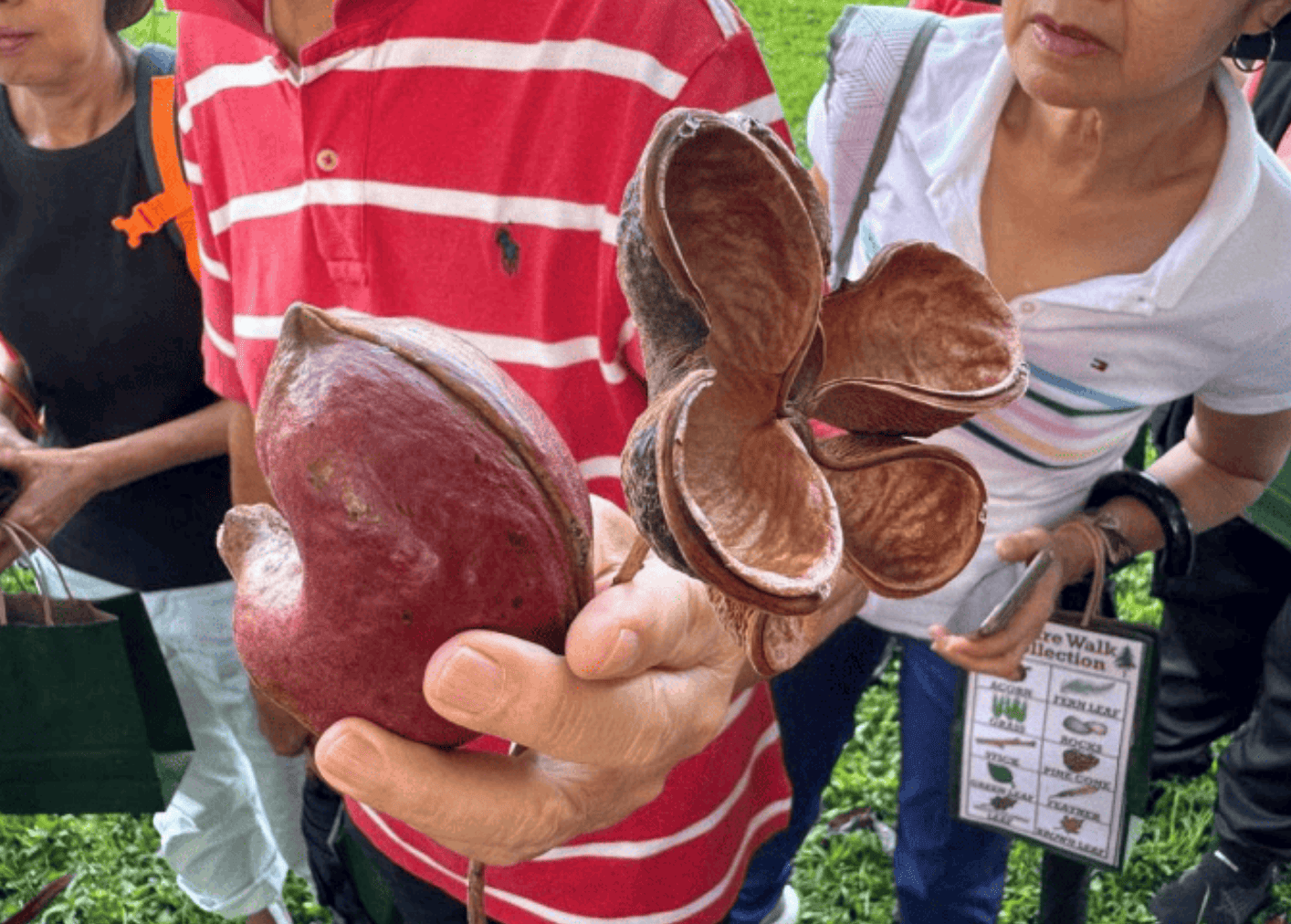
The tree produces clusters of orange, pink or red flowers, followed by striking red fruits that split open to reveal dark seeds. Due to its size and buttress roots, it is best suited for parks and open landscapes.
Sterculia foetida supports bird life by providing ample perching and resting space within its broad canopy. Its flowers attract insects, which serve as food for birds, while its seeds may also be consumed by certain species. Its height and structure make it an ideal vantage point and nesting site.
SYZYGIUM LINEATUM
Gelam Tikus, Kecam, Common Kelat Syzygium lineatum is a fastgrowing tree that can reach up to 20 metres tall, with a dense, conical to hemispherical crown.
The bark is light pinkish to greyish-brown, and in wetter conditions, the tree may develop short stilt roots. Its flowers are pale and appear at the ends of branches, followed by oblong fruits containing a single seed.
These fruits are particularly attractive to birds, making the species an important food source for fruit-eating birds. In addition, its flowers attract insects and pollinators, further supporting bird life.
Its dense foliage provides excellent shelter, perching and nesting opportunities, contributing to a well-balanced and thriving ecosystem.
ACACIA AURICULIFORMIS
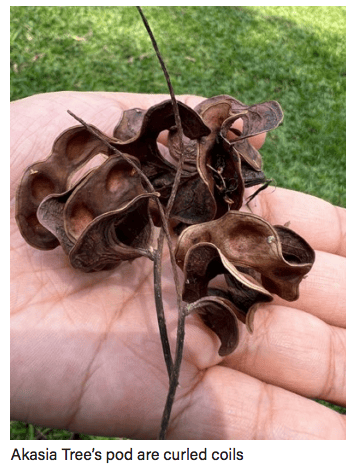
Akasia, Northern Black Wattle Acacia auriculiformis is a fastgrowing tropical tree widely planted for landscaping, timber and ecological restoration. Native to Australia and surrounding regions, it adapts well to Malaysia’s climate.
This species is especially beneficial for birds due to its dense canopy, which provides shelter and nesting sites. Its bright yellow flower spikes attract insects and pollinators, which serve as a food source for birds.
The tree also produces twisted seed pods that may be consumed by certain bird species. Its structure offers protection from predators and harsh weather, making it a reliable habitat for birds.
SAMANEA SAMAN
Rain Tree, Umbrella Tree
Samanea saman is an iconic tropical tree known for its wide, umbrella-shaped canopy. It is highly beneficial to bird life, offering both shelter and food.
Its expansive branches provide ideal perching and nesting sites, while its flowers attract insects that become food for insect-eating birds. The tree also produces seed pods containing nutritious seeds that some bird species feed on.
With its dense foliage and large canopy, the rain tree offers protection and a stable habitat, enhancing biodiversity within the landscape.
COME AND JOIN US!
Join our next Tree Walk on Wednesday, 6 May 2026 at 8.00 am and discover the remarkable stories behind the trees that shape the Old Course landscape. Each walk offers a deeper appreciation of nature and the unique biodiversity of The Royal Selangor Golf Club.