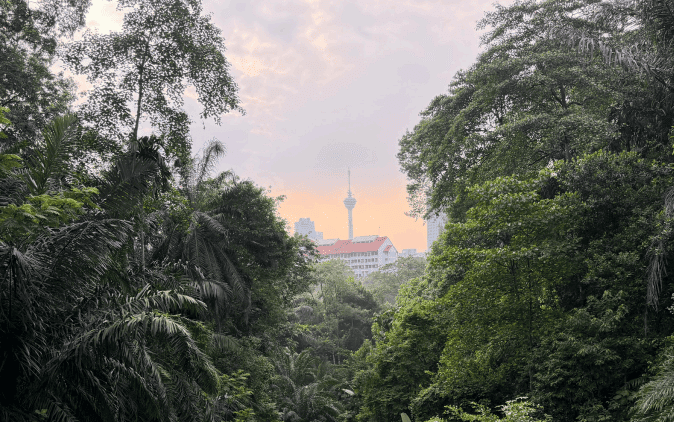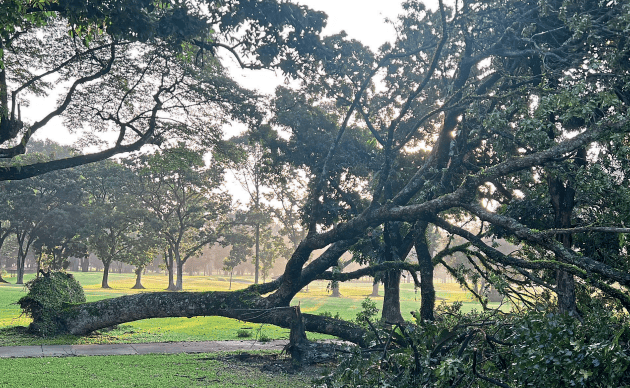
Let’s join the nature walk which will be organised this November. This time, the nature walk will expose the habitat of the wildlife for wetland and terrestrial at the Second New Course.
There are 4 stations which start from the Lake 18th Hole New Course, Lake 17th Hole New Course, Lake 11th Hole New Course and Nature Area of 11th Hole New Course. Along the walk to the wetlands, there are several species of aquatic plants Cat Tail flowers that will be highlighted in the lake system, which attract the water birds. A connecting corridor from the forest to the aquatic lake system creates a mutual environment to serve both the forest birds and the water birds.

Cat Tail flowers
Typha angustiloba Linn – Cat Tail
Cat Tail is a Perennial plant. A parennial plant is any plant that persists for several years, usually with new herbaceous growth from a part that survives from growing season to growing season. The Plant is herbaceous, tufted, erect, 1.5-3m tall, with short round stems. The stem creeps underground, from which tufted plants emerge. The leaves are linear, pointed at the tip, up to 3.5m long and 1.5cm wide, rising from the base of its stem. It has flowering stems 2.3 m tall, with flower spikes towards its end, cigar-like, male inflorescence towards the top and female inflorescence in a compact and thicker cylinder 2.5-4.0 cm below the male. Female inflorescence is about 30cm long and 2.5 cm in diameter, reddish brown, and covered with fluffy white hairs when mature.
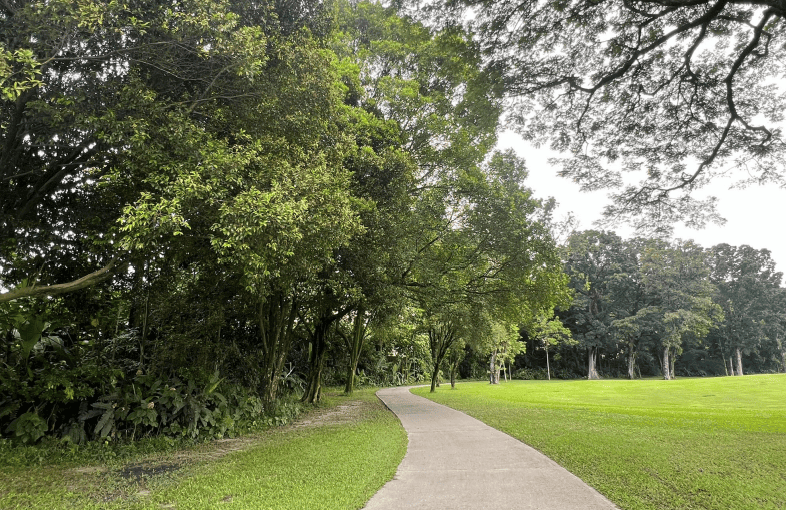 Habitat enhancement.Existing reserved forest at 11th Hole New Course
This cat-tail plant can be propagated by seeds and rhizomes. It ecologically functions to reduce suspended solids and chemical pollution, and biodegrades organic pollutants in water. It lives in open areas, swamps, ditches, examining ponds, and lakes, in fresh and brackish water. It is also an important component of lowland brackish swamp ecosystems.
The other uses of the cat tail, the rhizomes are rich in starch and sometimes eaten. The leaves are used for thatching and weaving. The flower spikes make decorative dried flowers. Occasionally, the fluff from old inflorescences are used to stuff pillows. In Chinese herbal medicine, the pollen is roasted until black and used to stop bleeding. Unroasted pollen is a diuretic against urinary problems, and also used for abdominal pain. The rhizomes make a cooling drink and diuretic, and are recommended for treating mastitis, fever and dysentery.
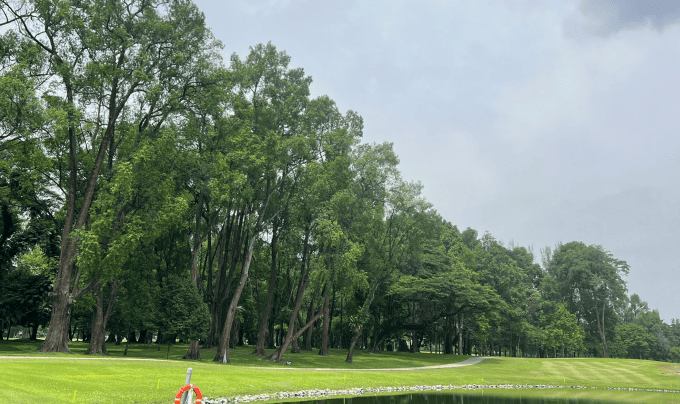 Proposed nature area at 4th Hole Old Course
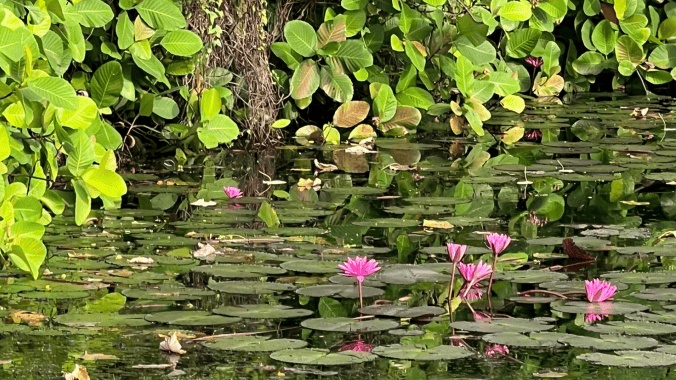
Nymphea nouchali Burm – Water Lily
Known as Kelipok or Water Lily, this perennial, emergent aquatic plant with large oval peltate and cordate leaves are found floating on water. The leaves are 25cm or more across, often purplish beneath. The flowers produced above water are fragrant, showy, and 5-12cm across, come in various colours, from white to purplish blue to pink, open only for several hours in the morning. The fruit is globose in form like berry that can reach up to 5 cm high, with persistent stamens.
It can be propagated by seeds and corms. Pest potently and occasionally attack the leaves, a species of greenish caterpillar which can completely defoliate the plant. Its ecological function is ornamental, in gardens and parks. It may reduce suspended solids and chemical pollutants, and biodegrade organic pollutants in water. It lives or occurs in stagnant freshwater pools, swamps lakes, and ditches.
The other uses of this water plant are that the juice of the plant is used as an astringent to treat gonorrhoea. It also has a narcotic effect, and is rubbed on the forehead or temple to induce sleep.
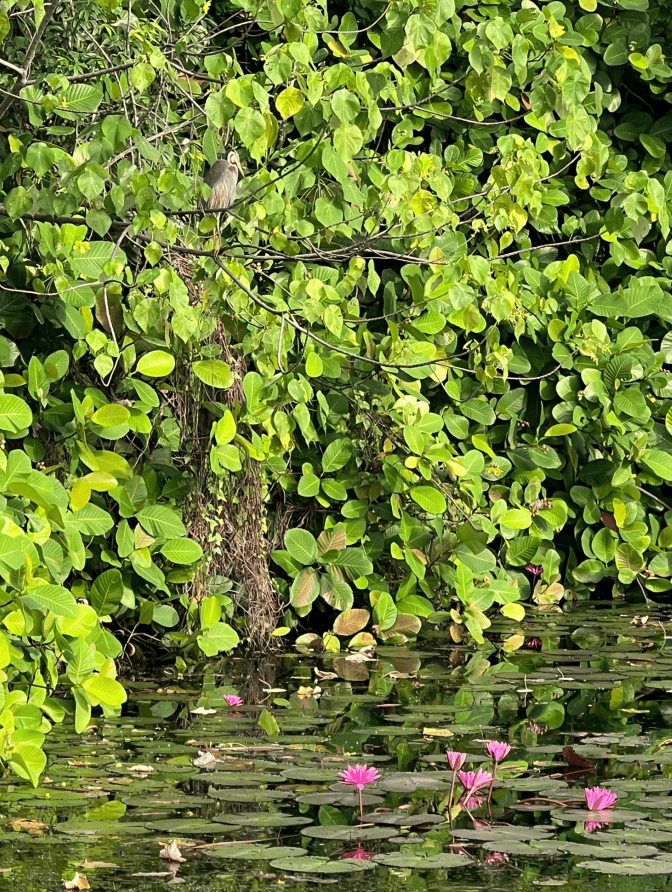 Simpoh Air as intermittent plant with floating Water Lily on the lake
Polygonum barbatum B1.
The local names are Tebuk seludang or panji-panji, and also known as knotgrass and smartweed. The perennial, robust plant, branching from the base, some basal branches creeping whilst other branches erect up to 30-90 cm tall. Stems are cylindrical, hollow, thickened at the nodes, and smooth to the touch due to appressed fine felt-like hairs. The leaves are simple, entire, oblong to lanceolate, sometimes with a dark brown spot in the centre, spirally arranged with short petiole petioles, both sides covered with fine dense felt-like appressed hairs. Bears 2-8 inflorescences at the end of branches, each 3-8 cm long, and three-sided.
It can be propagated by seeds and stem cuttings. It ecologically functions as bank protection, ornamental and sediment control. Lives in open wet areas, at borders of pools, lakes, ditches, rivers and rice fields. Commonly found in abandoned mining pools.
The other uses of the water plant were previously used in traditional medicine for treatment of smallpox. The seeds are also consumed by fish.
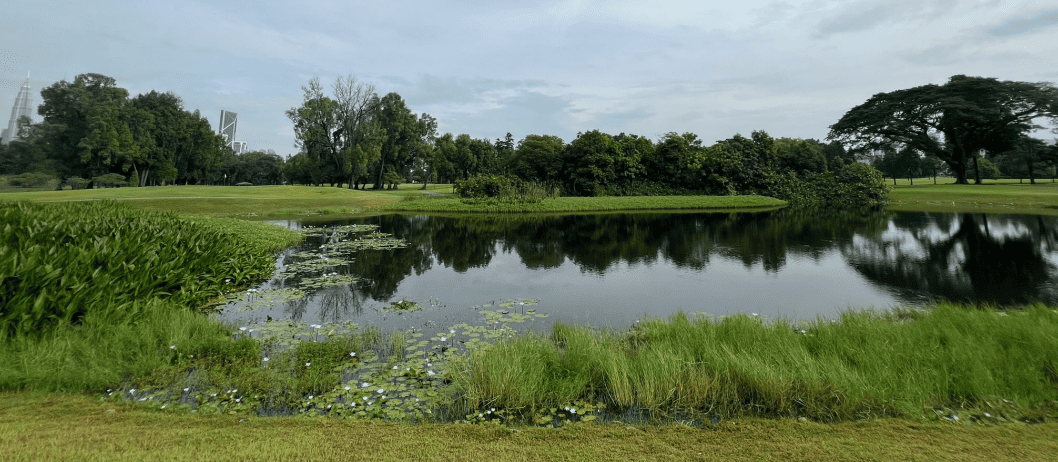 Wetland of 11th Hole New Course
Hanguana malayana (Jack) Mor.
Known also as Bakong in Malay. Commonly called as Hanguana. It is a perennial plant. It has large pineapple-like plants up to 1m high, with rosette leaves rising from a short stout stem. Leaves are 100cm long by 18cm wide, dark green, thick, and broadest at the middle. Inflorescence to more than 0.5 m long, with many branches. It has many small greenish to yellowish flowers. The fruits are small round berries, 0.5 to 1cm in diameter, green when young, turning dark purplish or black ripe. It multiplies by suckers to a thick dense stand. Distinguished from terrestrial forest varieties by its thicker leaves and lack of hair.
It lives in open wet areas, in ditches, edges of lakes and ponds.
Ecologically functions as bank protection, reduces suspended solids and chemical pollutants, and biodegrades organic pollutants in water.
The uses of Hanguana are also as shelter and food from the fruits for the water and arboreal birds. The Black berries of Hanguana borne in large bunches.
Dilenia suffruticosa
Plants that are categorised in the zone of intermittent. Known as Simpoh Air or as shrubby simpoh. This evergreen shrub can grow up to 6m in height. The large cabbagelike toothed leaves are 15-28 cm by 7-14cm, borne on winged stalks. The yellow are flowers 10-12 cm wide, scentless, either in simple or branched racemes, 17-43 cm long. Very often, flower buds, anthesizing flowers and developing fruits are found on the same inflorescence. Flowers open and close punctually, opening at 3 a.m. without fail. Fruit set occurs on 36th day after its petals fall. The fruit is covered by sepals when young, eventually splitting along 7-11 rays with white borders. Seeds pale with scarlet pulp.
The leaves are often attacked by the cockchafer beetle, Adoretus compressus, at night, often leaving only veins. It can be controlled by spraying chlorpyrifos insecticide or light traps.
rnamental if the bright yellow flowers are produced continuously, as slope protection and can also attract many species of birds, particularly bulbuls. It lives in Belukar or in secondary forests, wasteland and swampy areas.
It can be used as landscape plants, often planted on slopes and along highways. Traditionally, its young leaves were used to wrap bean-curd and cooked food.
Alstonia spatulata
Known as Pulai Paya, basong in Malay or as pagoda tree or marsh pulai. This small tree can reach up to 25 m high, easily recognised buy its pagoda-like crown formed by a unique layered –branching habit. There are 4 to 6 leaves in a whorl and the trunk is sympodial. The leaf blades are dark green above, yellowish beneath, and often notched the at tip. All parts of this plant produce copious white latex when injured. The tree is deciduous, shedding leaves at regular intervals. Flower fragrant, white, corolla lobes 0.7 to 1.2cm long and 1.3 to 1.9 cm wide are produced in loose terminal clusters. Fruit occurs as a pair of long hanging pods typical of Apocynaceae family, hairless and about 20 cm long, glaborous, producing, seeds with rounded ends.
It can be propagated by seeds or stem cuttings. There is no serious pest or disease known but occasionally attacked by lepidopterous caterpillars, feeding on its leaves and causing them to curl. Its ecological function is ornamental and for slope protection. It lives in lowland swamps, peat forests on the fringes of ex-tin mining ponds, and in the water.
The other uses of Pulai Paya are that its light wood is used to make pith-helmets, setting board for insects and floats for nets. Latex from its bark is used for treatment of sores and skin diseases.
Reserved nature of 11th Hole New Couse
Several species were introduced for their terrestrial habitat enhancement. The main program is to increase plant species diversity to provide food source and refuge for wildlife and bird species. In addition to providing good ground cover and low vegetation for example long grass and herbaceous ground cover are important as shelter. In addition, to create structural complexity and tree density to provide shelter for wildlife.
The plant selection involved the selection of different species of plants, to attract different group of birds. Different types of birds prefer specific types of plant species for food and shelter. These forest birds are categorised into 4 groups; insectivorous birds, frugivorous birds, nectarivorous bird and gramnivorous birds.
Plants with complex aerial root systems, or fine and divided leaves or flowers, will attract different kinds of insectivorous birds such as Ixora spp. These species too provide attractive screens for areas which attracts insects to their sweetsmelling flowers. Fruiting trees like Senduduk will attract frugivorous birds like bulbuls, flower peckers and green pigeons. Ficus tree will take slightly longer time to grow before it will fruit, but after that it will fruit every two or three months, giving excellent food supply throughout the year. The plants bearing fruits which are attractive to birds are like the Neem tree, Chempaka and Cherry tree. Those marsh species like Fimbristylis spp., Axonopus compressus, and Cyperus iria produce small nuts on inflorescence and provide food for munias and weaver birds.
The most important habitat features are, plant species diversity so as to provide food. Good ground cover and low vegetation like long grass and herbaceous ground cover are important to provide shelter.
The nature area and layout are designed to take into consideration inclusion of refuges of dense vegetation. Together with transition zones, lawns and short grass all of which act connecting corridors.
To attract water birds, the combination of aquatic plants and the surrounding environment of the lake were also looked into. This better approach was aimed to create a connecting corridor between the forest birds and the water birds. The reserved forest will serve well as a refuge area for water birds, and the lake as a feeding ground. Meanwhile the lake also serves as water source and feeding ground for the forest birds.
Alongside the plans, we had proposed some other nature area which is 4th Hole Old Course to 6th Hole Old Course with several plant species that ecologically function for the habitat enhancement.
If water management and wetland habitat creation are successful at RSGC, there will likely be a wide range of common wetland and urban bird, amphibian, reptile, mammal and insect species that will naturally invade the site. These species will benefit from the more structured wetland habitats, more food plant species and perhaps breeding sites in the Bird Sanctuary