It’s safe to say that even the most casual of wine aficionados has had their fair share of great moments with wine – sampling a lesserknown grape variety, sharing a special bottle with close friends, watching the sunrise over a wine estate, or enjoying wines paired with creative dishes.

For me, a bottle of Bouchard Finlayson Pinot Noir at the One&Only Cape Town a few years ago opened my eyes to the quality that exists in South African wines. While the rainbow nation’s Chenin Blanc and Pinotage wines were well known, I was blindsided by the possibility of Burgundianstyled Pinot Noir wines from South Africa. In my subsequent research, I discovered that Peter Finlayson pioneered and perfected South African Pinot Noir in collaboration with celebrated Burgundian winemaker Paul Bouchard at the appropriately named Hemel-enAarde Valley (Heaven and Earth) estate near Hermanus.
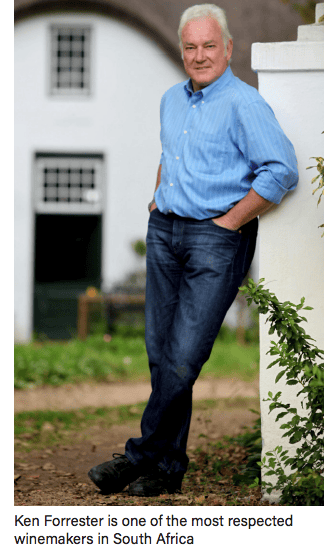
While South Africa is considered a ‘New World’ wine-producing country, the land on which grapes are grown in South Africa was first granted by the Dutch East India Company to settlers for agriculture as early as 1655. We feel it’s safe, then, to assume that South African wine production has been around for a long time, and its winemakers know a thing or two about their craft.
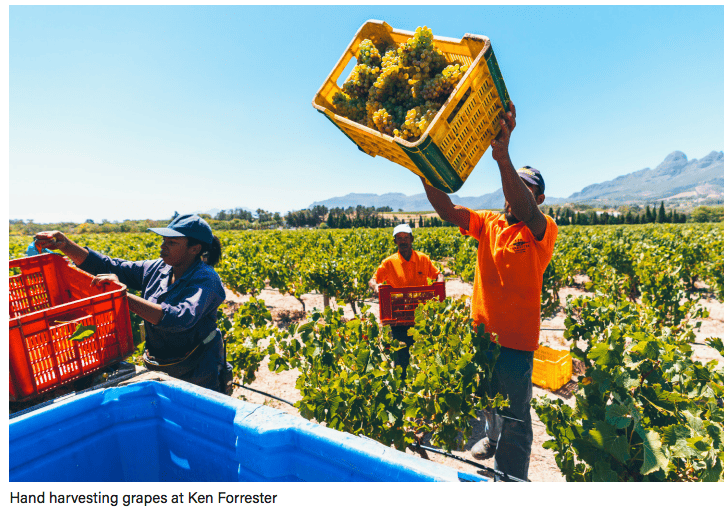
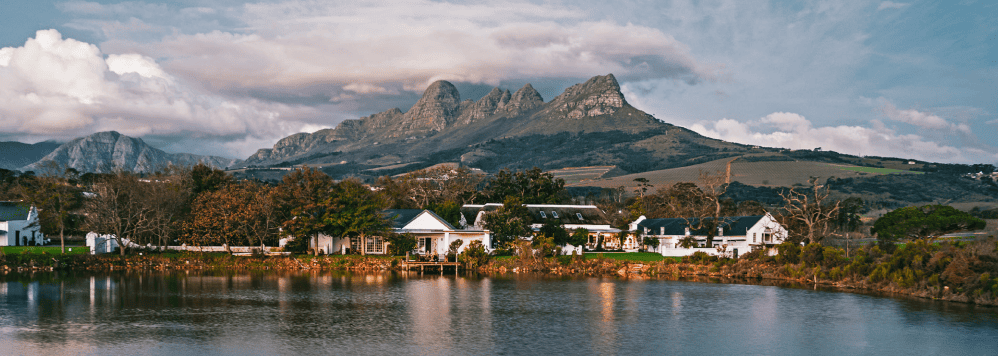
Indeed, South Africa’s wine industry has long been one of the most established in the Southern Hemisphere, hardly surprising with a winemaking history that dates back to the 17th century! Today, the country’s key growing regions are largely concentrated in the Western Cape, where a Mediterranean climate, varied topography, and mineral-rich soils provide favourable conditions for both white and red varietals. Chenin Blanc remains the most widely planted grape, though recent years have seen growing international recognition for South African Syrah, Cabernet Sauvignon, and blends. While many estates follow traditional winemaking methods, there’s also a notable shift towards smaller, independent producers experimenting with natural techniques, lower intervention, and sustainable farming practices. The result is a wine landscape that is diverse, evolving, and increasingly respected worldwide. That evolution touches all facets of viticulture and vinification in South Africa. Once dominated by bulk exports and old-guard cooperatives, producers are now shifting their focus to premium wines and sustainable practices to better compete on the global stage. The country is the world’s eighth-largest wine producer, with over 500 wine estates spread mostly across the Western Cape. Regions like Stellenbosch, Paarl, and Swartland have become synonymous with bold reds and crisp Chenin Blancs. The future for many South African producers is investing in terroirdriven wines and organic methods.
Regrettably, South African wines do not appear to be wellrepresented on Malaysian wine shelves, and those that are displayed tend to be positioned at the budget end of the price spectrum. Perhaps having a Bouchard Finlayson moment, we sought to unearth those that rose above the pack. Here are four standout South African reds that we’ve found, inspired by traditional French winemaking traditions, from the two wellrespected wine estates of Ken Forrester and Rupert & Rothschild.

KEN FORRESTER RENEGADE
Ken Forrester produced one of the very first Rhône-style blends in South Africa. This elegant wine, comprising Shiraz, Grenache, and Mourvèdre grapes (typical of GSM wines from France’s Rhône and other parts of the world like Australia), displays Old World style so typical of lands close to the Mediterranean Sea, but in a New World fruit-forward expression. Renegade is a bold, red blend that captures the spirit of innovation and elegance.
Crafted in the heart of Stellenbosch, the wine brings together three well-known varieties in a rich, full-bodied expression that reflects both the terroir and the winemaker’s rebellious positioning. The juice was fermented in open tanks with gentle extraction and then pressed and racked into second and third-fill French oak barrels for 18 months. This full-bodied wine has a hint of earthy, rustic Grenache and Shiraz’s noble spice with hints of nutmeg and olives on the finish. Mourvèdre brings structure, depth, and complexity to the party. The wine is complex and balanced with soft natural tannins to make for easy drinking. Enjoy this wine with roast lamb, roast duck (Peking style), and full-flavoured Mediterranean dishes, as well as slow-cooked Greek lamb or grilled meat and vegetables.
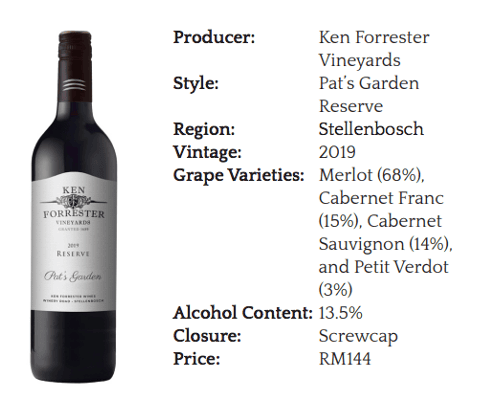
KEN FORRESTER PAT’S GARDEN RESERVE
Pat’s Garden is named after Patricia Forrester, Ken’s late motherinlaw, whose beloved garden overlooks this part of the estate. According to the winery, Pat’s Garden Reserve captures her spirit: nurturing, unpretentious, and deeply rooted in place. The wine is a blend dominated by Merlot with the addition of Cabernet Franc, Cabernet Sauvignon, and just a hint of Petit Verdot. These are four of the noble Bordeaux grape varieties (Malbec being the other that isn’t represented in this blend).
The grapes for the blend are sourced from mature vineyards on clay-rich granite soils near the Helderberg Mountain in the Western Cape. The vines are managed by hand on dry-farmed land, which is maintained through adopting organic practices and without irrigation. The Ken Forrester cultivators grow fruit for concentrated berries and vivid fruit characters. Fermentation takes place in open-top fermenters with indigenous yeasts, followed LIFESTYLE by ageing in French oak barrels for a year or so. The wine opens with ripe cherries, cassis, mint, and subtle tobacco flavours, supported by supple tannins and a lingering minerality. This pairs well with roast lamb, grilled meats, hearty stews, or some of the famous Cape Malay dishes of the region. For example, boboti – a spicy baked mince gently topped by custard that has been marinated in a delicious curry sauce.
RUPERT & ROTHSCHILD CLASSIQUE
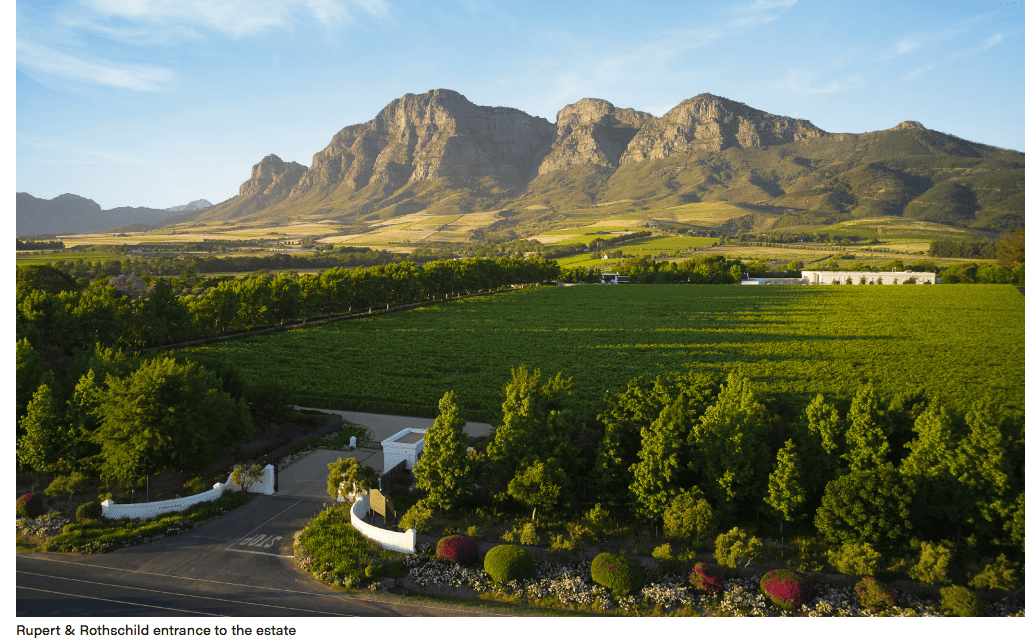
Bouchard Finlayson isn’t the only French connection in South Africa; the collaboration between the late Anthonij Rupert and Baron Benjamin Rothschild is another. French Huguenots fleeing persecution settled in the country in the late 17th century. They put down their roots (certainly those of their grapevines) in the Franschhoek Valley, which means ‘French Corner’, and they played a crucial role in advancing viticulture in South Africa by introducing new varieties and winemaking techniques.
It’s therefore appropriate that the Rupert & Rothschild Vignerons winery is located in the Franschhoek Valley. The late Dr Antonij Rupert and his business partner Baron Edmond de Rothschild founded the winery in 1997 with a shared vision of producing exceptional South African wines. Both families set out to create premium South African wines, emphasising precision and perfection in winemaking. Rupert & Rothschild focuses on crafting just three distinct wines: a Chardonnay, a Bordeaux blend named after Baron Edmond de Rothschild, and a classic red blend called Rupert & Rothschild Classique.
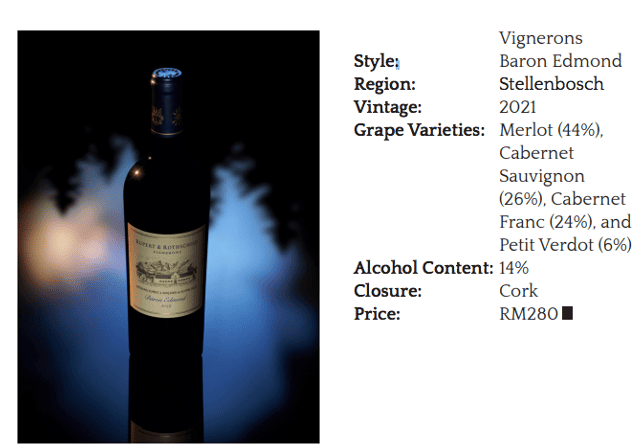
RUPERT & ROTHSCHILD BARON EDMOND
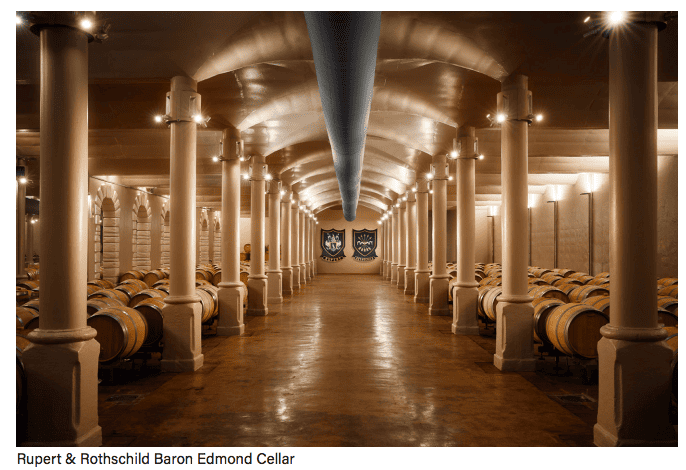
Rupert & Rothschild Baron Edmond is a Bordeaux-style red blend born from a prestigious partnership between the Rupert Family of South Africa and Baron Benjamin de Rothschild of the famed French wine dynasty. While only established in 1997, the land was first farmed in 1690. The wine estate is located in the Franschhoek Valley, a region renowned for its coolclimate elegance and centuriesold viticultural heritage. This wine is mostly crafted from Cabernet Sauvignon, Merlot, and Cabernet Franc and draws its inspiration from Bordeaux’s Right Bank.
Aged in French oak barrels (50% were new) for 18 months, Baron Edmond displays finely tuned structure and elegance. On the nose, we enjoyed layers of blackcurrant and dark cherry, underpinned by traces of tobacco. Fine-tuned tannins and a lingering savoury finish provide length and pleasure with every sip. It pairs exceptionally well with robust meat dishes such as aged beef, venison and slowcooked lamb. Its restrained power and balance suggest its ageing potential, gaining complexity with bottle age, if you can wait that long. What sets this wine apart is the ability of the winemakers to harness Old World winemaking techniques with the South African terroir. This starts in the vineyard with hands-on viticulture and continues through to the winemaking of low-intervention cellar practices and decades of shared expertise.