Fittingly, on 27 September 1825 – exactly two centuries ago – the world’s first steam passenger train chugged out of Darlington, bound for Stockton in the rolling landscapes of northeast England. While George Stephenson’s invention created localised interest, it wasn’t long after that steam locomotion revolutionised the way people travelled, as it opened the world to new and exciting possibilities.

Within a matter of years, train lines were radiating across Britain and then rapidly across Europe and the rest of the world. Asia soon followed, with the opening in 1853 of a 32 km line between Bombay and Thane. Trains were introduced to the Kingdom of Siam (Thailand) after several decades, reportedly inspired by a toy train set gifted to the king by Queen Victoria. King Rama V was a keen supporter of extending the kingdom’s rail network, and he became known as the father of Siam’s railroads.
His enthusiasm led to the opening of the railway line from Bangkok southwards to the seaside retreat of Hua Hin. Formerly a quiet fishing village along the Gulf of Thailand, approximately 200 km south of Bangkok, the area soon emerged as a preferred holiday destination for the nation’s elite.
THE ‘IRON HORSE’ ARRIVES
The railway arrived in Hua Hin in 1911, but the station was rebuilt in 1926. Its most striking feature is the splendid royal waiting room constructed in the Thai architectural style. The structure was moved from Sanam Chan Palace, Nakhon Pathom Province.
Once Hua Hin became linked to the capital, affluent travellers quickly began visiting for some seaside solitude. It is worth remembering that this was an era of limited travel, with the train journey from Bangkok being quite an adventure then.
By 1921, the railway linked Bangkok, Hua Hin, Malaya, and Singapore. The king established a summer residence in the town, and all those seeking royal favours had to travel to Hua Hin to meet the king when he was on vacation here. Two royal palaces were erected here, and, for several months each year, the affairs of state were conducted in the palaces. Royal retreats such as Muruk Khatayawan Palace, built entirely from teak, are open for visitors to inspect, and the royal family still maintains a retreat here.
The Royal State Railways of Siam (now the State Railways of Thailand) knew they were on a winner with the railway line, and in 1923, they opened a hotel close to the railway station. The Railway Hotel opened as an elegant and refined beachside resort along the Hua Hin beachfront. It was built in an era when long journeys were a luxury, and Hua Hin became an exclusive retreat for Siam’s royalty and socialites. It was built on land owned by the railway, which still owns it but leases it to its current operator, the 200-room Centara Grand Beach Resort and Villas Hua Hin.
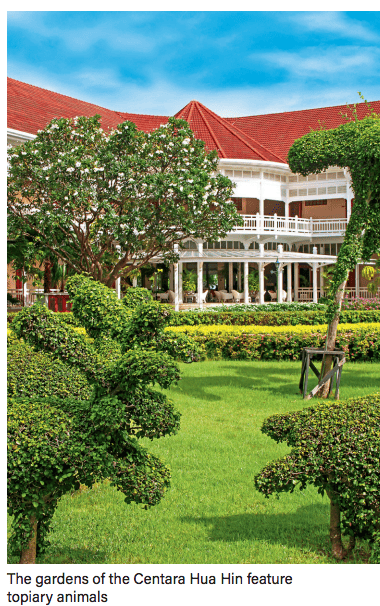
This style of hotel still retains the elegance of a bygone era. Its sculptured topiary bushes are a feature, while the property also includes extensive gardens and three pools overlooking the Gulf of Thailand. Guests can enjoy elegant afternoon teas in the Museum Café or play a game of chess on the giant outdoor chessboard. Movie buffs will enjoy knowing that the place was featured in the 1984 movie, The Killing Fields. It portrayed the Hotel Le Phnom in the Cambodian capital, which was an important element in the movie’s plot.
FIRST-TIME VISITOR
When I first visited Thailand in the 1980s, an experienced visitor to the kingdom suggested Hua Hin as the idyllic seaside resort far from the cares of the world. Guidebooks back then suggested that Hua Hin was the Thais ‘little secret’ kept exclusively for holidaying locals. The crassness of Pattaya and Phuket was for the tourists, but Hua Hin was for the Thais.
I took the less-trodden path to Hua Hin and didn’t regret it. On this first visit, I dropped by the hotel to admire its Raffles-like ambiance and gracious hospitality offered in its seafront setting. I have returned on several occasions to be further impressed by a few makeovers and architecturally sympathetic extensions. On each visit, I notice more international tourists, suggesting that the secret is out.
REGIONAL ACTIVITIES
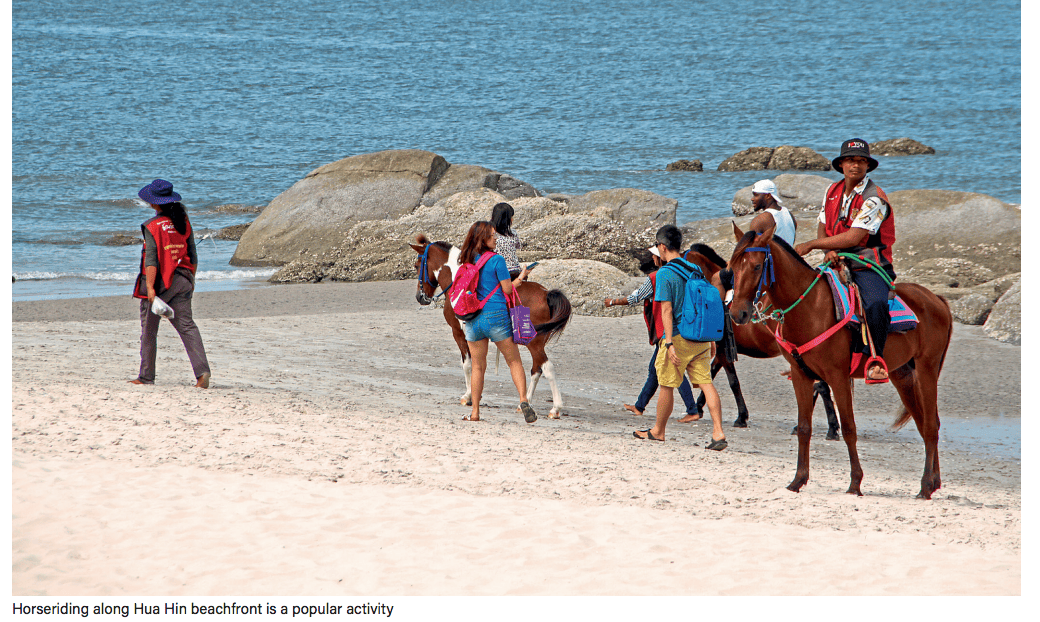
Being the seaside resort that it is, there are numerous activities available on the land and in the sea. Horse rides were and still are popular along the main beach, with numerous handlers available to guide guests.
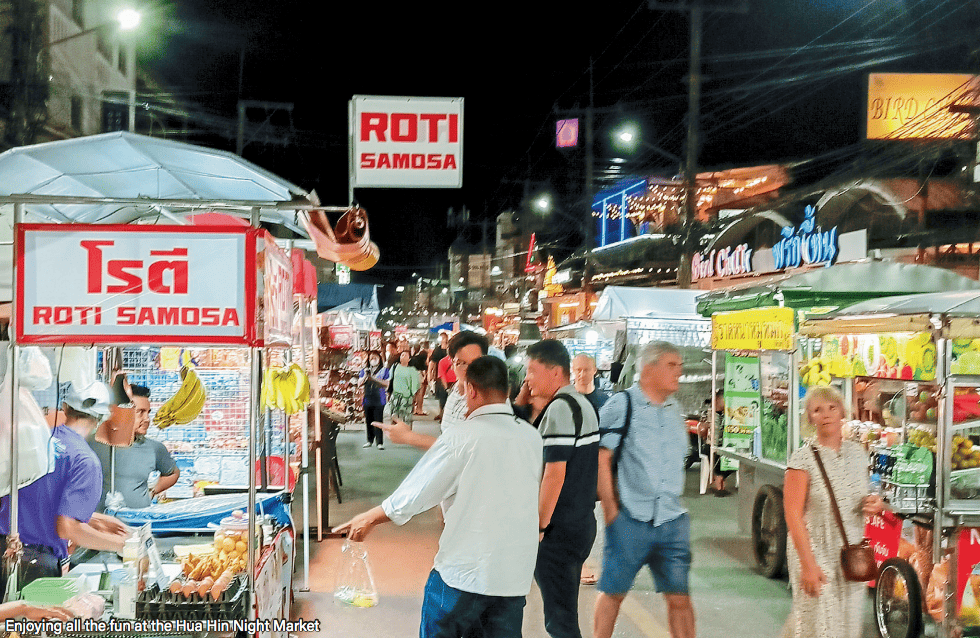
The popular Hua Hin Night Market isn’t the only market in town, with Tamarind and the Cicada Markets just 7 km south of the town centre. Both are within walking distance of several resorts. These markets are adjacent to one another, so weekend visitors are spoilt for choice. The former is more for upmarket arts, crafts, and fashion, while the Tamarind Market has more of a food focus.
FAIRWAYS AND GREENS
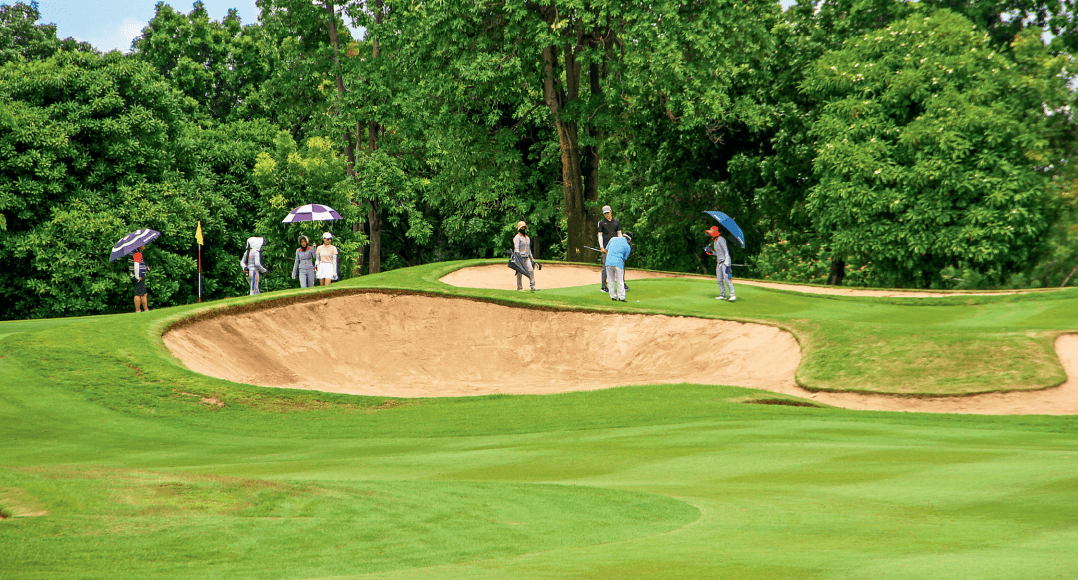
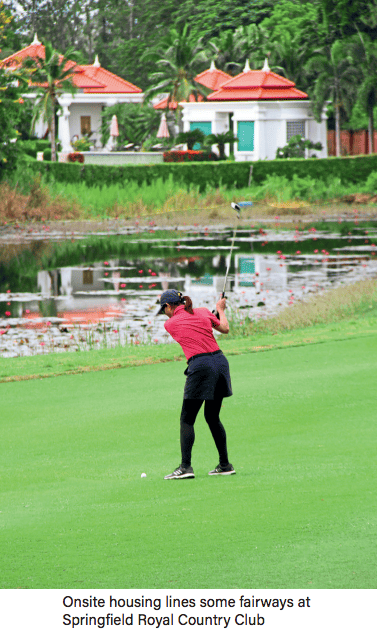
Golf has always been a good reason to travel to Hua Hin. The Royal Hua Hin Golf Course, Thailand’s oldest and one of its most exclusive golf courses, is located near the railway station. The first nine opened in 1924, and the full 18 holes a few years later. Now there are numerous courses along the holiday strip, including Springfield, Palm Hills, Imperial Lakeview, Majestic Creek, and Black Mountain.
My choice on my last visit was Pineapple Valley Golf Club (previously known as Banyan Golf). Opened in 2009, the course weaves across a former pineapple plantation. Pineapples are still grown in parts, but they are more of a design feature than a productive farm.
The course is meticulously maintained and offers golfers a world-class experience with comprehensive facilities. Golfers used to resort courses will love the expansive fairways and generous landing areas. However, the course is no pushover with undulations, high bunkers, and challenging greens.
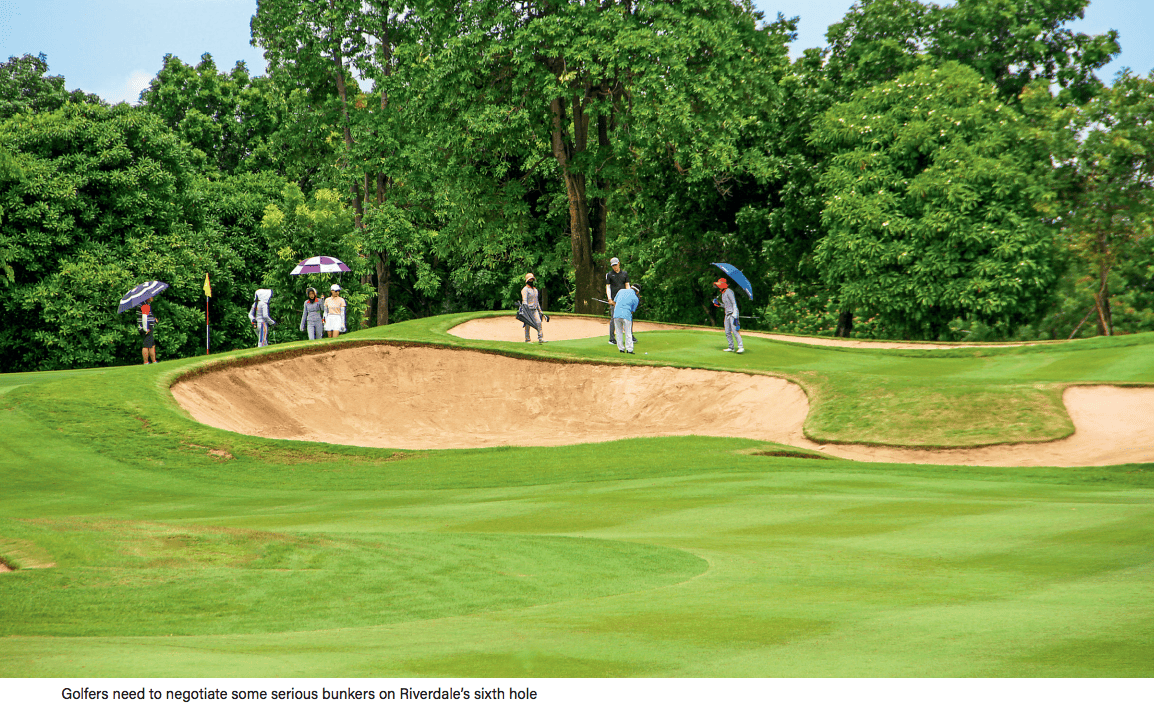
The sixth is one of the most beautiful holes, with its winding fairway and a water hazard near where your ball should land. The difficulty is in the second shot, and it’s best to spend some time admiring the scenery while contemplating the appropriate club to use.
The Thai-style clubhouse includes luxurious changing rooms, exclusive club suite accommodation, Mulligan’s Pub, and The Terrace Restaurant. Spectacular sunset views of the mountains that delineate the border with neighbouring Myanmar are a good reason to linger longer at Milligan’s.
SEASIDE SOJOURN
Resorts and apartment complexes extend along a long stretch of beachfront from Cha Am in the north to Hua Hin in the south. Many international hotel groups are represented along this strip. I have stayed at several properties here, including the Centara Grand, V Villas, Holiday Inn Vana Nova, Hilton, Mövenpick Asara, and SO/ Sofitel.
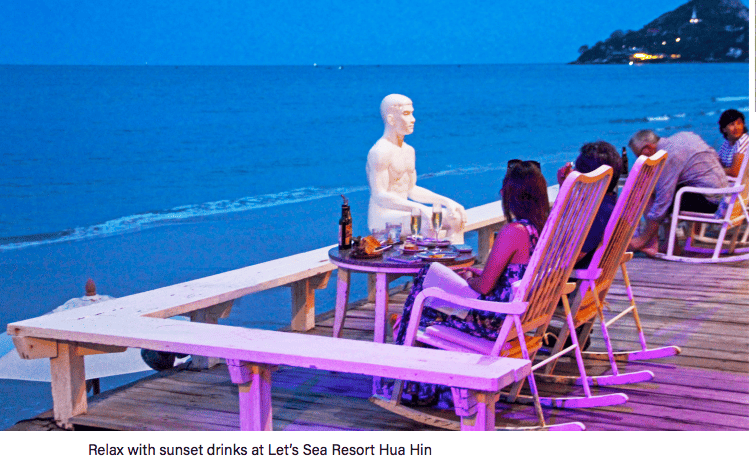
Let’s Sea, a Thai-owned property, is suitable for those on modest budgets. At Let’s Sea Resort and the adjoining Loligo Resort guests can be assured of personalised service. The former caters to families, while the latter is more of a couples’ resort. Both share a long seafront with few beachgoers, and while the sun sets behind the resort, enjoying a seaside beverage served at Squid Ink Bar is most enjoyable. Food and wine are taken seriously at Loligo, with Western, Thai, and Thai fusion dishes served alongside an impressive wine list.
Hua Hin still retains most of its charm, with hawkers serving snacks and beverages in deckchairs beneath umbrellas while horse rides are offered along the sandy strip.
While not the easiest resort to access, once you are in Hua Hin, the cares of the world easily slip by.
TRAVEL FILE
GETTING THERE
Being just a three-hour drive south of Bangkok and without an airport catering to large aircraft made it an idyllic weekend escape for stressedout city folk. AirAsia has had an on/off bromance with Hua Hin, so keep your eyes open for possibilities. The last time I checked, the relationship had chilled, and this means visitors need to fly via Bangkok’s Don Mueang Airport from Kuala Lumpur. Then, it’s a three-hour journey overland to Hua Hin. The railway from Bangkok southward through Hua Hin is being progressively doubletracked and upgraded, and in the not-too-distant future, improved rail connections will be available. The current rail services are slow and not convenient for most visitors.