“SEEING STARS”
Prior to the War, almost all of the famous professional golfers confined themselves to the tournaments at home and chose to hibernate during the winter. Commercial air travel was still in its infancy then. The only stars who set foot on SGC soil then were Joe Kirkwood, the Australian trick shot artist and American Walter Hagen, 3-time winner of The Open and twice winner of the American Open.

They came over in 1937 during a world tour and enthralled everyone – Kirkwood with his sheer artistry in making a ball do almost anything, and Hagen with his demonstration of the more orthodox shot making.
Perhaps the biggest ever impact created by a golf professional in the SGC is that of Tom Verity, who was transferred from Singapore Island Club in 1938 to become the Club’s resident teaching pro. Golfing ability aside (he could match up to any of the touring stars who graced the Club with their presence in later years), his immense contribution in the massive rehabilitation exercise after the War has been well documented and cemented in the Club’s history.
Verity remained as the resident pro until 1962 when he subsequently went on to build a number of other courses in the region, including one in Kashmir, before his retirement in 1979. He was made an Honorary Member upon his return to Kuala Lumpur, where he settled down until his demise in July 2004.
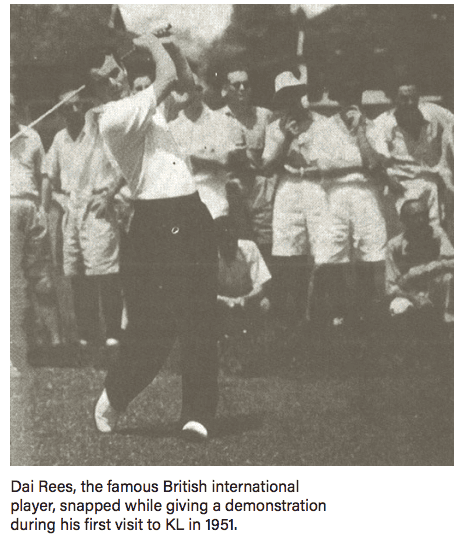
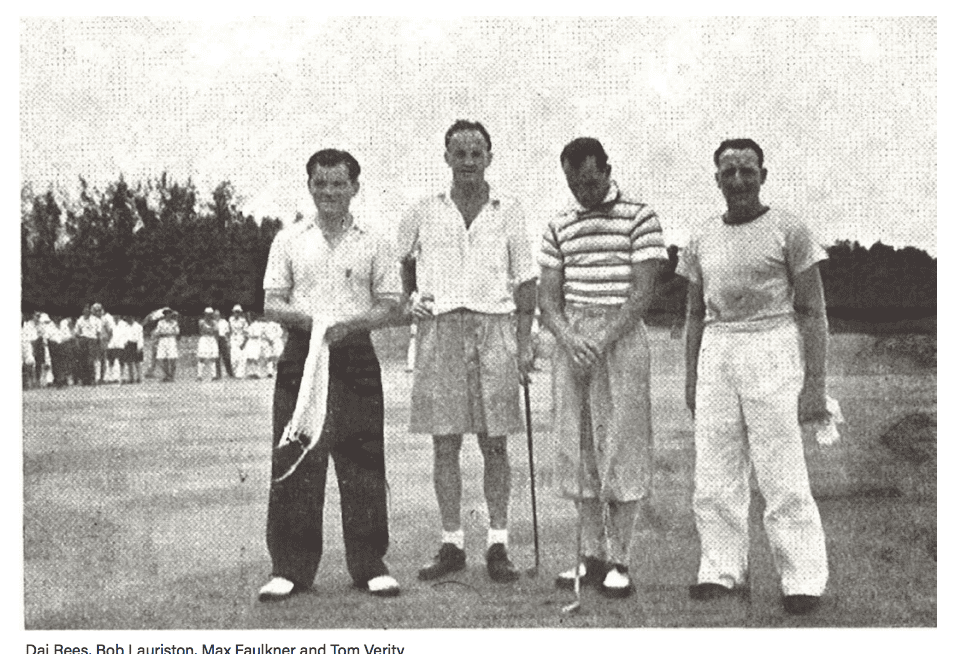
The Club welcomed the first of the post-war visitors in April 1951 when Dai Rees and Max Faulkner, both British Ryder Cup stars, made a diversion to Kuala Lumpur (after a stopover in Singapore on the way back home from Australia). Rees was then the holder for the 4th time of the British Professional Matchplay Championship and Faulkner was to triumph in The Open shortly thereafter in the summer.
The illustrious visitors had an exhibition match against Verity and the then Club Champion R.B. Lauriston. Dai Rees was so delighted with the Club, the course and the surroundings as well as the warmth of his reception, that he undertook to pay a return visit.
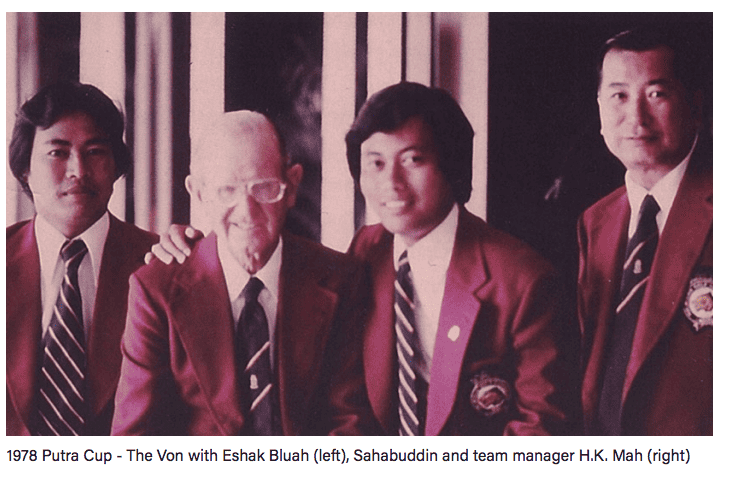
Another outstanding star that is part of RSGC’s history was Norman Von Nida. The Australian came to prominence in 1947 when he took Britain by storm in winning seven tournaments that year (still a European tour record) and a few more in 1948. By the time he retired from tournament play in the mid-seventies, with a bad back and failing eyesight, he had won over eighty championships, although never a major.
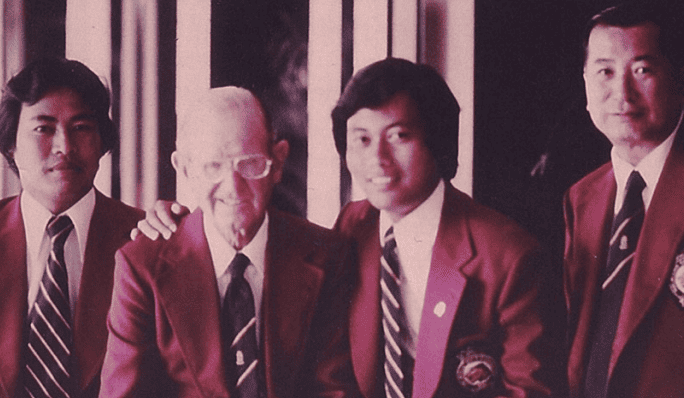
The Von, as he was popularly known, first met up with the Club Captain Tommy Lee and his wife Clarissa in 1975 when they visited him in Australia to seek his expertise and to invite him to assist the Malaysian team to win the Putra Cup. He accepted, much to the delight of the Lees. Before long, he became an invaluable fixed asset at the RSGC. The Von would rise at the break of dawn and would be coaching housewives in the morning and other Members, including Putra Cup players, throughout the rest of the day and if necessary, even in the blazing sun. Hard work or magic or whatever – it worked and almost immediately, paid dividends. His Putra Cup team won in 1976. His charges in the 1977 Nomura Cup were even more impressive, securing third placing among the best amateur players in Asia.
In 1978, Members were treated to some exciting world-class golf when the Club hosted the 4th and final leg of a head-to-head match between Johnny Miller and Graham Marsh. Miller had an 8-stroke cushion at the end of the earlier 3 rounds played at Fanling in Hong Kong, Pondok Indah in Jakarta and KGNS – and looked a certainty. Complacency, nervousness or just plain showmanship, who knows? Whatever it was, the crowd was treated to a nail-biting finish with Miller’s lead whittled down to only 1 stroke going to the par 4 18th. Miller was on in 2. Marsh had to chip from a bad lie, and like a true professional, his ball came to rest a few inches from the hole, and he tapped in for a par. Miller had a tricky putt from 100 feet or so with “potato chip” undulations to surmount.
He did reasonably well to come to within a very missable 6 feet, with a subtle break. The stage was set for a dramatic finish. But Miller was not ranked No. 2 in the world then for nothing. He coolly stroked the ball in to seal victory.
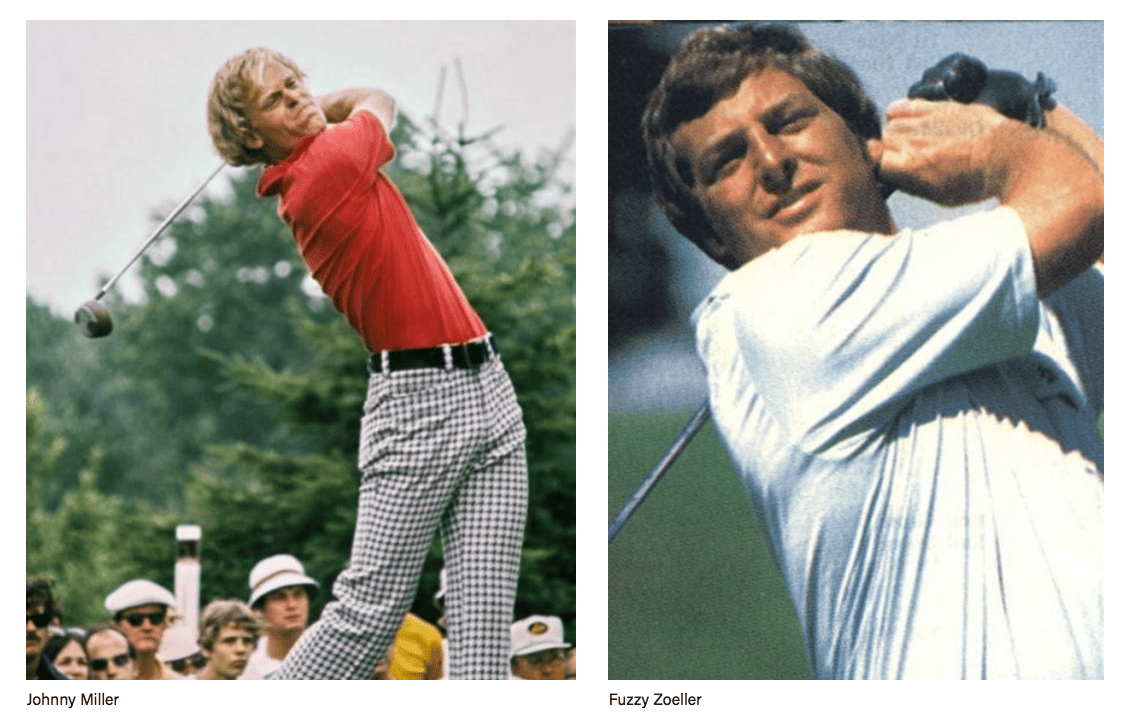
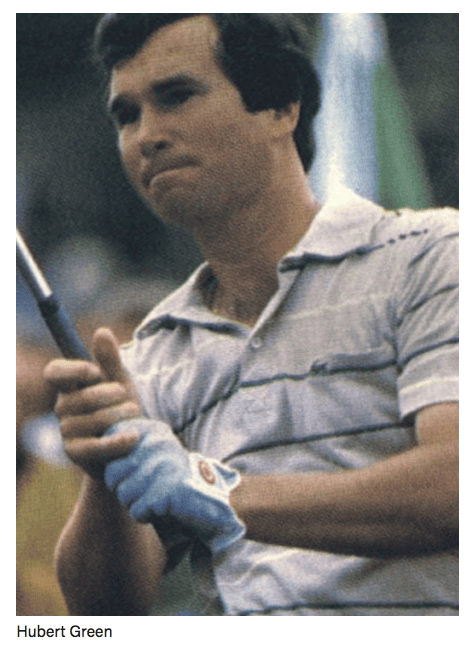
The following year, the RSGC was again the chosen venue for a similar event with Fuzzy Zoeller, the reigning US Masters Champion, taking on Hubert Green, the 1977 US Open Champion. After the first 3 legs in Hong Kong, Jakarta and Ipoh, they were all square. Unfortunately, the eagerly anticipated excitement did not materialise as both finished unspectacularly, with Green just edging his opponent with a 73.
Credit to YK Liew – Excerpt from the book The RSGC: Veritably A Royal Heritage