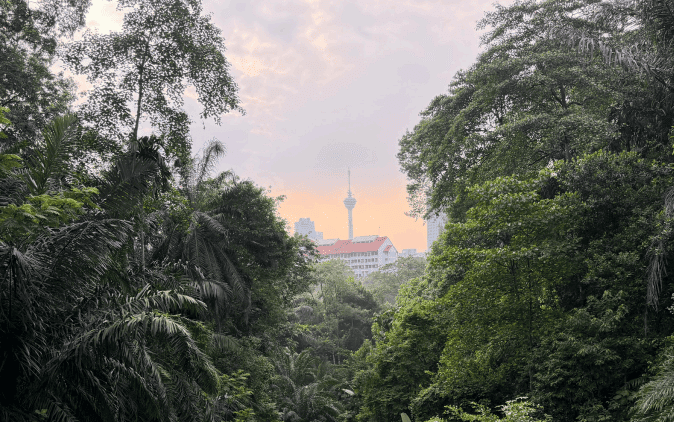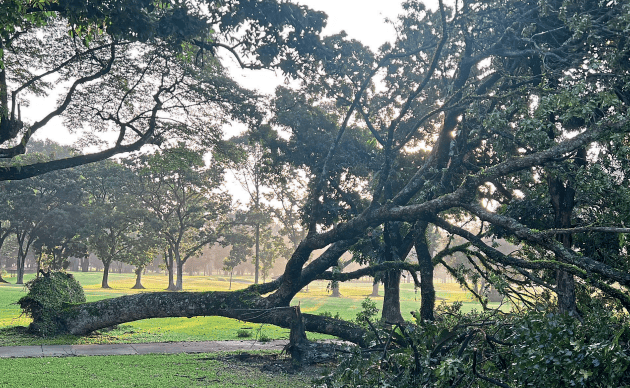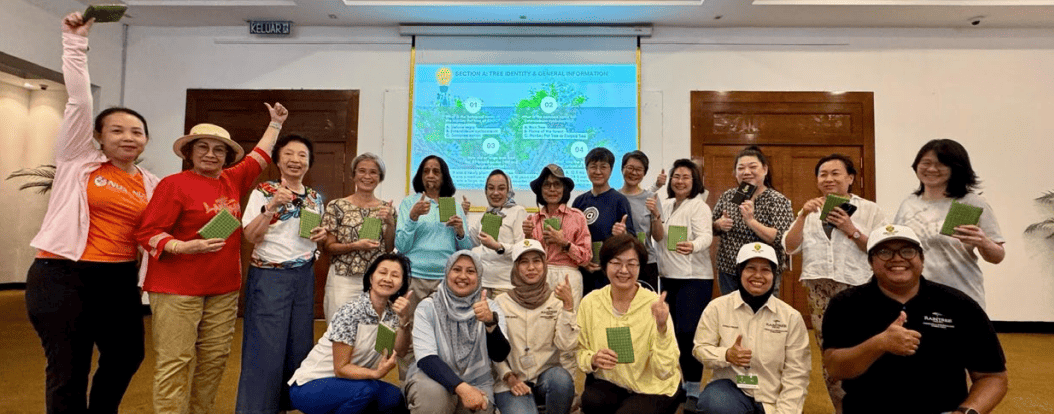
The Nature Walk on 14 August 2025 returned with a fresh approach. Usually, we delve into nature and relate it to our everyday existence. This time, however, the focus was on our duty to preserve the environment and its surroundings.
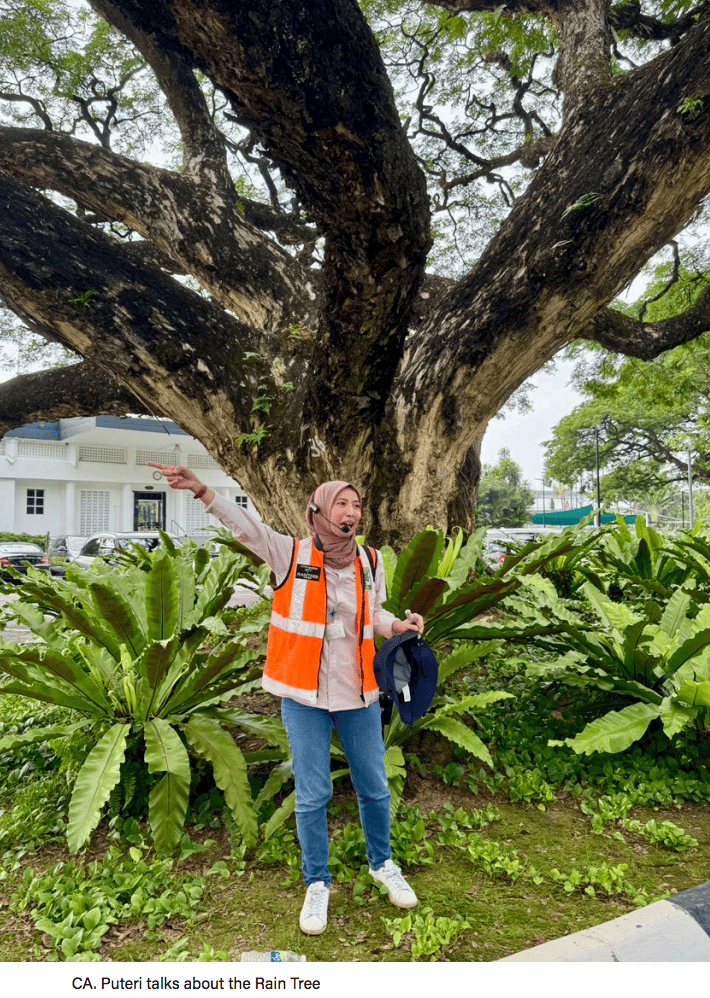
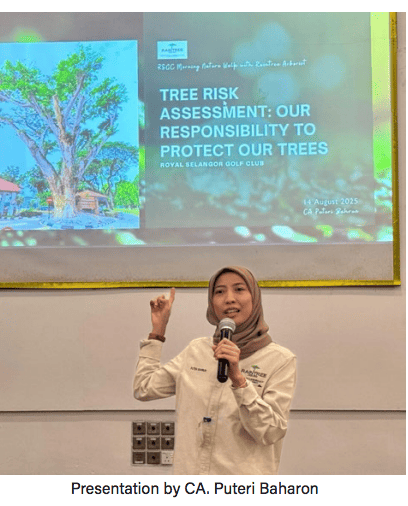
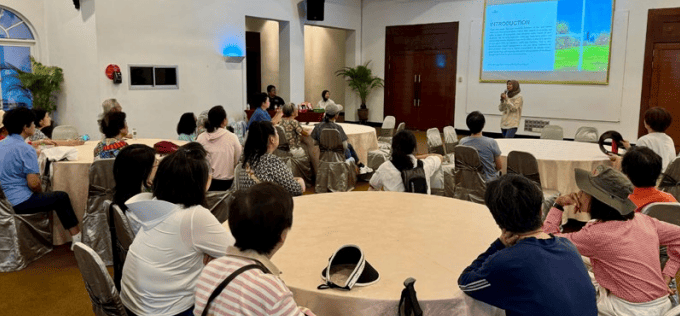
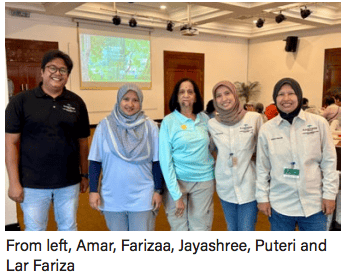
CA. Puteri Baharon, our beloved Certified Arborist, delivered a fantastic presentation and shared her annual Tree Risk Assessment report. She was assisted by her partners, Lar. CA. Fariza Firdaus and CA. Ammar. The presentation highlighted the importance of Tree Risk Assessment, protecting trees while removing hazards that may pose risks to members, staff and facilities. It is a shared responsibility to ensure safety, preserve heritage and maintain the charm and playability of The Royal Selangor Golf Club for generations to come.
WHO IS THE CERTIFIED ARBORIST?
Three certified arborists were invited. They are tree care professionals who have demonstrated their knowledge and skills in arboriculture through rigorous testing and certification by the International Society of Arboriculture (ISA). These experts in tree health, maintenance and safety possess indepth knowledge of tree biology, diagnosis and proper pruning techniques.
They assessed tree risks using three levels of assessment:
- Visual Tree Assessment (VTA): A quick walk to identify obvious risks.
- Basic Ground Inspection: A detailed check on the canopy, branches, trunk and root zone.
- Advanced Assessment: Applied to high-value or questionable trees such as the Rain Tree and Monkey Pod tree, using the Picus Sonic Tomograph and Resistograph.
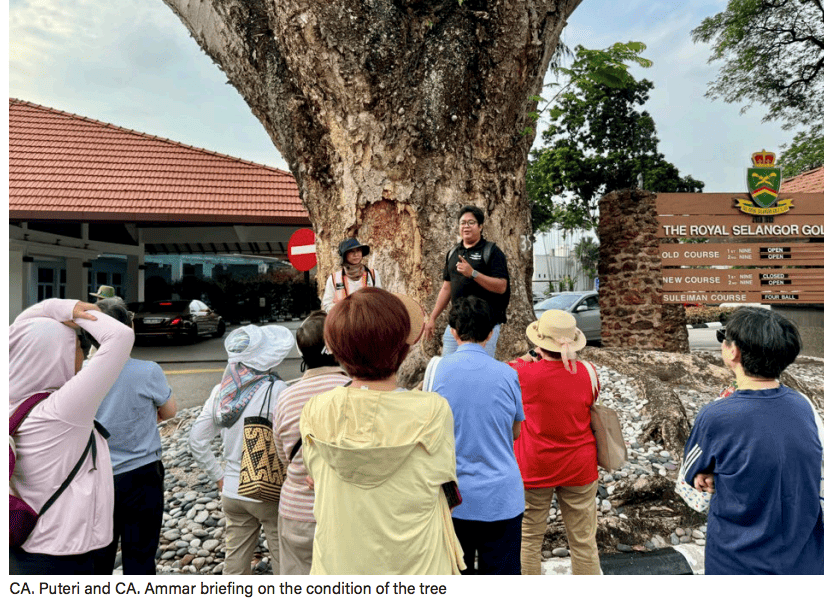
The Monkey Pod tree, planted in the 1940s, has shown signs of decline since 2022. Tomograph findings revealed significant decay in the trunk and root collar within its limited root area, with internal decay progressing from 2023 to 2025. Upper branches were also analysed, showing poor structural integrity of only 53%, requiring removal. Visual assessments confirmed the steady advancement of decay across three consecutive years.
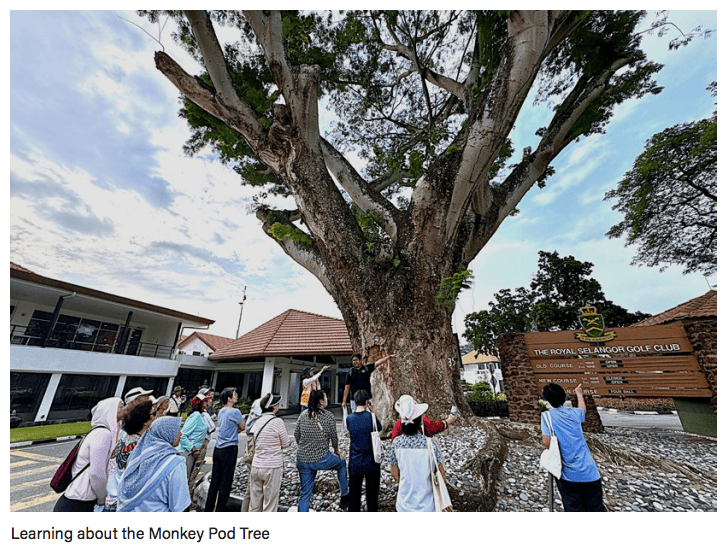
VISITING THE MONKEY POD TREE
During the visit, Members recalled that vehicle traffic circling the Monkey Pod tree had contributed to its deterioration. Tarmacking over the root zone caused soil compaction, reducing oxygen availability, water infiltration and root respiration, which in turn led to root decline.
The installation of hardscape such as tar and kerbs further limited lateral root expansion and reduced the available soil volume essential for water and nutrient absorption. Asphalt paving absorbed and radiated heat, increasing soil temperature and stressing the root zone, particularly in a tropical climate. The impervious tar surfaces also prevented natural rainwater infiltration, leading to chronic drought stress.
They also noted that the original root system may have been severed or damaged during road paving and kerb installation, compromising both anchorage and nutrient uptake. Now confined to a traffic island far too small for its size, the tree suffers long-term stress
HOW TO PROLONG ITS LIFE
Several measures were recommended to preserve the Monkey Pod tree:
- Resurface the road with nontarmac and widen the planting space to give the roots more undisturbed soil.
- Root invigoration to improve soil conditions using an air spade to gently loosen compacted soil, followed by adding organic matter and nutrients.
- Propping to support weak and heavy branches, reducing the risk of branch failure while preserving the tree’s structure.
- Crown pruning for load reduction, already carried out twice (January 2024 and February 2025), with another planned before year-end. Each session reduced about 30% of the crown, allowing the tree to store enough energy to produce food.
- Canker and soil treatments using Mancozeb fungicide combined with Trichoderma spp. inoculation to improve soil health and resistance to pathogens. While these treatments cannot reverse the disease, they slow its spread.
As Puteri explained, these actions are necessary to preserve our veteran trees for as long as possible.
FUTURE VIEW OF THE MONKEY POD TREE AND RAIN TREE
Participants were briefed on the current condition of the decaying Monkey Pod tree and asked to consider the potential risks if it were to fall. Recommendations included widening the root area and restricting traffic, allowing only motorcycles and pedestrians near the tree.
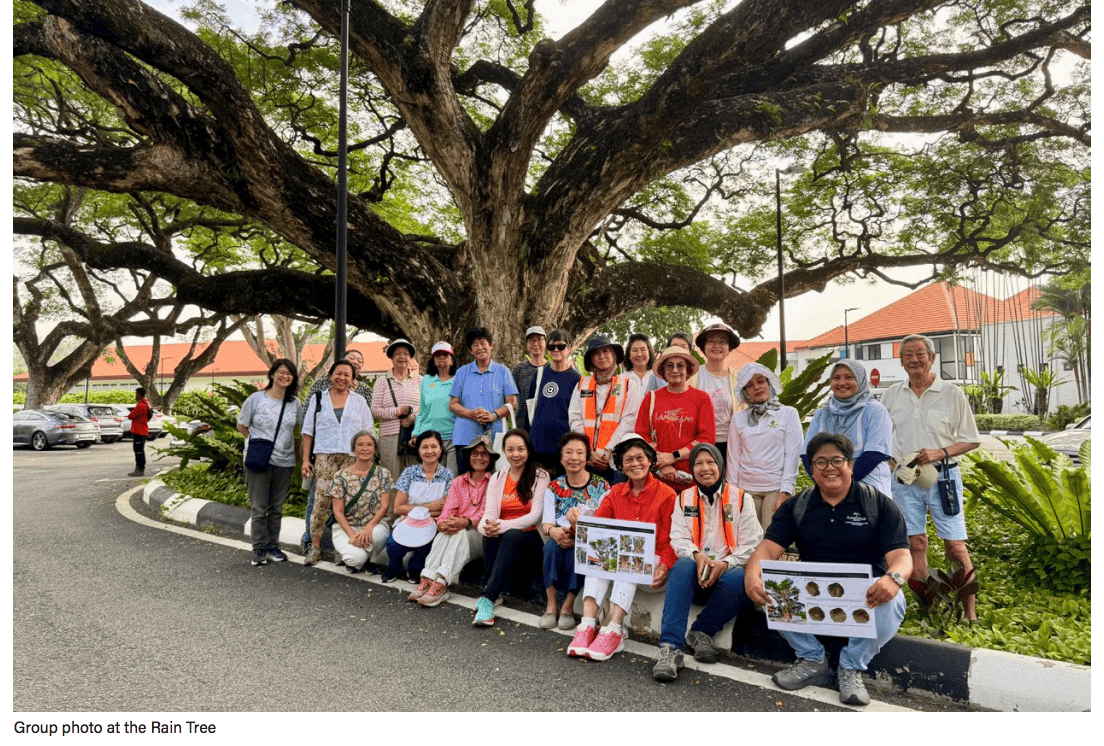
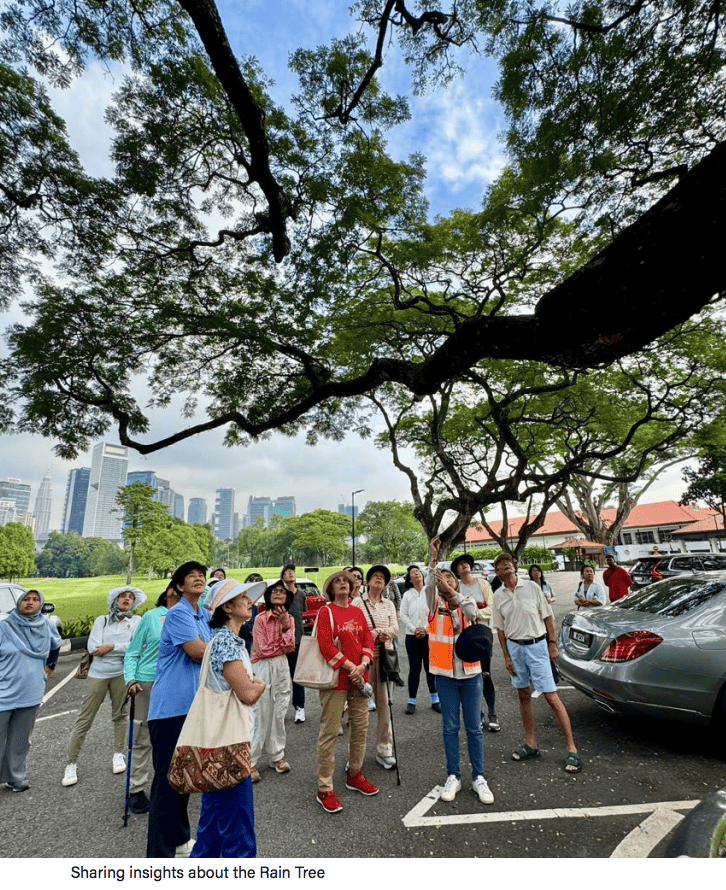
Members expressed their hope that the tree would continue standing for future generations, as it is part of the Club’s heritage. They also visited the legendary Rain Tree, admired for its magnificent canopy, and learned that propping works would soon be carried out. A group photo was taken with the Rain Tree as the background.
REFRESHMENTS AND QUIZZES
After the walk, participants returned to the hall for refreshments and further discussion. Many shared how valuable it was to learn about the trees’ conditions and risks, appreciating the knowledge shared by the arborists.
Instead of the usual stroll, this session was a deep dive into tree care, giving Members a new perspective on the importance of arboriculture.
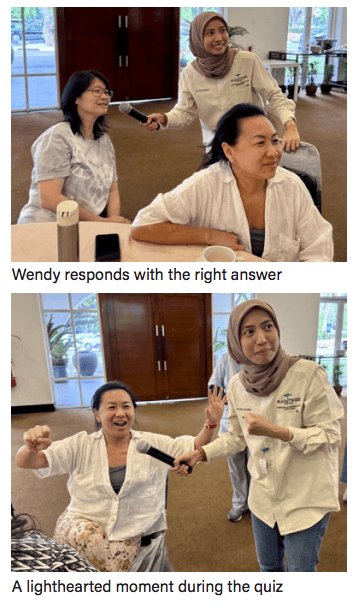
The quiz session that followed was lively, with participants eager to answer—and most first guesses were correct. Winners posed for a photo session at the end of the event.
FEEDBACK
Although some Members had hoped for a longer walk, they were grateful for the knowledge gained about Tree Risk Assessment. They praised the arborists’ presentation and requested that the Nature Walk be held monthly.
For now, the event will continue quarterly, with various concepts to keep it engaging. We look forward to seeing everyone at the next walk!