A recent tasting of New Zealand wines stirred our interest in what is the world’s 13th biggest wine-producing nation. Despite making up only 1.5% of global wine production, Aotearoa’s (Land of the Long White Cloud) wines have gained international attention. The wines of Central Otago and Marlborough are well known and respected, and there would be few wine lovers who have not tried a New Zealand Pinot Noir or the ubiquitous Sauvignon Blanc. It is as if New Zealand has taken ownership of these two styles among other New World wine producers.

Wine is made throughout New Zealand, but tasting wines from Hawke’s Bay brought renewed attention to this region and its offerings beyond Pinot Noir and Sauvignon Blanc.

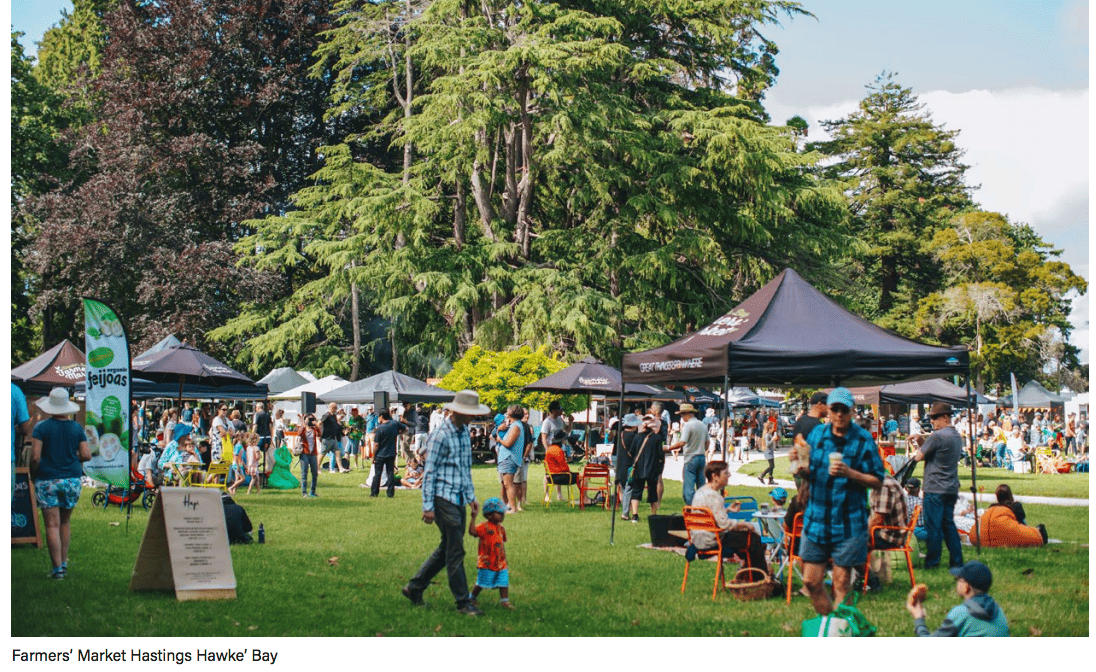
Located on the east coast of the North Island, Hawke’s Bay wines are noteworthy for their diverse range of premium reds, especially Bordeaux-style blends and Syrah (Shiraz), along with full-bodied Chardonnays. The region’s varied soils, long-growing season and temperate climate contribute to several styles of interest. Napier and Hastings attract tourists due to their good weather, closeness to Auckland and Wellington, and popular wine trails.’
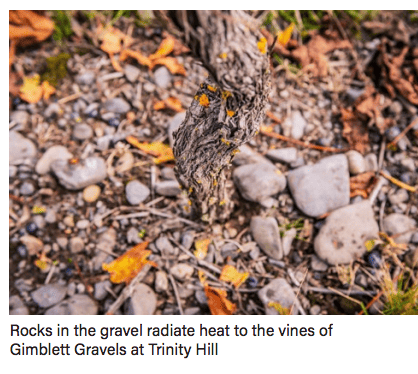
Despite viticulture extending back to the 1850s, it was the recognition of the Gimblett Gravels sub-region that generated greater interest in the region’s wines. The meandering Ngaruroro River deposited the Gimblett Gravels, and the stony sediments result in wines of exceptional character and personality. Comprising a mix of gravel, sand and silt, these free-draining soils provide ideal conditions for viticulture. The gravelly terrain absorbs heat during the day, radiating it back to the vines at night, aiding ripening and intensifying flavour development.

Once regarded as barren, unusable farmland, this area has undergone a remarkable transformation. The first vineyards were established in the late 1970s and early 1980s. Despite facing challenges such as legal battles and opposition to viticultural development, the region’s trailblazers persevered, laying the foundation for Gimblett Gravels to become one of the world’s most esteemed wine-growing regions.
Trinity Hill’s three estates are all located within the Gimblett Gravels Winegrowing District. Each vineyard site was carefully selected to showcase the diversity and complexity of this unique terroir. From the stony soils of Gimblett Stones to the sheltered warmth of Gimblett Estate, each site imparts its own distinct character to the wines.
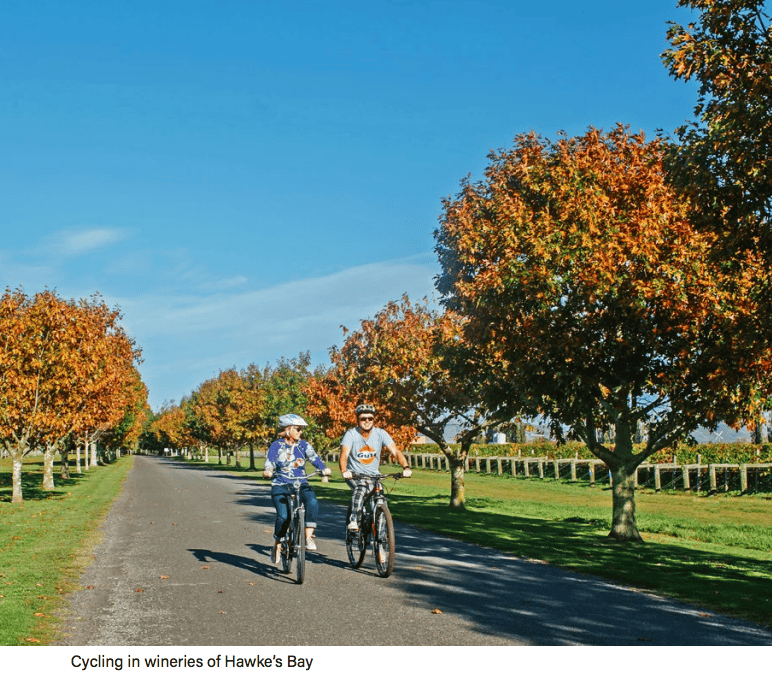
Here are three red wines and a white from Trinity Hill that exemplify the variety of wines from Hawke’s Bay.

TRINITY HILL GIMBLETT GRAVELS CHARDONNAY

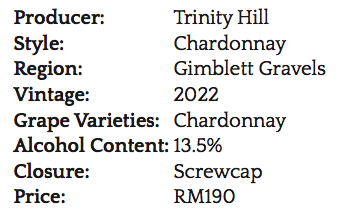
Weather conditions leading up to the 2022 harvest were a classic Hawke’s Bay summer of warm sunny days with moderate to cool nights. As Autumn arrived. the weather became cooler and wet; however, these conditions were ideal for preserving natural acidity as well as freshness and flavour in the Chardonnay. The grapes were hand harvested and then fermented in 500-litre French oak puncheons and barriques, with 46% of the barrels consisting of new oak. The wine aged 12 months in barrels, then matured an additional six months on yeast lees in tanks to enhance texture and complexity.’This Chardonnay has fragrant aromas of nectarines, citrus and lime zest with the added complexity of toasted nuts and a flinty minerality. The result is a wine of finesse and complexity, qualities that are hallmarks of Trinity Hill Gimblett Gravels Chardonnay. It is a wine that will improve with bottle age for up to five years. The 2023 vintage of this style received a silver medal and a score of 93 at the recent Melbourne International Wine Competition.
TRINITY HILL MERLOT
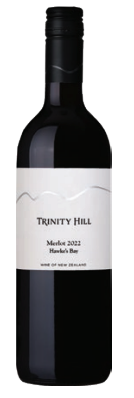
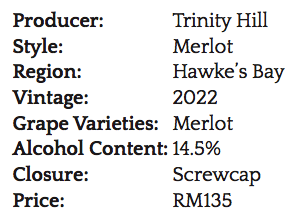
Merlot is one of the fastest-growing red wine varieties around the globe, including in New Zealand. It is wonderful as a straight varietal or in a blend with other grapes. Hawke’s Bay produces most of New Zealand’s top Merlots. Following 14 months ageing in a combination of stainless-steel tanks and small French oak barrels, the individual parcels were blended to create the perfect marriage of components. The plum and blackberry aromas combine well with the aromatic spiciness of oak ageing to produce a fruit-dominant wine. Enjoy this with lightly spiced lamb and beef dishes.


TRINITY HILL SYRAH
The wines of New Zealand are well represented on the shelves of Australian wine shops and vice versa. New Zealand Sauvignon Blanc sells well in Australia, and one suspects that Australian Shiraz edges out those from New Zealand, which means the producers there need a strong point of difference to compete with Oz reds. Labelling the wine Syrah rather than Shiraz is a great start, but New Zealand reds stand tall among the competition. Related Syrah wines of the Trinity Hills Syrah received recent accolades at the Melbourne International Wine Competition. This wine is also consistently good from vintage to vintage, and we love the blackberry, pepper and savoury spice on the palate. Fruit from vineyards on the Gimblett Gravels was vinified before being aged in stainless steel tanks and then seasoned in small and large format French oak barrels. The batches were blended to produce a deep ruby-coloured wine. Juicy fruit, bright acidity, and subtle spice lead to a smooth finish. This wine will especially appeal to those who love French Syrah from the Rhône region. Try it with New Zealand lamb, deer meat (venison), or beef satay.
THE GIMBLETT
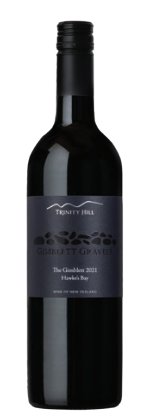
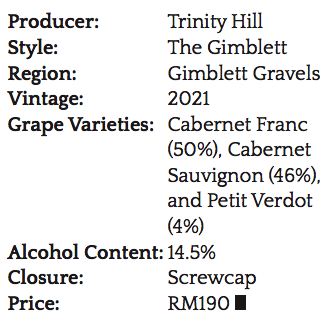
This is the estate’s premium red, crafted from three classic Bordeaux-blend varieties (Malbec and Merlot often make it into the blend). The two Cabernets in this blend benefit from the region’s warmgrowing conditions. Hawke’s Bay enjoys warm, sunny days and cool nights during the growing season. A marked diurnal temperature variation prolongs the ripening period, allowing grapes to achieve optimal flavour maturity while retaining refreshing acidity. Grapes from two plots were aged separately in 38% new and seasoned 225-litre French oak barrels for up to 12 months, then blended. Cabernet Franc’s aroma pairs well with Cabernet Sauvignon’s elegance and Petit Verdot’s vibrant colour and spice. A beautiful violet fragrance precedes complex aromas of blackcurrants and blackberries, intermingled with herbal hints, anise, vanilla and toast. Fine tannins and juicy acidity combine to produce a succulent and silky wine on the palate with a well-developed structure that will become more complex with age. This is a wine to put aside for a few years and to then enjoy with the finest cut of beef. Bottle ageing will allow for more mellowness and a longer finish on the palate. The wine should be decanted before serving.