Stories of the Trees at Hole 10 & Hole 11, Old Course
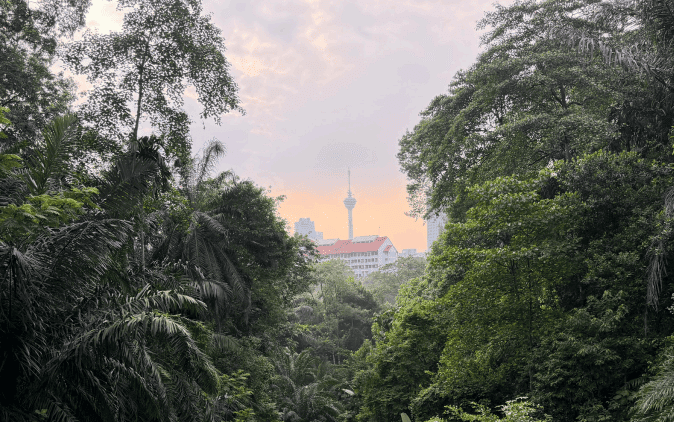
The morning Tree Walk made a refreshing comeback in January 2025. The walk aims to enhance awareness of our RSGC environment and encourage Members to learn more about the magnificent trees that shape our landscape. As the resident horticulturist, I had the honor of leading the walk and sharing insights into each tree’s history, characteristics, morphology, and cultural value.
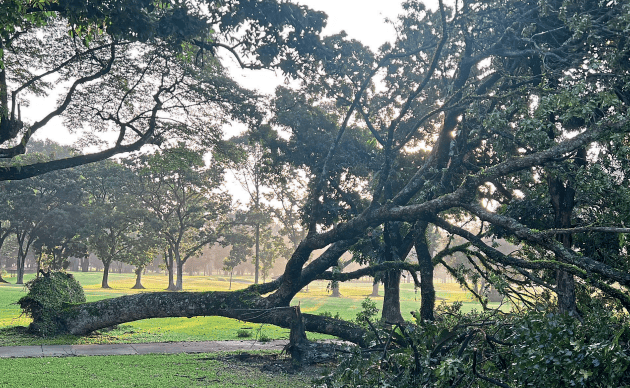
The second nine of the Old Course was the perfect setting as it was closed for maintenance that morning. As an added highlight, participants witnessed the transplanting of a Pokok Kapur tree at the end of the event.
Below is a brief overview of the trees featured during the walk:
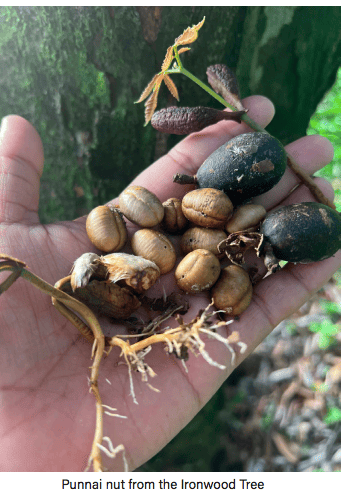
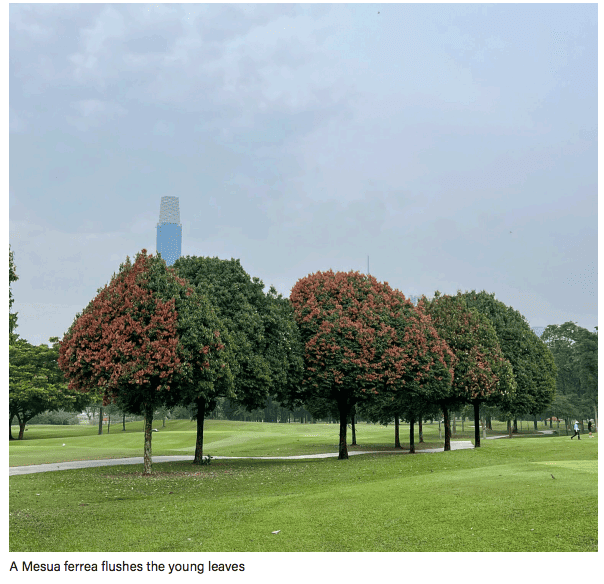
STATION 1: MESUA FERREA — PENAGA LILIN / CEYLON IRONWOOD
Mesua ferrea is a slow-growing, medium to tall evergreen tree capable of reaching over 30 m in height. It prefers moist, well-drained soil and is easily propagated by seeds. Highly valued as an ornamental landscape tree, it features a conical canopy, dense shade, showy red-orange young leaves, and large fragrant white flowers.
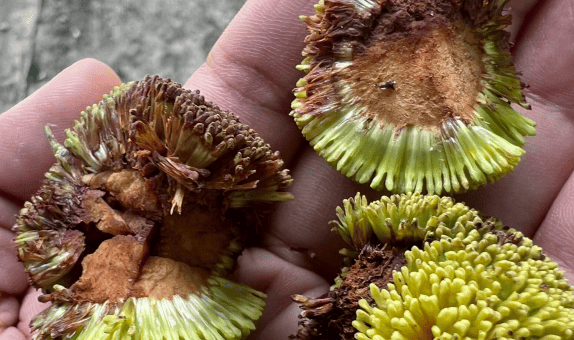
Its trunk is slightly buttressed with grey to reddish-brown bark that flakes in large irregular pieces. When bruised, it exudes aromatic resin. Young leaves emerge purplish red before turning yellowish-pink and eventually green. The ovoid, conical fruits are edible and sold as Punnai nuts, though the dark green aromatic oil they yield is toxic.
The tree’s fragrant flowers are used in perfumes, incense, cosmetics, and soaps. Its deep reddish-brown heartwood is prized for its hardness and used for boat building, railway cross-ties, and heavy construction.
STATION 2: CALLERYA ATROPURPUREA — TULANG DAING / PURPLE MILLETTIA
This evergreen tree is known locally as Tulang Daing. It grows up to 40 m tall and has a dense, umbrellashaped crown ideal for shade. Its trunk is light grey, and the pinnately compound leaves bear smooth, glossy, elliptic leaflets with entire margins.
The species is named atropurpurea, meaning “dark purple,” referring to its abundant purple flowers that bloom near the branch tips. The oblong seed pods are dark brown with curved pointed ends. Due to its generous shade, it is suitable for parks and parking areas.
STATION 3: NEOLAMARCKIA CADAMBA — KELAMPAYAN / KADAM / BUTTERFLOWER TREE
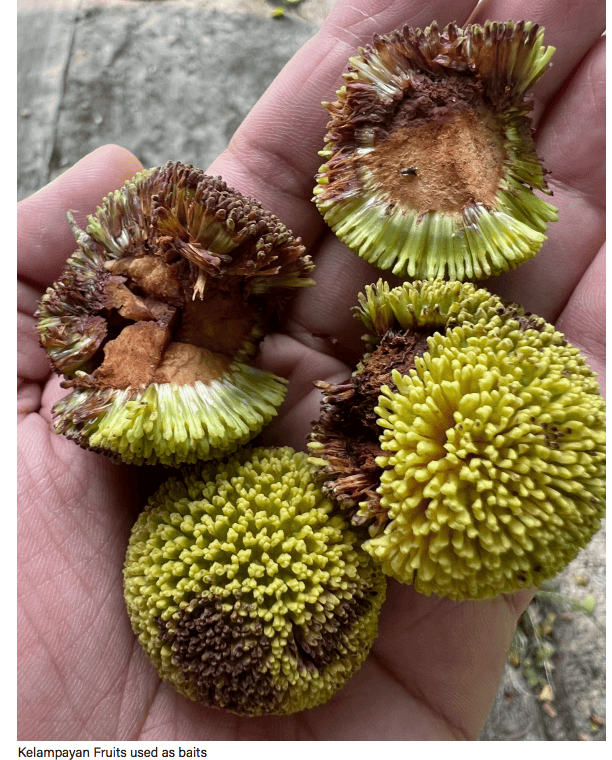
Kelampayan is a tall, broad-crowned tree reaching up to 45 m. Native to Asia and Southeast Asia, it holds significant religious and cultural value among Hindus in India, Java, and Malaysia.
A fast-growing timber tree, it has a straight cylindrical trunk, sometimes with buttresses. Its leaves are opposite, elliptic-oblong, coriaceous, with inter-petiolar stipules. The sweetly fragrant flowers are red to orange and form dense globular heads about 5.5 cm in diameter. Its fruits are packed capsules.
Kelampayan is widely used for timber, paper making, and ornamental planting. It is also suitable for reforestation.
STATION 4: ELATERIOSPERMUM TAPOS — PERAH
Perah is a large tree growing up to 50 m with buttresses reaching 2 m. It exudes latex when injured. Its elliptic to obovate leaves (5–24 cm long) have smooth surfaces and flush bright red when young.
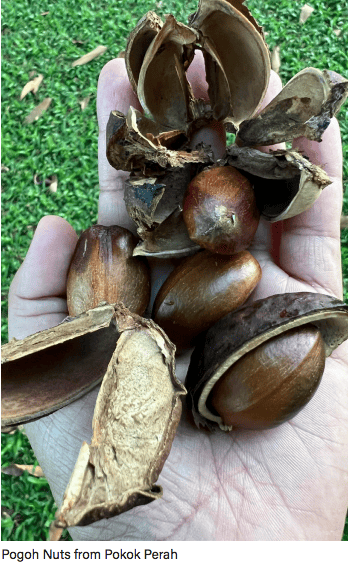
The tree sheds leaves and flowers during the dry period. Its white to pale yellow flowers appear on terminal inflorescences. The oblong-ellipsoid fruit turns from green to nearly black when ripe and contains three shiny brown seeds—which can cause dizziness if consumed in excess.
Perah is excellent as a specimen tree in parks due to its colorful flushes. Its wood is used for firewood and for medium-heavy to heavy construction.
STATION 5: ADENANTHERA PAVONINA — SAGA / CORAL BEAN TREE / RED BEAD TREE
Locally known as Saga, this leguminous tree can exceed 20 m in height. Notably, Malaysia’s first national car, the Proton Saga, was named after it. Young trees have rounded canopies that become irregular as they mature. It is deciduous.
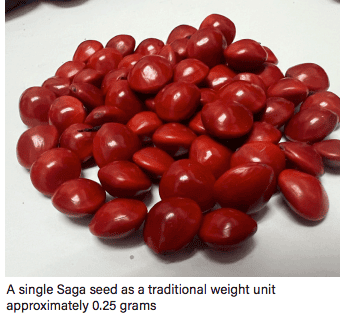
The trunk is slightly buttressed with greyish-brown bark. Leaves are bipinnately compound. Small yellowish flowers grow in dense drooping clusters, and the seed pods coil before releasing the striking bright red seeds.
Traditionally, decoctions of its leaves and bark are used to treat diarrhoea. However, the raw seeds are toxic.
STATION 6: AZADIRACHTA INDICA — SEMAMBU / NEEM / INDIAN LILAC
The Neem tree is a medium-sized species (15–20 m) with a dense rounded crown. The trunk is smooth when young, becoming ridged with age. Leaves are pinnate compound with 4–7 pairs of glossy, serrated, lanceolate leaflets, arranged spirally.
The fragrant white flowers form panicles at branch tips. The ellipsoidal fruits contain 1–2 seeds.
Neem is considered holy by Hindus and commonly planted in temple grounds. It is highly valued in traditional medicine—believed to help treat smallpox, among many other uses. Its seeds and leaves are well-known for their insecticidal and antiseptic properties.
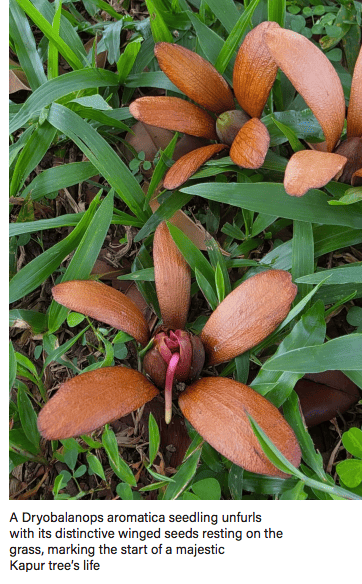
STATION 7: DRYOBALANOPS AROMATICA — KAPUR
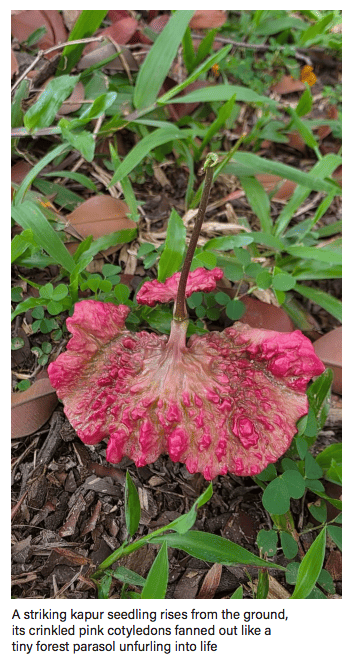
Kapur grows up to 45 m in mixed dipterocarp forests. It has prominent buttress roots and produces dammar resin, which emits a camphor-like fragrance— hence the species name aromatica.
The leaves are ovate, acuminate, and leathery, measuring 4–6 cm long, arranged alternately. White flowers grow on axillary and terminal panicles up to 7 cm long.
Historically, Kapur was a major source of camphor that attracted Arab traders to Borneo. Its timber is highly valued locally and internationally for quality and durability.
Come and Join Us! Join our next Tree Walk and discover the remarkable stories behind the trees that shape the Old Course landscape. Each walk offers a deeper appreciation of nature and the unique biodiversity of RSGC.