As you may have noticed, Malaysia’s electric vehicle market has moved from tentative curiosity to genuine momentum in just a few short years. What was once a niche segment dominated by early adopters has quickly become one of the most actively contested spaces in the local automotive landscape, driven by rising maintenance costs, increasing environmental awareness, and a steady stream of new model launches across multiple price brackets.

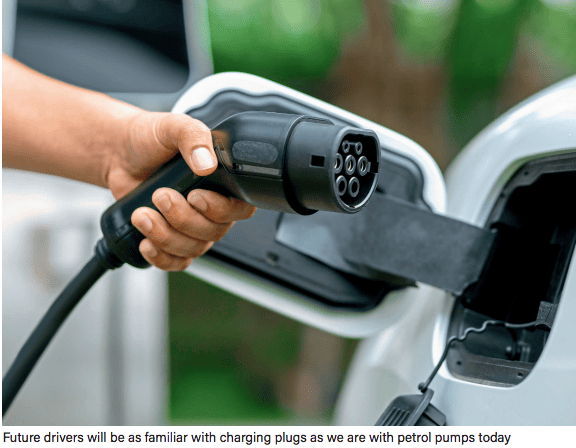
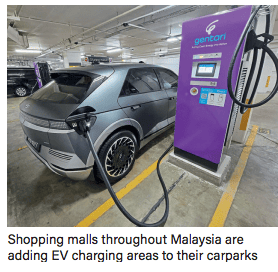
Government incentives and tax exemptions have helped accelerate adoption, but the picture is not without its limitations. Charging infrastructure, while improving noticeably in Klang Valley and key urban centres, still lacks the depth and nationwide consistency needed to make EV ownership fully seamless for all Malaysians. Long-distance travel remains a concern for many buyers, and home charging is not always an option for high-rise dwellers – though we expect to see that being increasingly addressed, particularly in new condo developments. Even so, the direction of travel is clear, and manufacturers appear convinced that Malaysia is ready for broader EV penetration.
Over the past two to three years, an array of electric brands has entered the market, with at least 15 brands offering electric vehicles in Malaysia now. Some are dedicated EV specialists, including BYD, Zeekr, Jaecoo, and Tesla, while established marques such as BMW, Mercedes-Benz, Volvo, Hyundai, and local carmakers Proton and Perodua have added electric models alongside their internal combustion and hybrid line-ups. Into this increasingly crowded field comes Dongfeng Motor Corporation, introducing two battery-electric models that are equally impressive, but aimed at very different buyers – the Dongfeng 007 sedan and the Dongfeng VIGO compact SUV.
A CROWDED MARKET WITH GROWING CONFIDENCE
Malaysia’s EV growth reflects a wider regional trend, but with its own local character. Buyers remain valueconscious, placing strong emphasis on warranty coverage, aftersales support, and real-world usability rather than headline figures alone. Range anxiety has eased as newer models deliver more competitive driving distances, but charging speed and long-term reliability are now emerging as equally important decision points.
Against this backdrop, Dongfeng’s arrival is notable less for novelty and more for timing. The Chinese manufacturer enters at a point where Malaysian consumers are already familiar with EV technology and are beginning to compare models critically on performance, build quality, and longer-term ownership considerations. Partnering with Volt Auto and Central Auto Distributors Bhd, Dongfeng positions its Malaysian offering as a pragmatic alternative rather than a purely aspirational one.
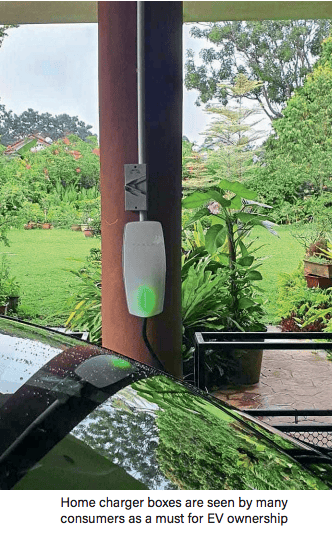
Both the Dongfeng 007 and VIGO are offered with an extended ownership package that includes a six-year vehicle warranty with unlimited mileage, an eight-year powertrain warranty with unlimited mileage, and a complimentary ABB wall box for home charging. In a market where warranty coverage often influences purchasing decisions, this approach is likely to resonate with buyers seeking reassurance in a relatively new segment.
THE DONGFENG 007: A PERFORMANCE-LED ELECTRIC SEDAN
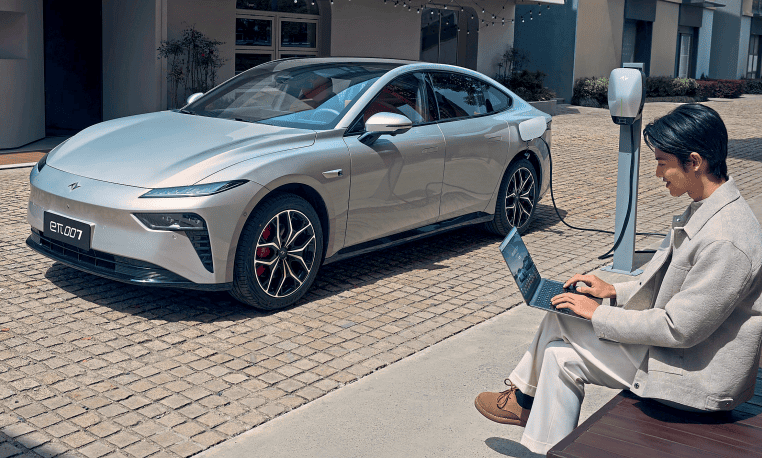
The Dongfeng 007 is the brand’s more performance-focused offering, aimed squarely at urban drivers who want strong acceleration and modern technology without stepping into ultra-premium pricing territory. Styled as a sleek electric liftback, the 007 adopts a low-slung profile that prioritises aerodynamics while maintaining everyday practicality through its hatch-style rear.
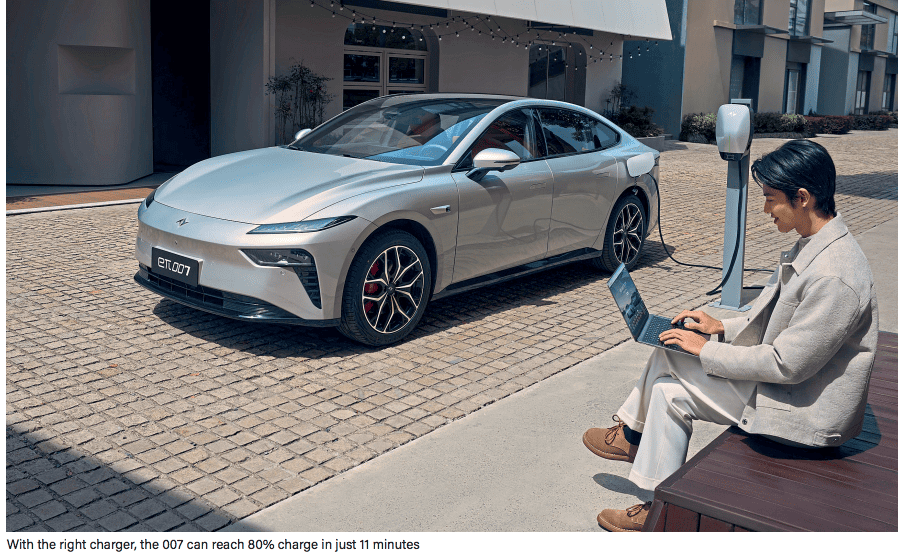
On paper, its performance credentials are among the strongest in its segment. The 007 accelerates from 0 to 100 km/h in a stunning 3.9 seconds, placing it firmly in sports sedan territory. This level of performance is increasingly common among electric vehicles, but still impressive at the 007’s expected starting price of RM161,000 after launch incentives.
Range is quoted at up to 650 km, which, if achievable in mixed driving conditions, would put the 007 among the longer-range EVs available locally. As with all EVs, real-world results will depend on driving style, climate control usage, and traffic conditions, but the figure suggests a car designed with both daily commuting and longer intercity journeys in mind.
Charging performance is another area where the 007 aims to stand out. Dongfeng claims the battery can be charged to 80 percent in as little as 11 minutes under optimal fast-charging conditions. While such figures typically rely on highoutput DC chargers that are not yet widespread across Malaysia, they do indicate future readiness as infrastructure continues to expand in the country.
Inside, the 007 focuses heavily on in-cabin technology. A WANOS premium 19-speaker surround sound system, complete with headrest audio, anchors the infotainment experience, while the overall cabin layout leans toward a minimalist, screen-led design common among newer EVs. The liftback format adds a layer of practicality often missing from traditional sedans, allowing for more flexible cargo use without moving into SUV territory.
Rather than positioning the 007 purely as a lifestyle statement, Dongfeng appears to have targeted buyers who value measurable performance and equipment levels. Its recent launch in Singapore, which attracted considerable attention, has helped build regional awareness, but its success in Malaysia will likely hinge on how well it performs in everyday driving and how competitive its aftersales support proves to be.
THE DONGFENG VIGO: A PRACTICAL ELECTRIC SUV
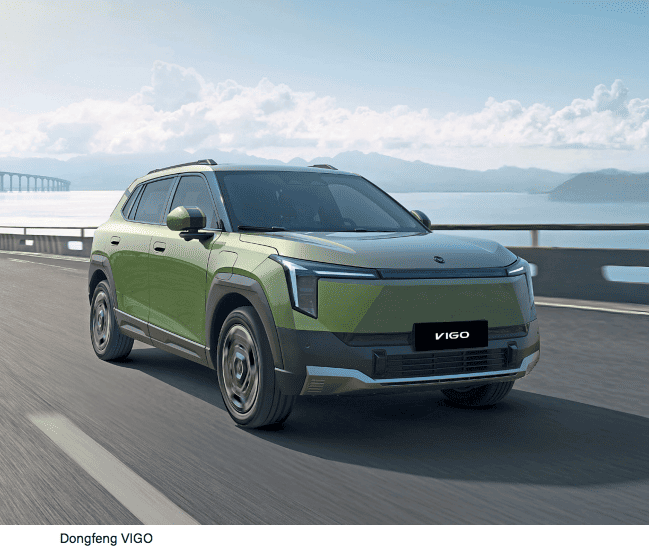
Where the 007 leans toward performance and design, the Dongfeng VIGO takes a more pragmatic approach. Positioned as a compact electric SUV, it is clearly aimed at families, urban commuters, and buyers looking for versatility rather than outright speed.
Space utilisation is one of the VIGO’s key selling points. Despite its compact footprint, it offers a 500-litre boot, supplemented by a 72-litre hidden storage compartment. A wheelbase of 2,715 mm contributes to a cabin layout that prioritises legroom and overall usability, placing it competitively within its segment.
The most distinctive feature is the so-called “Heaven and Earth Gate” split tailgate, capable of supporting up to 150 kg. This design allows the lower section to function as a bench or platform, lending itself to activities such as picnics, camping, or casual outdoor use. While not essential for daily driving, it reflects a growing trend among EV manufacturers to integrate lifestyle-oriented features that extend a vehicle’s perceived usefulness, particularly for families or those more geared towards an active lifestyle.
Inside, the VIGO adopts a technology-forward cockpit centred around a 12.8-inch HD touchscreen with Apple CarPlay and Android Auto support. Powering the system is a high-performance chip designed to deliver smooth responsiveness, an increasingly important factor as in-car systems take on more functions.
Several intelligent cabin modes – including Rest, Camping, and Music Speaker – allow the vehicle’s systems to adapt to different scenarios. These features, combined with 256-colour ambient lighting and music synchronisation, lean toward comfort and convenience rather than novelty, although their long-term appeal will depend on how often owners actually use them.
Charging and power management are areas where the VIGO shows strong technical intent. DC fast charging of up to 167 kW allows for an 80 percent charge in approximately nine minutes under ideal conditions. As with the 007, infrastructure availability will determine how often such speeds can be achieved locally, but the capability itself positions the VIGO well for future network upgrades.
The inclusion of 3.3 kW Vehicleto-Load functionality adds another practical layer, enabling the car to power appliances and equipment during outdoor activities or emergencies. In a market where EV buyers increasingly look beyond simple transport, this feature could prove genuinely useful.
Driver assistance systems include Level 2 ADAS and a 540-degree panoramic camera with transparent chassis view, designed to simplify parking and low-speed manoeuvring. Cabin refinement is addressed through extensive sound insulation, with Dongfeng claiming an ultra-low powertrain noise level of 18 dB. While such figures are difficult to verify without independent testing, they suggest a focus on ride comfort rather than aggressive driving dynamics.
Priced from RM100,000 after launch incentives, the VIGO positions itself as one of the more accessible electric SUVs in the Malaysian market, potentially appealing to first-time EV buyers who want a balance of space, technology, and manageable cost.
LOOKING AHEAD FOR EVS IN MALAYSIA
Dongfeng’s entry into Malaysia arrives at a moment when the EV segment is no longer defined by novelty alone. We see more and more EVs on the highways and streets of Malaysia, coming from a bewildering array of brands both old and new. But even as the market surges, consumers are changing, as well: Buyers are increasingly informed, comparing specifications, charging capability, warranty coverage, and long-term value rather than simply brand reputation.
While infrastructure development in Malaysia remains a work in progress, particularly outside major urban centres, the steady pace of new charger installations suggests gradual improvement rather than stagnation, which certainly contributes to confidence for those considering an EV. Naturally, as charging networks become more robust, vehicles such as the Dongfeng 007 and VIGO will be better positioned to deliver on their technical promise.
Ultimately, the success of new EV entrants in Malaysia will depend not only on specifications and pricing, but also on reliability, dealer support, and how well these vehicles integrate into everyday Malaysian driving conditions. These realities are something that will only be known in time, but early observation certainly suggests that Malaysia is moving in the right direction and will be a key regional player in the growth and penetration of EVs. Dongfeng’s early offerings here present a technically competitive case. Whether they can translate that into sustained market presence remains to be seen, but their arrival adds further depth to an EV market that is clearly gaining traction – at an electrifying pace!