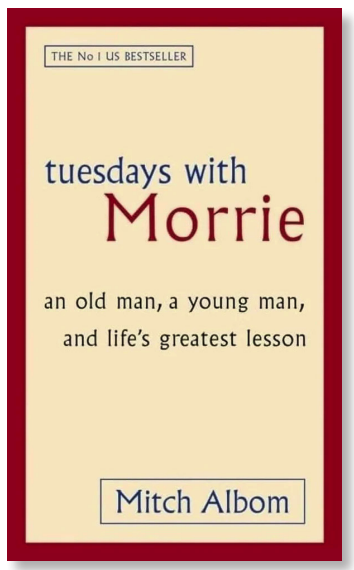
T uesdays with Morrie by Mitch Albom is a heartfelt memoir that tells the story of Morrie Schwartz, a beloved sociology professor at Brandeis University, during the final months of his life as he faces a terminal diagnosis of amyotrophic lateral sclerosis (ALS). After discovering that Morrie was battling ALS, a progressive neurological disease, Albom began visiting him every Tuesday. Albom, a former student who had lost touch with his mentor for 16 years, reconnects with Morrie after seeing his interview on television. What follows is a series of weekly Tuesday visits that become a final classroom for Albom, filled with lessons on life, love and human connection.
The book opens by introducing who Morrie Schwartz was, not only as an academic, but also as a man deeply invested in the lives of those around him. Albom recalls his undergraduate years at Brandeis, where Morrie’s classes were less about sociology as a discipline and more about understanding the human condition. Morrie became one of the most influential professors in Albom’s life, teaching him lessons that extended far beyond the classroom.
The heart of the memoir lies in the Tuesday conversations themselves. Morrie’s perspective on life is both inspiring and practical. He reminds readers that success is not measured by wealth or status, but by the relationships we build and the kindness we show others. One of Morrie’s central lessons is that love and human relationships are the foundation of a meaningful life. He believes that no amount of money, status, or professional success can replace the comfort and fulfilment that come from caring for others and being cared for in return.
Morrie’s emphasis on friendship, family and community feels especially relevant. He argues that loneliness, not failure or poverty, is one of life’s greatest struggles. Due to his condition, Morrie becomes aware of the limited time he has left. He offers a new perspective on ageing. Instead of viewing growing older as something negative, he sees it as an opportunity to gain wisdom and experience, and encourages readers to embrace every stage of life rather than fear it.
Throughout their conversations, Morrie encourages Mitch to embrace his emotions rather than suppress them, believing that experiencing feelings fully allows people to better understand themselves and others. He also stresses the importance of giving back to the community, showing compassion, and helping those in need, as these actions bring a deeper sense of purpose and satisfaction. Ultimately, Morrie teaches that a meaningful life is not defined by wealth, power, or recognition, but by the quality of our relationships, our willingness to love and forgive, and the positive impact we have on the people around us.
The book presents a striking contrast between Morrie and Mitch at the beginning. Mitch is consumed by work, deadlines, and professional success, while Morrie values relationships, reflection, and emotional connection. Watching Mitch gradually transform as he learns from Morrie is one of the most interesting aspects of the book.
In conclusion, Tuesdays with Morrie is a touching memoir that offers valuable lessons on life, love, and human connection. Although the book tells the personal story of Morrie and Mitch, its themes are universal. Nearly everyone can relate to questions about purpose, family and happiness. More than a story about dying, it is a story about learning how to live. This timeless message is one of the reasons the book continues to resonate with readers around the world decades after its publication.