Promoting Responsible Coexistence Between Members and Wildlife
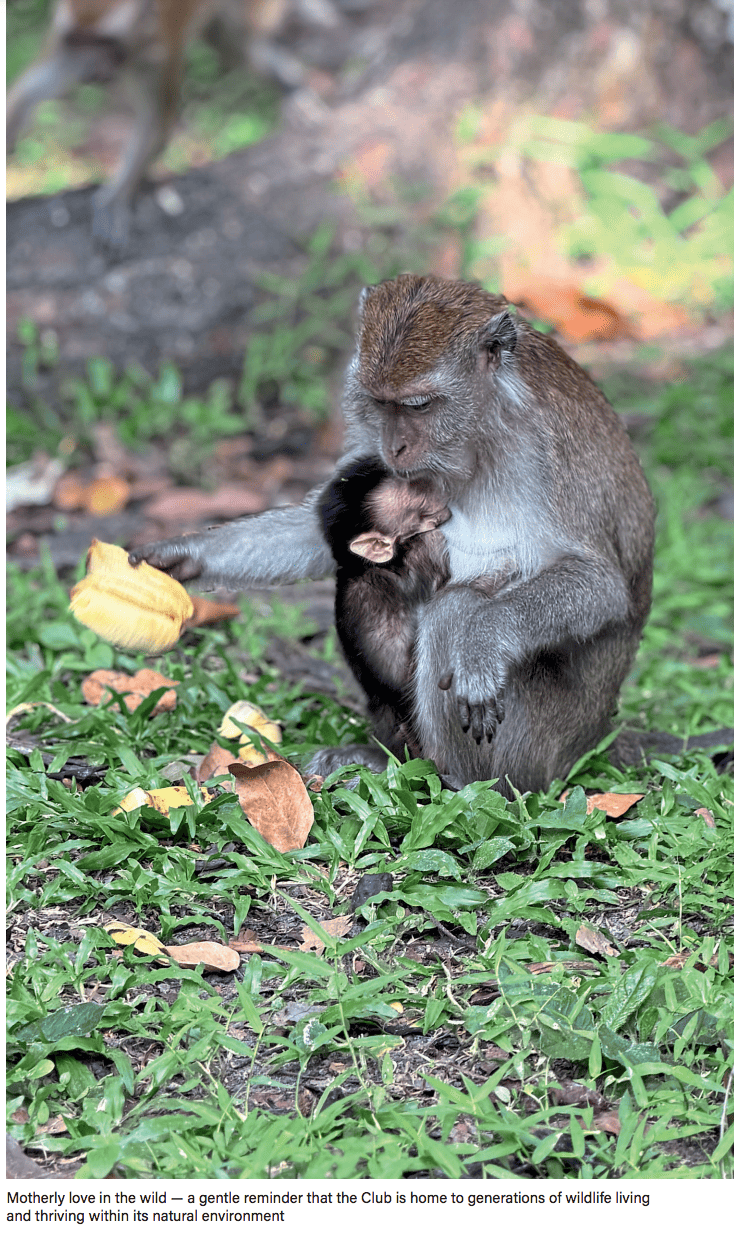
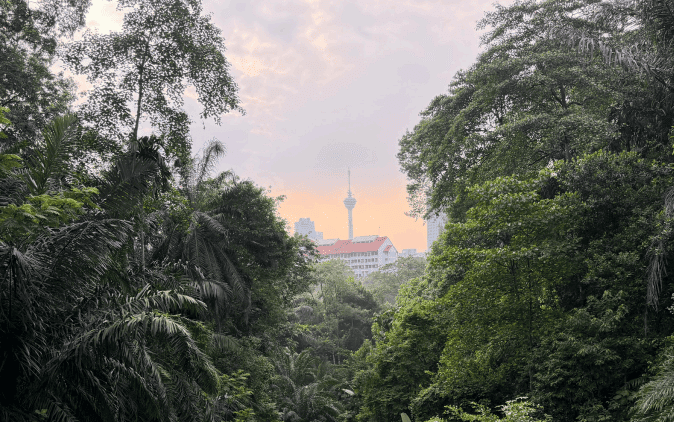
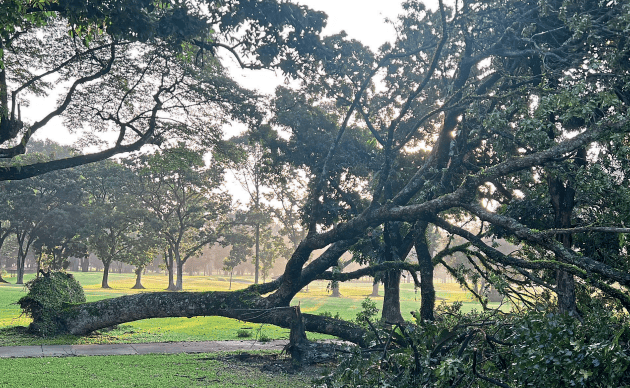
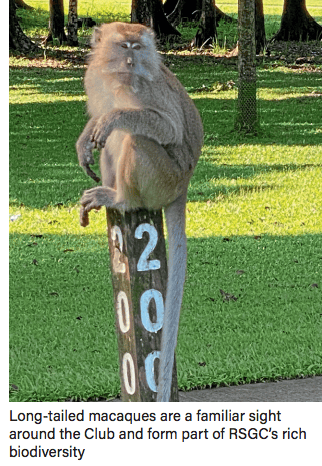
One of the unique features of The Royal Selangor Golf Club is its rich natural environment. Surrounded by mature trees and lush greenery, the Club provides a habitat for a diverse range of wildlife, including the long-tailed macaques that have long been part of the Club’s landscape.
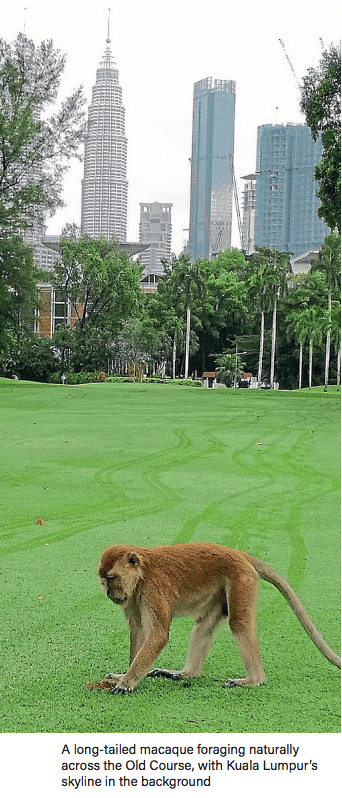
While many Members enjoy observing these animals in their natural surroundings, recent months have seen an increase in monkey activity within the Club, particularly around the sports facilities, swimming pool, tennis courts and other high-traffic areas. Incidents involving monkeys approaching Members in search of food have also become more frequent, giving rise to safety concerns, particularly for children, women and senior Members.
One of the contributing factors identified is the practice of privately feeding the monkeys. Although often well-intentioned, feeding wildlife encouraging them to gather in larger numbers and become increasingly dependent on human interaction. Over time, this alters their natural behaviour and increases the likelihood of unwanted encounters.
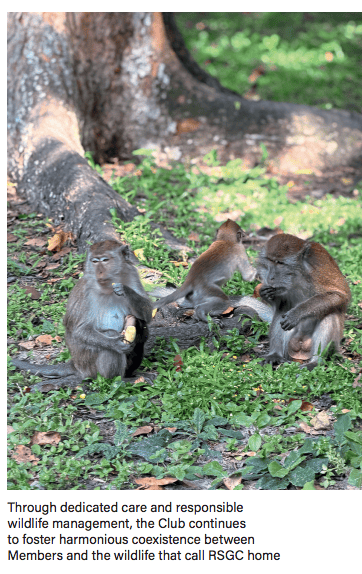
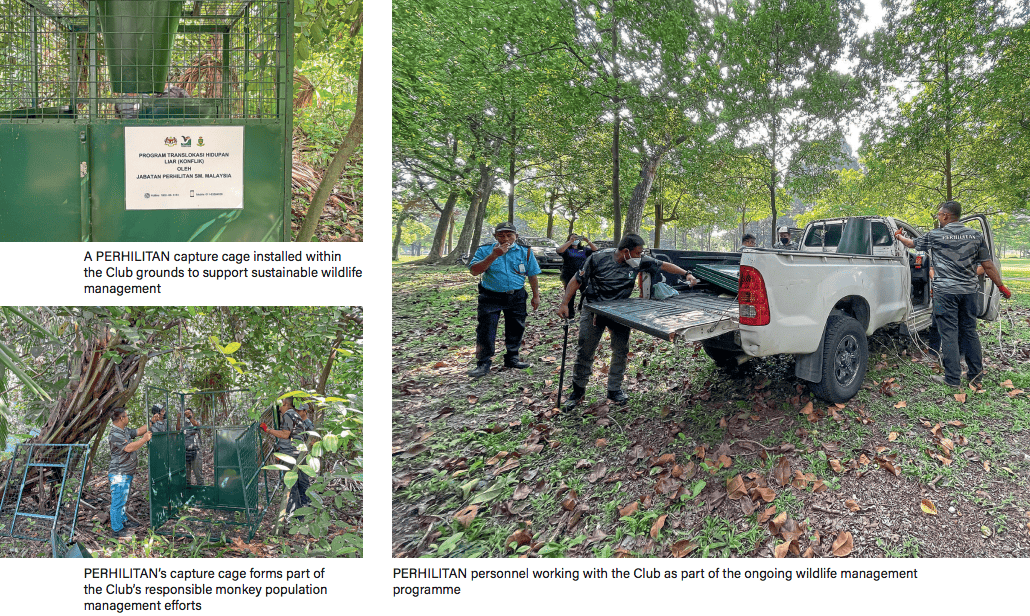
The Club continues to work closely with the Department of Wildlife and National Parks (PERHILITAN) in managing the monkey population responsibly. As part of its wildlife management efforts, PERHILITAN has undertaken measures including the installation of control cages and sterilisation programmes to help manage the population in a responsible and sustainable manner.
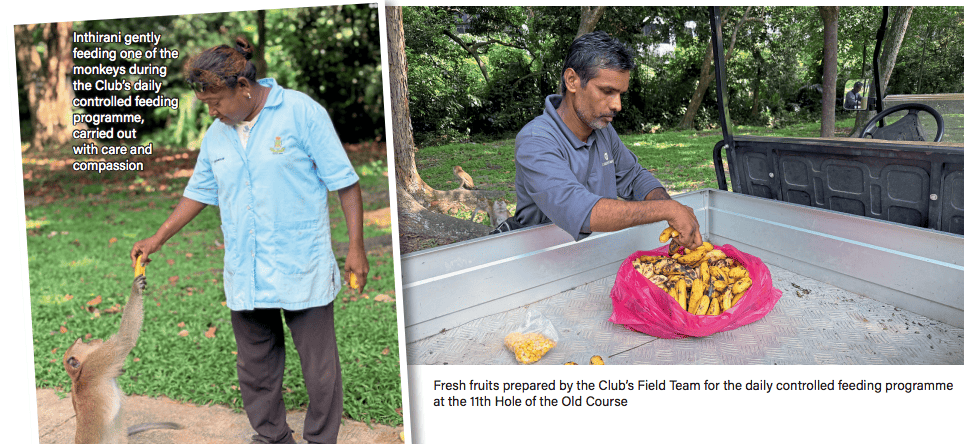
The Club also conducts a daily controlled feeding programme at the 11th Hole of the Old Course between 11am and 12 noon, where approximately ten kilograms of fruits, including bananas, papayas and other seasonal fruits, are provided. However, the monkeys do not depend solely on this feeding programme.
The Club’s extensive landscape already provides an abundance of food sources throughout the year, including the seeds of mahogany trees (commonly known as sky fruit), fruits such as perah, jelutong and seasonal rambutans, kapur flowers, young leaves, stems, roots, mushrooms, grasses, bird eggs and insects. Complementing this natural ecosystem are a variety of wildlifefriendly plants and trees growing throughout the Club, including rambutan, kelumpang, kapur, wild bananas (pisang hutan), wild ginger (halia hutan), wild pandan (pandan hutan) and bamboo, all of which contribute to a healthy and sustainable habitat for the diverse flora and fauna that call RSGC home.
PERHILITAN also advises the public to observe several simple precautions when encountering monkeys:
• Do not hit the monkeys with sticks or spray them.
• Do not shoot or attempt to harm them.
• Do not provoke the animals.
• Do not feed them.
• Avoid direct eye contact, as they may perceive it as a threat.
• Move away slowly by stepping backwards rather than confronting them.
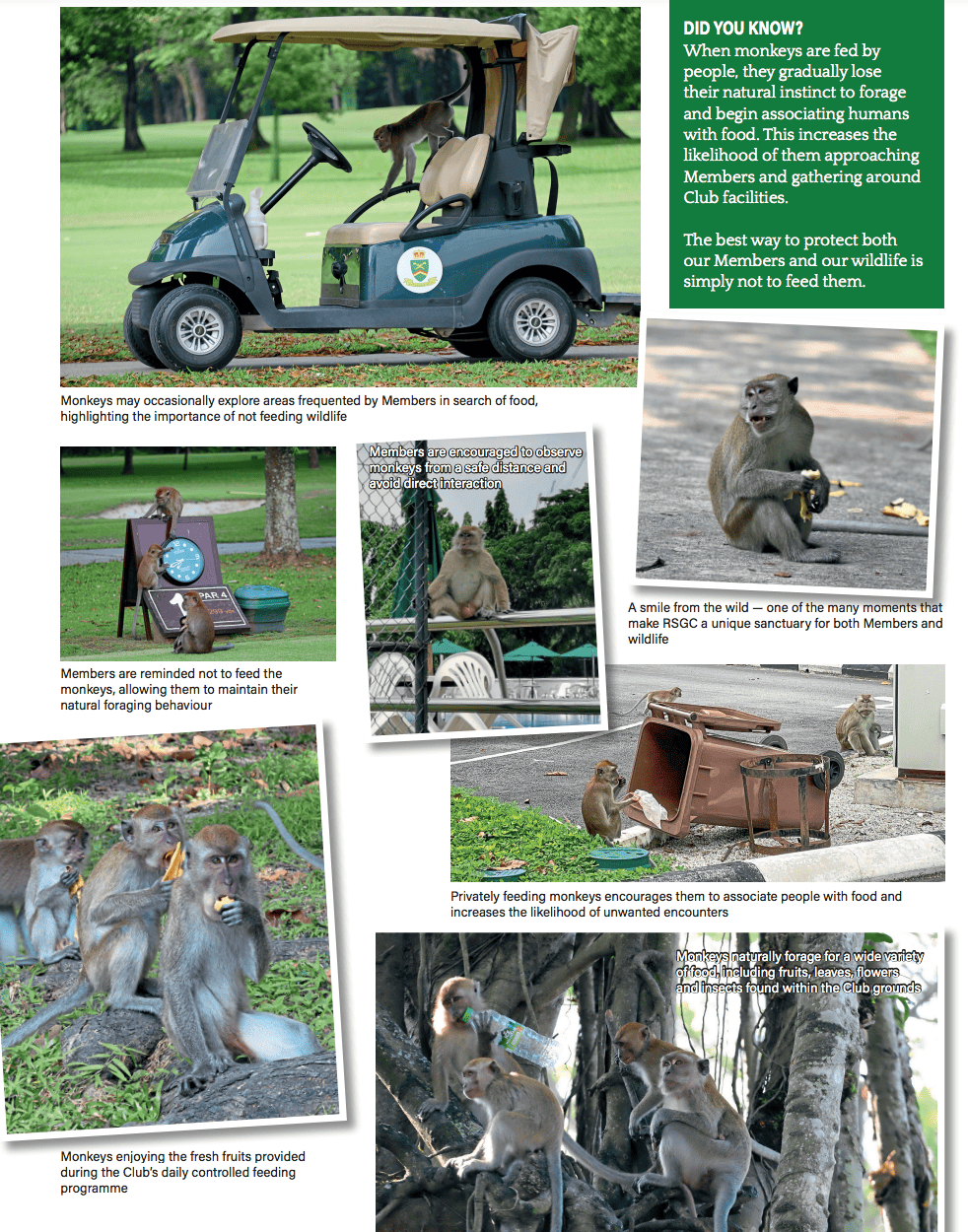
Members are therefore encouraged to play their part by refraining from feeding the monkeys and allowing the Club’s wildlife management programme to operate as intended. This simple act not only supports the Club’s wildlife management efforts but also helps reduce the likelihood of monkeys associating Members with food and gathering around Club facilities.
As custodians of a Club that is home to both people and wildlife, we all share a responsibility to maintain a safe, respectful and harmonious environment. By working together and following the guidance provided by PERHILITAN, we can help preserve the Club’s unique natural heritage while ensuring a safe and enjoyable environment for Members, guests and the wildlife that call RSGC home.