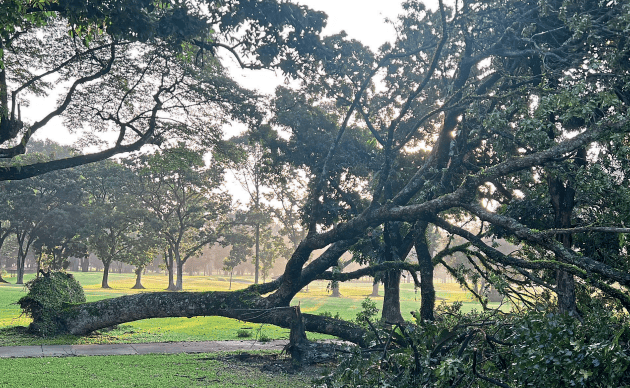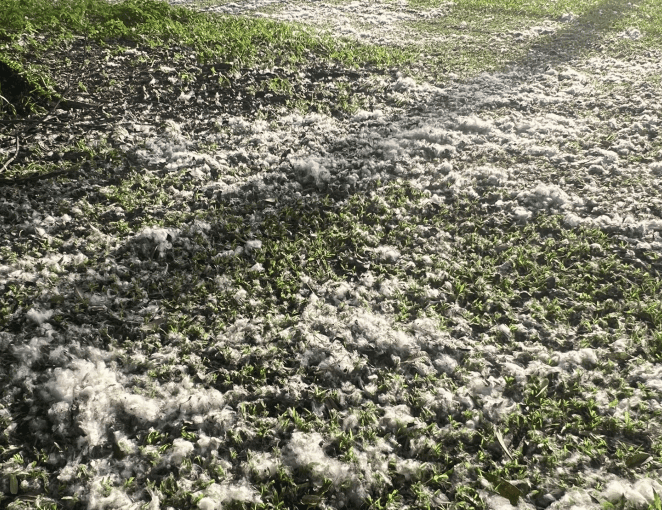
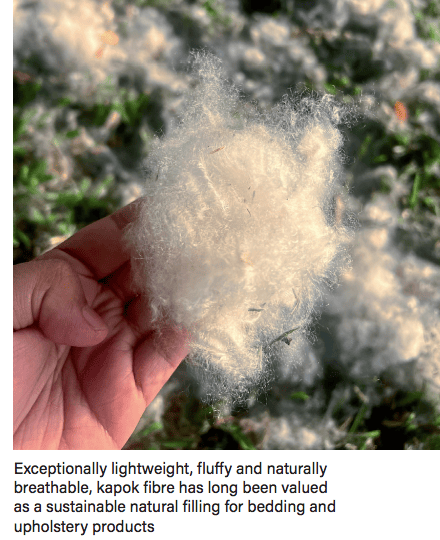
Ceiba pentandra, commonly known as the Kapok Tree or Silk Cotton Tree, produces a soft, silky natural fibre known as kapok. It is widely used as filling for pillows, cushions and mattresses. Exceptionally lightweight, fluffy and naturally breathable, kapok is an excellent natural filling that promotes comfortable and restful sleep.
Kapok fibres contain a natural waxy coating that helps repel moisture, keeping pillows dry and comfortable throughout the night. Their breathable structure allows good air circulation, reducing heat build-up and providing a cooler sleeping surface, particularly in warm and humid climates.
Kapok-filled pillows are naturally soft and resilient, offering gentle support for the head and neck while allowing users to adjust the loft by adding or removing the filling. The fibre is also practically odourless and does not easily retain moisture, helping to maintain a fresh and hygienic sleeping environment.
Ceiba pentandra belongs to the family Bombacaceae, although modern botanical classification places it in the Malvaceae family. It is also known by different names in various cultures and languages, including Akpu-ogwu in Igbo, Rimi in Hausa, and Ogun-gun or Araba in Yoruba. The tree is widely recognised for its ecological, cultural and economic importance throughout the tropical regions of the world. In addition to its practical uses, Ceiba pentandra holds significant symbolic value and is the national tree of Guatemala, where it represents strength, heritage and national pride.
DESCRIPTION
Ceiba pentandra is a large deciduous tree that can grow to more than 30 m in height, with a trunk measuring up to about 3 m in diameter. Native to South America, it is now widely cultivated across the tropical regions of the world.
The tree has a distinctive appearance, with branches arranged in horizontal tiers that form a pagoda-shaped crown. Its light grey trunk is covered with sharp, conical thorns when young. As the tree matures, it develops large buttress roots that provide additional support.
The leaves are palmately compound, consisting of five to eight leaflets attached to the end of a long petiole. Each leaflet is lanceolate, measuring 8–20 cm in length, with entire or slightly serrated margins.
The flowers are small, white, bisexual, fragrant and borne in clusters. They are primarily pollinated by bats.
FRUITS AND FIBRES
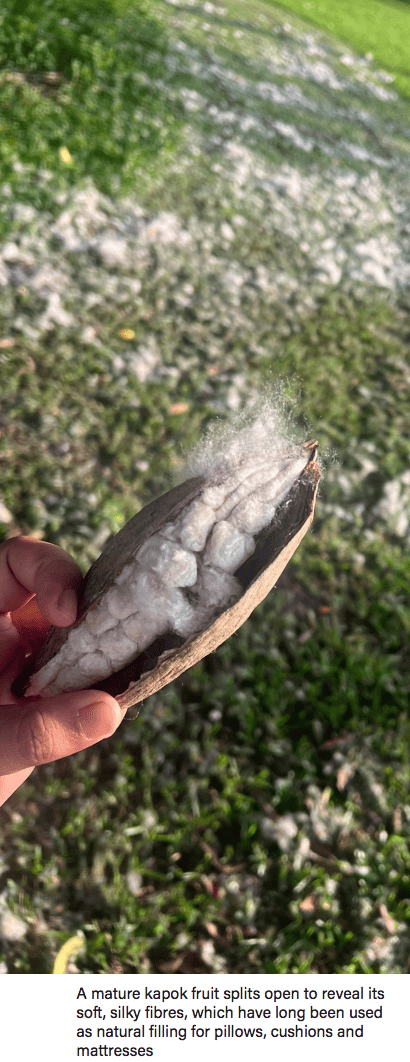
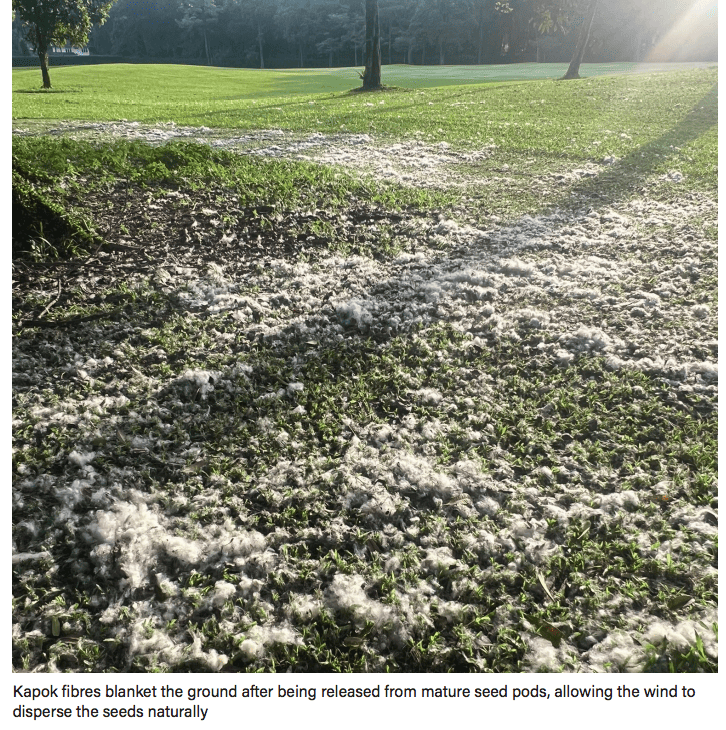
The fruit is a large capsule measuring 8–15 cm long that hangs from the branches. It is green when immature and turns dark brown to black upon ripening. When fully mature, the capsule splits open into five or six sections, revealing masses of silky fibres known locally as kekabu or kapok.
These lightweight fibres are traditionally used as stuffing for pillows, cushions, mattresses and other soft furnishings. Variegated forms of the species also occur.
CULTURAL SIGNIFICANCE
The kapok tree is regarded as sacred in many cultures and serves as a national emblem of both Guatemala and Equatorial Guinea.
Among the Maya, four sacred ceiba trees are believed to support the universe at the north, south, east and west. The Tikuna people of the Amazon regard the ceiba as the “Tree of Life” and believe that the Amazon River and its tributaries were formed when the first giant ceiba tree fell.
ECONOMIC IMPORTANCE
The wood of Ceiba pentandra, marketed under the trade names Ceiba or Fuma, is lightweight, straight-grained and attractive in colour. Owing to these qualities, it is widely used for a variety of applications, including plywood production, the manufacture of boxes and crates, lightweight joinery, and interior construction. Its ease of machining and low density make it particularly suitable for products where moderate strength and light weight are required. The tree is also valued for its long, straight trunk, making it suitable for timber production. However, increasing exploitation poses a threat to its long-term conservation.
Kapok fibre possesses several unique properties that make it an excellent natural filling material for bedding and upholstery products. It is extremely lightweight, practically odourless and naturally breathable, allowing good air circulation and enhanced comfort. Its natural resistance to moisture accumulation helps keep pillows and cushions dry, cool and hygienic, while its adjustable loft allows users to achieve their preferred level of softness and support. These qualities have made kapok fibre a popular and sustainable alternative to synthetic filling materials in pillows, mattresses, cushions and other household products.
Kapok is significantly less dense than cotton, making it suitable for products such as pillows, cushions and life jackets. However, unlike cotton, kapok fibres have relatively low tensile strength and are therefore unsuitable for durable textile fabrics.
CARE OF KAPOK PRODUCTS
Kapok-filled products should not normally be washed unless absolutely necessary, as washing can alter the fibre’s structure and reduce its loft. To refresh a kapok pillow or cushion, it is recommended to air it outdoors rather than wash it.
CULINARY USES
The seeds of Ceiba pentandra have several traditional uses. They may be roasted and ground into powder for soups and flavouring. The seeds can also be processed to produce an edible cooking oil.
Although the raw seeds contain toxic substances, the extracted oil is considered safe for consumption after proper extraction and refining
OTHER USES
The tree has long been valued by rainforest communities for its timber, fibre and oil. Because of its numerous economic and cultural benefits, the sustainable management and conservation of Ceiba pentandra are important to prevent overexploitation.