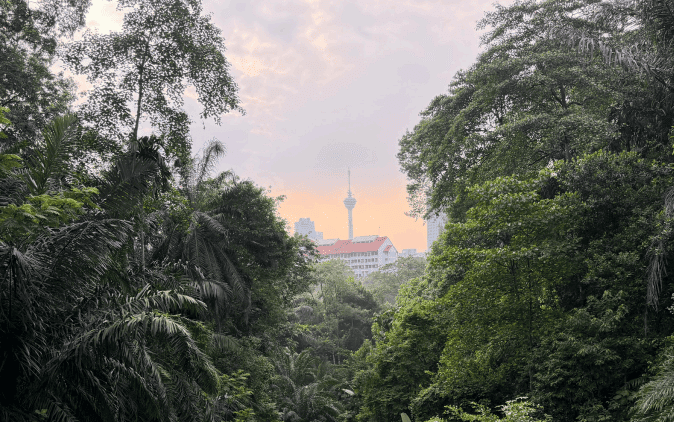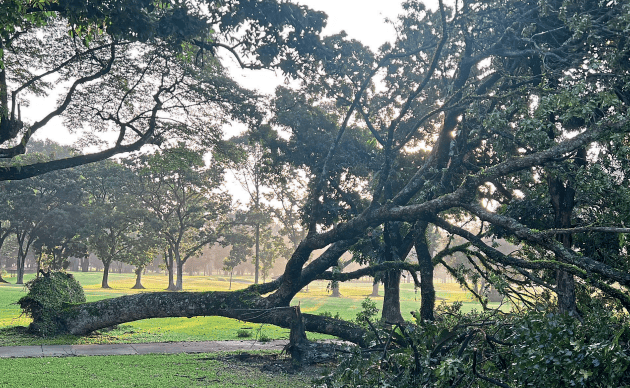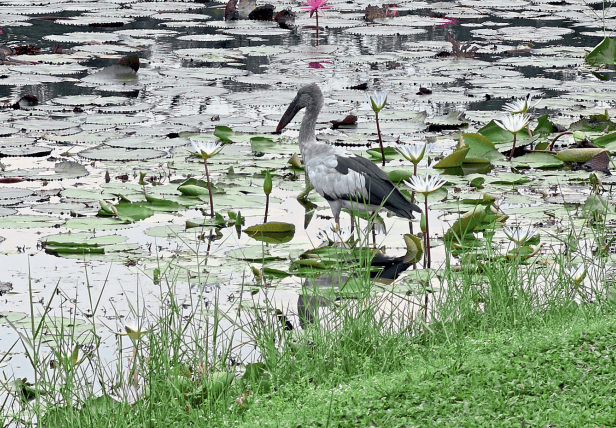
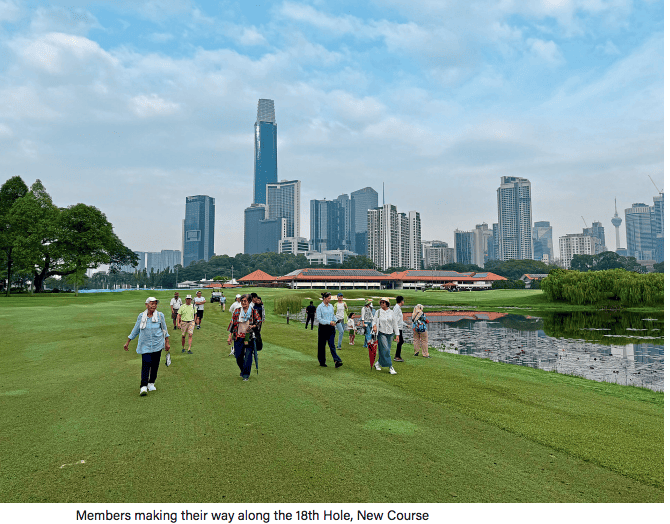
It is easy to think of RSGC in terms of fairways, greens and the game itself. But look a little closer and another landscape begins to emerge — aquatic plants growing along the water’s edge, flowering shrubs attracting birds and insects, towering trees and wildlife quietly sharing the Club grounds with us.
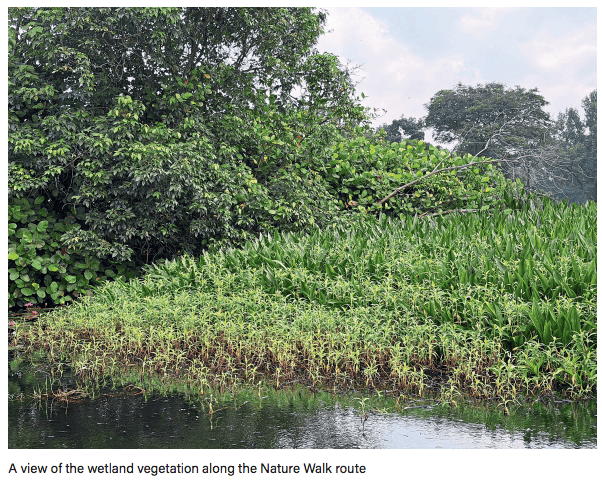
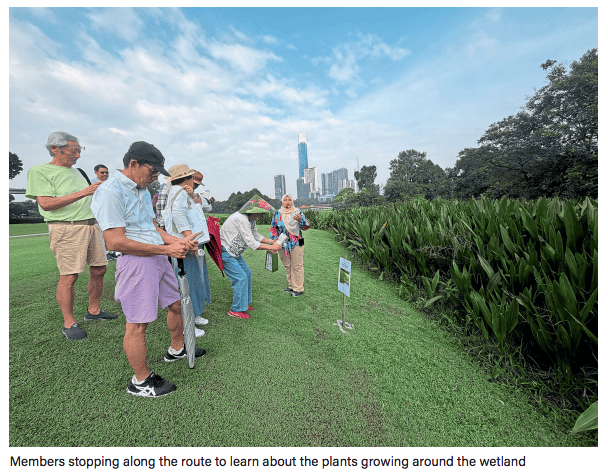
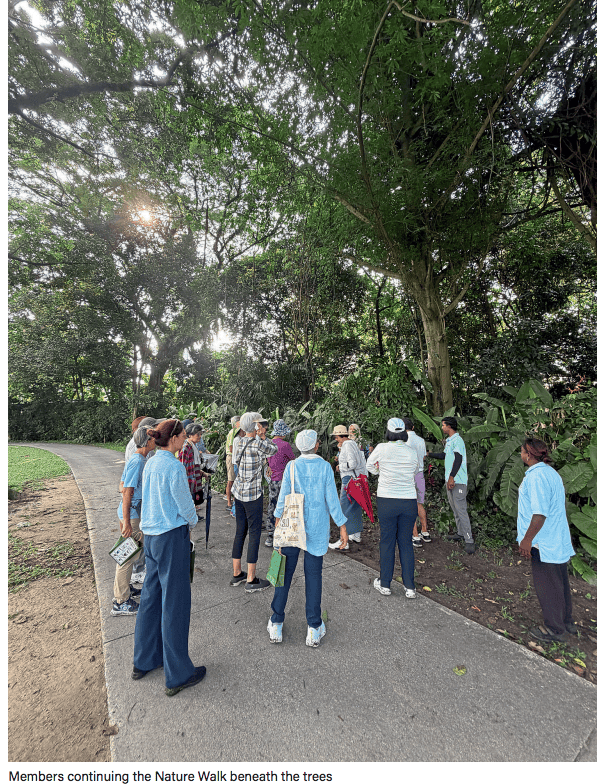
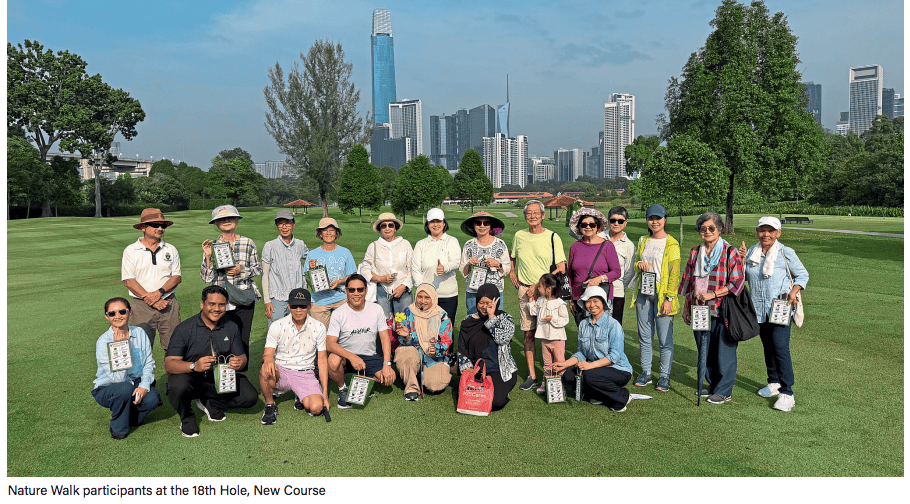
On the morning of 14 July 2026, Members had an opportunity to explore this lesser-seen side of RSGC during a Nature Walk around the wetlands of the 17th and 18th Holes on the New Course.
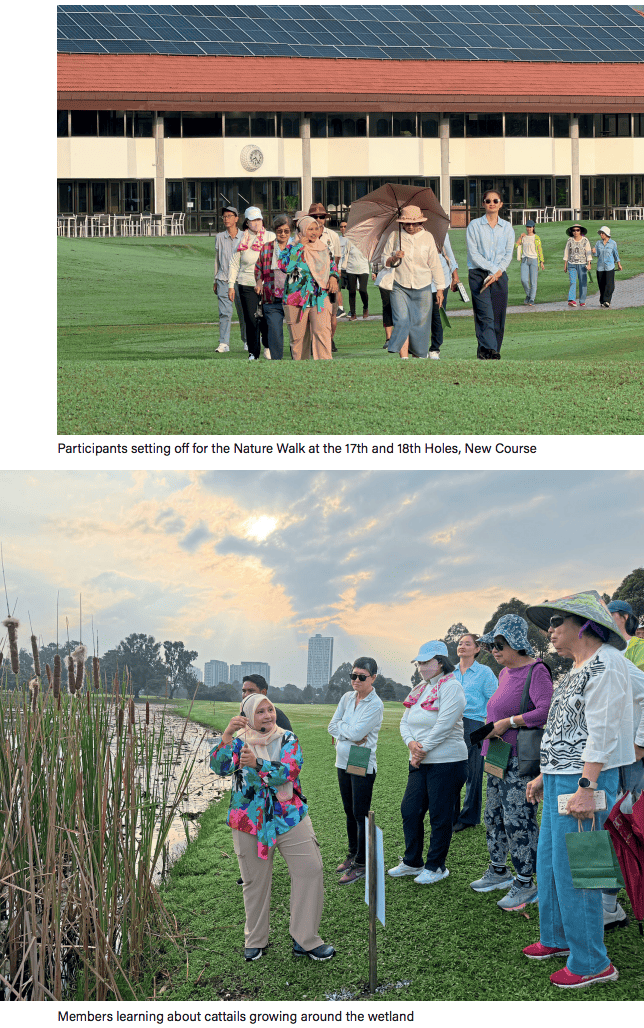
Among the participants was Aurora, who had returned from Norway for her summer break and arrived with one particular hope: to catch a glimpse of the monkeys that inhabit the Club. We were also delighted to welcome back Puan Zuraidah, one of our regular Nature Walk participants, who tries not to miss the walks and enjoys each opportunity to learn something new about the natural environment at RSGC.
For Members accustomed to life in the city, the morning offered something increasingly precious — a chance to slow down, look closely and discover the variety of plant life growing within the Club itself. And there was plenty to discover.
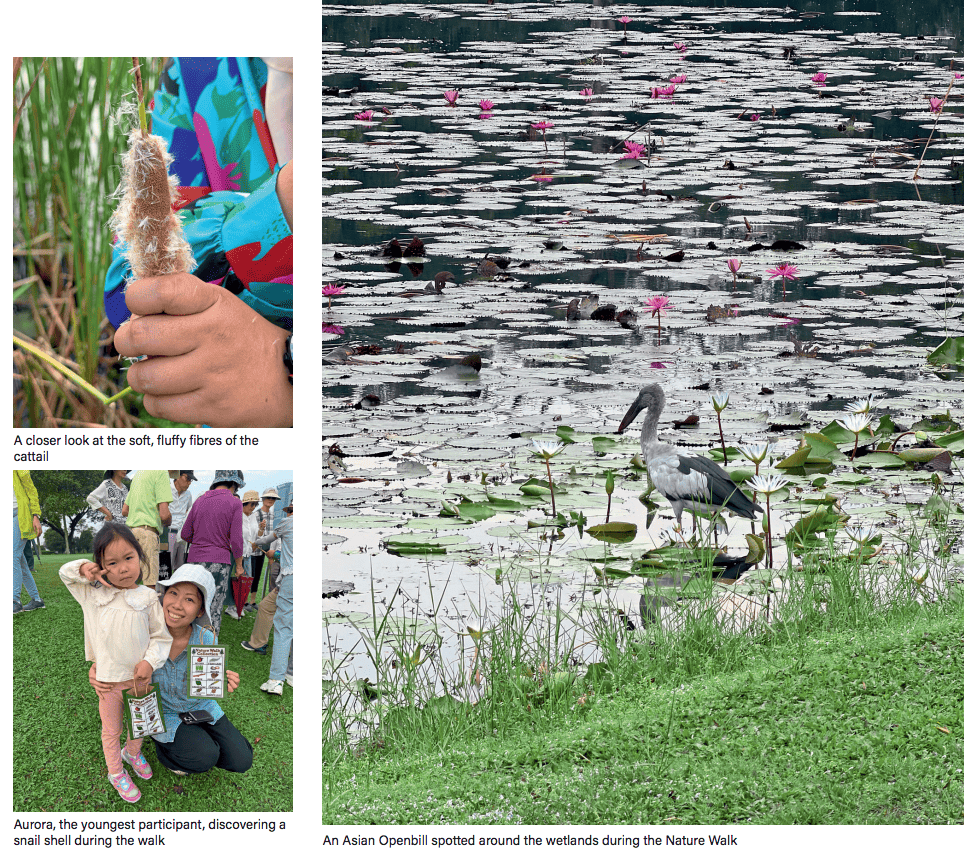
CATTAIL (TYPHA ANGUSTIFOLIA)
One of the first plants encountered was the cattail, immediately recognisable by its distinctive brown, sausage-shaped flower spike. There is more to that familiarlooking spike than meets the eye. Participants learned about its unusual flower structure, with male and female flowers occupying different sections of the spike, as well as the traditional medicinal use of its pollen.
The cattail is also remarkably versatile. Parts of the plant are edible, while its stems and leaves have traditionally been woven into mats and other crafts and used for thatching. The soft material produced as the flower head matures has also been used as filling for items such as pillows and cushions. It was a good example of how an ordinary-looking wetland plant can have an extraordinary range of uses.
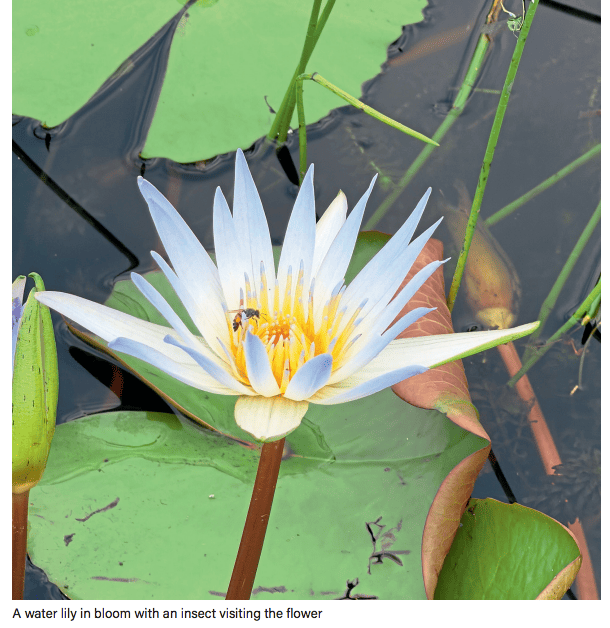
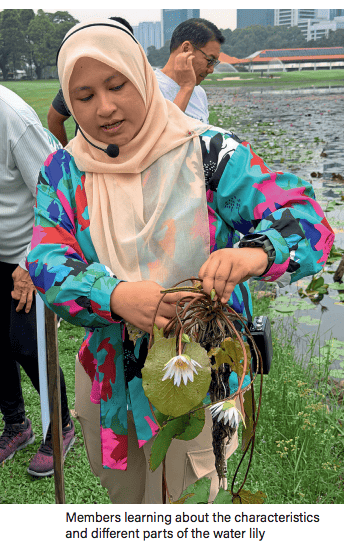
WATER LILY (NYMPHAEA NOUCHALI)
Floating serenely on the water, the water lily may be one of the cultivation, giving participants an opportunity to exchange their own experiences of growing aquatic plants at home.
KNOT GRASS / SMART WEED (POLYGONUM BARBATUM)
The walk continued with knot grass, also known as smart weed, a plant most familiar plants around RSGC’s lakes. Its floating leaves and fragrant flowers make it a popular ornamental aquatic plant. But one fact gave Members reason to look at it rather differently.
Water lilies belong to an extraordinarily ancient lineage of flowering plants, with their evolutionary history stretching back more than 100 million years. Something we may pass regularly during a round of golf therefore has roots stretching back to the earliest chapters of flowering-plant evolution.
The discussion also touched on different varieties of water lilies, their flowering habits and cultivation, giving participants an opportunity to exchange their own experiences of growing aquatic plants at home.
KNOT GRASS / SMART WEED (POLYGONUM BARBATUM)
The walk continued with knot grass, also known as smart weed, a plant commonly associated with moist environments and water margins. It may not command attention in the way a colourful tropical flower does, but it provided another example of how plants growing naturally around us can carry their own history of human use.
Participants learned that its roots and seeds have been associated with traditional medicinal uses.
The discussion encouraged Members to look more closely at the smaller plants around the wetlands — those that can easily be overlooked beside their larger and more colourful neighbours.
HANGUANA / BAKONG (HANGUANA MALAYANA)
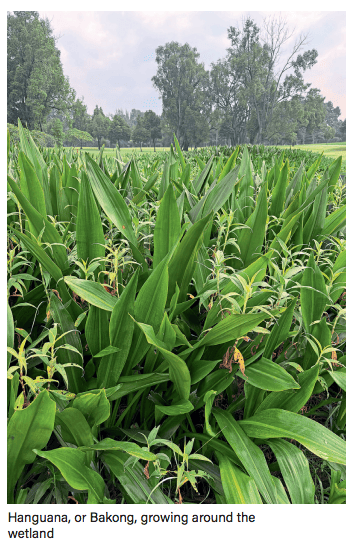
Hanguana, or Bakong, introduced Members to another interesting relationship between plants and people: the use of natural fibres.
Participants learned that the plant can produce raw fibre for handicrafts and textiles, including applications in the Philippines.
Its large leaves and presence within wet environments also made it an interesting subject for understanding the diversity of plants that can thrive around wetlands
The discussion was a reminder that plants can hold practical value alongside their role within the natural landscape, and that traditional knowledge continues to reveal different ways in which natural materials can be used.
SIMPOH AIR (DILLENIA SUFFRUTICOSA)
For many Malaysians, Simpoh Air may be more familiar. Its large leaves have traditionally been used for wrapping food, including tempeh, long before plastic packaging became commonplace. Its bright yellow flowers provide another reason to stop and look. Each flower lasts for only a day, while the mature fruit eventually opens to reveal its distinctive red fleshy seeds. Participants learned about this flowering cycle and the changes that take place as the fruit develops.
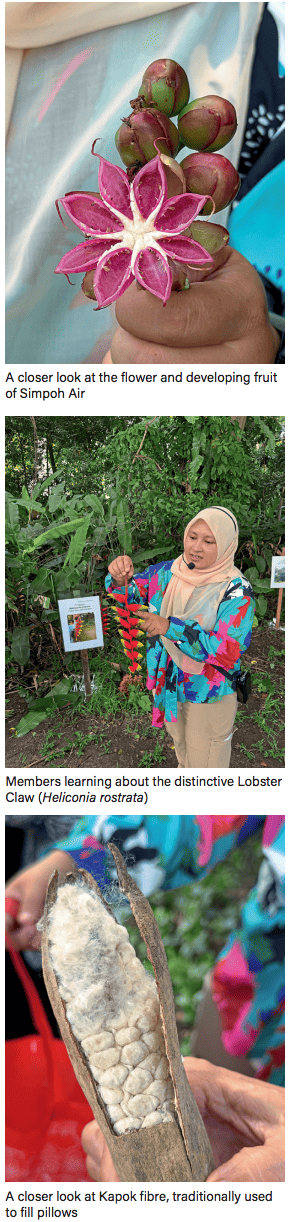
The plant also has an important relationship with wildlife. Its flowers attract pollinators, while its fruits provide food for birds and other animals. Sometimes the most interesting discoveries during a Nature Walk are not unfamiliar plants, but familiar ones whose stories we have never stopped to consider.
PAGODA (CLERODENDRUM PANICULATUM)
The Pagoda plant caught the group’s attention with its clusters of bright red-orange flowers arranged in a form reminiscent of a traditional Asian tower — giving the plant its familiar common name.
Participants learned about its value as a nectar source and the importance of sufficient bright light for good flowering. Beyond adding colour to the landscape, flowering plants such as the Pagoda demonstrate the relationship between vegetation and the birds and insects that share the Club grounds.
LOBSTER CLAW (HELICONIA ROSTRATA)
Another tropical showstopper was the Lobster Claw, also known as False Bird of Paradise, whose unusual hanging flowers make it immediately recognisable. Its distinctive flowers attract birds and insects, illustrating another of the many relationships between flowering plants and wildlife found around the Club.
Participants also learned about its growing characteristics and its relationship to other tropical plants. These observations encouraged Members to remember not simply the names of the plants they encountered, but also their characteristics, growing conditions and roles within the surrounding environment.

KAPOK / KEKABU (CEIBA PENTANDRA)
The final stop brought Members back to a familiar subject — the Kapok, or Kekabu tree, which was featured in last month’s article. This time, participants could encounter the tree in its natural setting and examine its distinctive soft fibre up close.
The Kapok produces large pods that split when ripe to reveal silky fibres surrounding the seeds. The fibre is naturally light and buoyant and has historically been used as stuffing for items such as pillows and mattresses, as well as life jackets.
Participants also learned about the unusual lightness of Kapok fibre and its practical applications. Seeing the tree itself after reading about it offered a different kind of learning experience. A species encountered on the pages of The Circular had become something Members could stand beside, observe and touch.
CURIOSITY CONTINUES
The Nature Walk was never intended to be a one-way lesson. Questions came throughout the morning as participants discussed the plants, their uses and how some might be cultivated. There was also an engaging conversation about the role of a horticulturist and the distinction between horticulture and arboriculture.
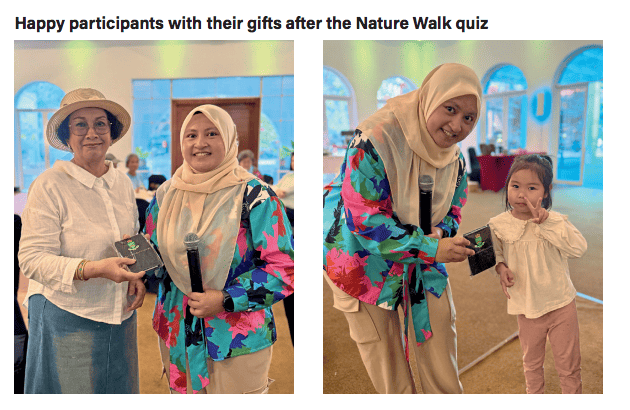
After completing the walk, the group headed indoors for refreshments and a quiz — with 15 questions waiting to test just how closely everyone had been paying attention. The morning also provided another opportunity to highlight the Club’s composting initiative and the importance of returning nutrients to the soil as part of maintaining a healthier natural environment. And there was still one item on Aurora’s wish list.
At her request, several participants stayed behind after the walk in the hope of seeing RSGC’s resident monkeys. Their patience was eventually rewarded, adding one final wildlife encounter to a morning already filled with discoveries. One participant summed up the experience simply: “We should connect more with our Alam.
Perhaps that is the greatest value of these Nature Walks. They encourage us to slow down and notice what has been around us all along.
ly on the lake, a cattail at the water’s edge or a brilliant cluster of tropical flowers, perhaps you will see more than just another part of the landscape. You may see a story worth discovering.
Members can continue that discovery at the next Nature Walk on Monday, 16 November 2026, at the First Old Course.
DID YOU KNOW?
An ancient beauty Water lilies belong to an ancient lineage of flowering plants whose evolutionary history stretches back more than 100 million years.